Reviewed by Kratom Verdict Editorial Team
Last Updated: July 2026
Estimated Reading Time: 5 minutes
Guide Type: Independent Editorial Strain Guide
Research Basis: Publicly available botanical information, third-party laboratory transparency, publicly available regulatory resources, scientific literature, and independent editorial research.
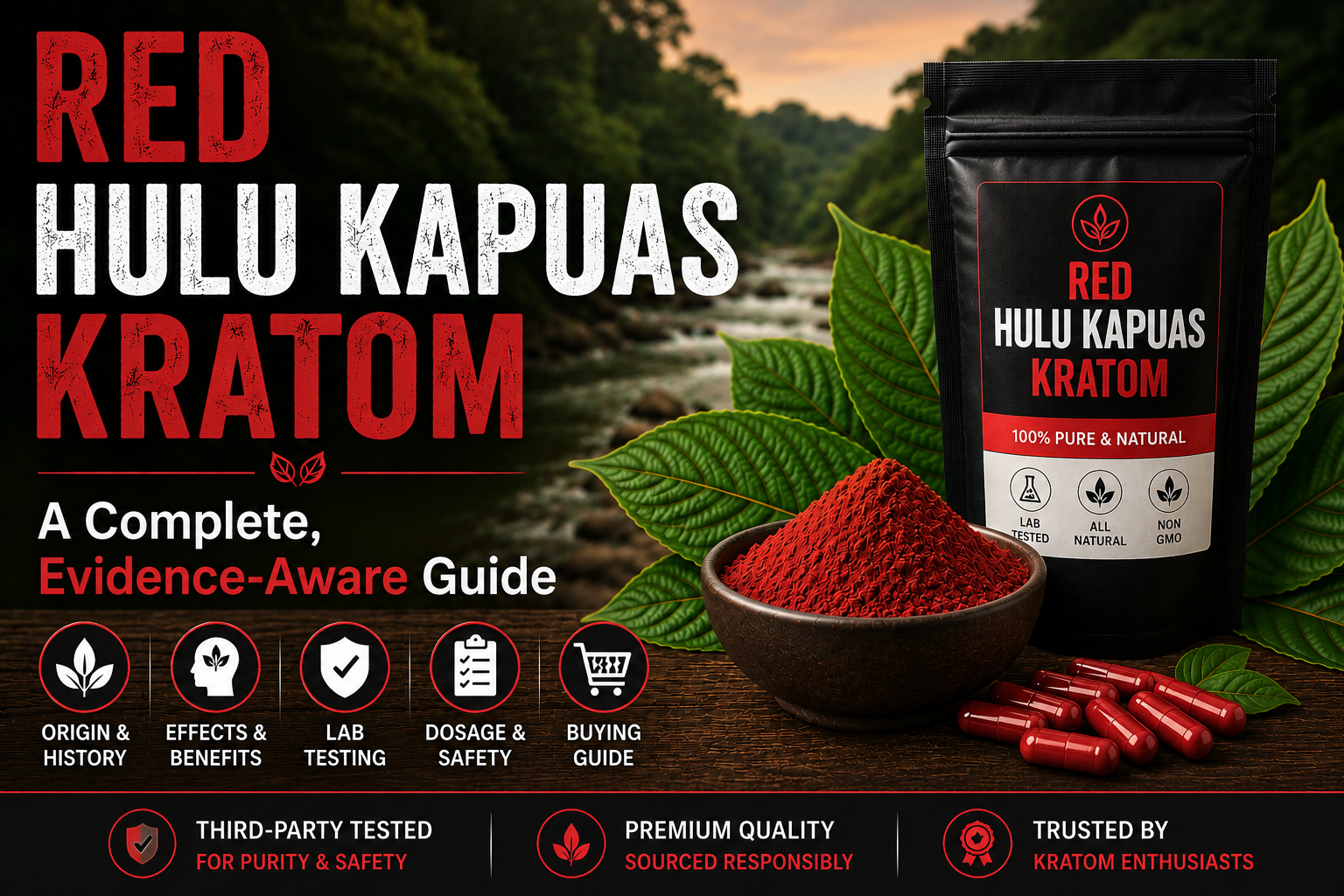
What Is Red Hulu Kapuas Kratom?
Red Hulu Kapuas kratom is a red-vein strain of Mitragyna speciosa, a tropical tree in the coffee family native to Southeast Asia. Its name comes from where it’s harvested: “Hulu” is Indonesian for “upstream,” and this strain is grown along the upper reaches of the Kapuas River in the Kapuas Hulu Regency of West Kalimantan, Borneo — a remote, hard-to-access growing region.
That remoteness is a big part of why Red Hulu Kapuas has a reputation among kratom communities as a rarer, harder-to-find strain compared to more widely distributed varieties like Red Bali or Red Maeng Da.
Origin and How It’s Processed
Kratom farmers in the Kapuas River basin harvest leaves from mature trees, then dry and process them using regionally traditional methods. The river’s mineral-rich sediment and the area’s humid, tropical climate are often cited by growers and vendors as contributing to the strain’s alkaloid makeup, though these claims are largely anecdotal rather than backed by controlled agricultural research.
Like other kratom strains, “red vein” refers to the color of the leaf’s veins at the time of harvest, which vendors associate with a particular alkaloid balance — though vein color alone doesn’t precisely predict effects, since growing conditions, drying methods, and plant maturity all play a role.
Reported Effects
It’s important to be upfront here: kratom is not FDA-approved for any medical use, and claims about its effects come primarily from user reports and vendor marketing rather than rigorous clinical trials. With that caveat, people who use Red Hulu Kapuas commonly describe:
- A sense of calm or relaxation
- Mild, functional stress relief that some describe as less sedating than other red strains
- A mellow, balanced feeling rather than strong stimulation or heavy drowsiness
Experiences vary widely from person to person based on individual body chemistry, tolerance, product quality, and amount used. Anecdotal reports are not a substitute for medical evidence, and you shouldn’t rely on this strain (or any kratom product) to treat a diagnosed medical or mental health condition.
How Red Hulu Kapuas Compares to Other Red Strains
| Strain | Commonly Reported Character |
|---|---|
| Red Hulu Kapuas | Balanced, calming, described by users as less sedating |
| Red Bali | Often described as more strongly sedating |
| Red Maeng Da | Reported as more stimulating for a red-vein strain |
| Green Hulu Kapuas | Same growing region; users describe a more energizing profile |
These comparisons reflect general community consensus and vendor descriptions, not standardized lab testing across brands.
Is Red Hulu Kapuas Kratom Legal?
Kratom’s legal status is genuinely complicated and changes over time, so don’t treat any single article — including this one — as the final word:
- Federal (U.S.): Kratom is not a federally scheduled controlled substance as of 2026, but it is also not FDA-approved, and the FDA has issued warnings about kratom-related health risks.
- State and local: A number of U.S. states and municipalities restrict or ban kratom outright. Rules can also differ by county or city even within states where it’s broadly legal.
- Outside the U.S.: Many countries, including some in Southeast Asia where kratom is grown, heavily regulate or prohibit it.
Because this changes, check your specific state, county, and country’s current laws before purchasing or using kratom products.
Safety Considerations
Kratom is a psychoactive substance, and responsible-use information matters more than marketing claims:
- Effects and tolerance vary significantly between individuals — what one person reports as mild, another may not.
- Reported side effects include nausea, dry mouth, reduced appetite, dizziness, and constipation.
- Frequent or heavy use has been associated with dependence and withdrawal symptoms in some users.
- Combining kratom with other substances, including alcohol, opioids, or certain medications, carries added risk and should be discussed with a pharmacist or physician.
- Kratom quality varies a lot between vendors; contamination (including heavy metals and salmonella) has been documented in some tested products by the FDA, so third-party lab testing and reputable sourcing matter.
If you’re considering kratom for a specific health concern, talk to a healthcare provider first — especially if you take other medications or have an underlying health condition.
Buying Red Hulu Kapuas Kratom
Because it’s a lower-volume, harder-to-source strain, “Red Hulu Kapuas” is sometimes mislabeled by vendors selling generic red-vein powder. If you’re evaluating a vendor, general things worth checking include:
- Whether they publish third-party lab (Certificate of Analysis) results per batch
- Whether they’re a member of a recognized industry quality program, such as the American Kratom Association’s GMP program
- Clear sourcing information and transparent labeling
Frequently Asked Questions
Is Red Hulu Kapuas the same as Red Bali? No. They’re both red-vein Indonesian strains, but they’re harvested from different regions and are commonly described as having different effect profiles — Red Hulu Kapuas is often described as more balanced and less sedating.
Is Red Hulu Kapuas kratom stronger than other strains? “Strength” is subjective and depends on the individual, the product’s freshness, and how it was processed. There’s no standardized potency rating across the kratom industry.
Can I take Red Hulu Kapuas every day? Some users report using kratom strains on a rotating basis rather than daily, citing concerns about tolerance and dependence. This is a personal-risk decision worth discussing with a healthcare provider rather than following generic online advice.
Is kratom addictive? Kratom interacts with opioid receptors, and regular heavy use has been linked to dependence in some users. This is an active area of research and a genuine risk to weigh.
This article is for general informational purposes only and is not medical advice. Kratom is not FDA-approved to diagnose, treat, cure, or prevent any disease. Consult a licensed healthcare provider before using kratom, particularly if you are pregnant, nursing, have a health condition, or take other medications. Check your local and state laws, as kratom’s legal status varies by location and can change.