Reviewed by Kratom Verdict Editorial Team
Last Updated: July 2026
Estimated Reading Time: 8 minutes
Guide Type: Independent Editorial Strain Guide
Research Basis: Publicly available botanical information, third-party laboratory transparency, publicly available regulatory resources, scientific literature, and independent editorial research.
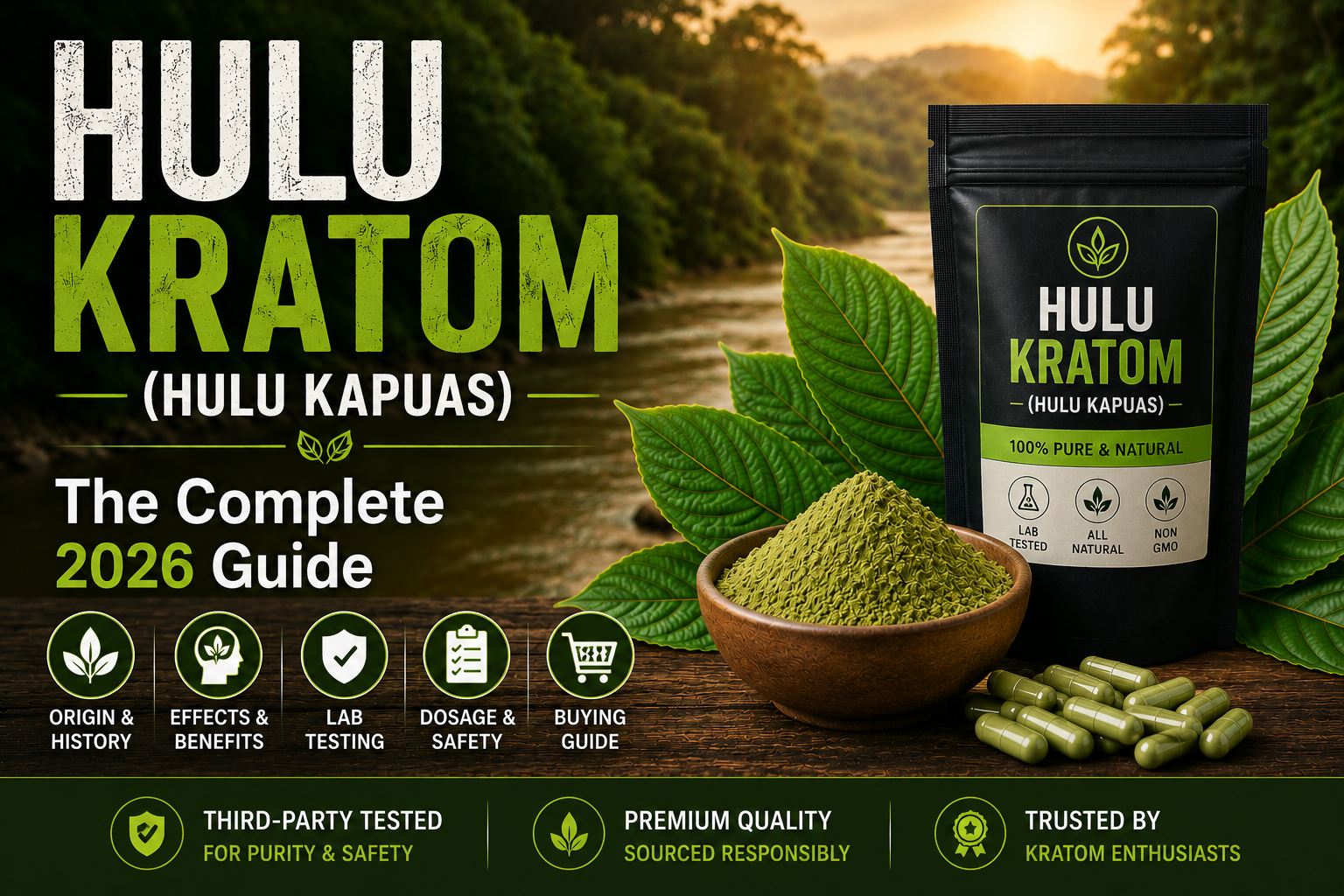
Hulu Kapuas — often shortened to “Hulu” — is one of the more storied names in the kratom world: a strain tied to a specific, remote stretch of Borneo’s longest river, with a reputation for potency that draws both devoted fans and real skepticism. This pillar guide covers everything: where Hulu kratom comes from, how its color variants differ, what’s actually verifiable versus marketing hype, and the legal landscape you need to know in 2026.
What Is Hulu Kratom?
Hulu kratom, more formally known as Hulu Kapuas kratom, is harvested from Mitragyna speciosa trees growing along the upper reaches of the Kapuas River — Indonesia’s longest river — in the Kapuas Hulu Regency of West Kalimantan, Indonesian Borneo. “Hulu” translates roughly to “upper river” in Indonesian, referring to the region’s location near the river’s source rather than its mouth.
The area is genuinely remote: much of it is accessible only by boat along winding river tributaries, which has helped preserve both older kratom trees and traditional harvesting methods. Seasonal flooding deposits mineral-rich alluvial soil around the trees, and the combination of that soil, high humidity, and filtered jungle canopy sunlight is commonly cited as the reason Hulu leaf develops a particularly full, complex alkaloid profile.
A note on trust: Hulu Kapuas has occasionally been the subject of skepticism within the kratom community — not because the region or the strain isn’t real (it is, and it’s well documented), but because “Hulu” branding has sometimes been applied loosely by vendors to leaf that may not be genuinely sourced from the region. If sourcing transparency matters to you, look for vendors who can speak specifically to their supply chain rather than relying on the name alone.
Alkaloid Profile
Like all kratom, Hulu Kapuas’s effects trace back to its alkaloid content — primarily mitragynine, with smaller natural amounts of 7-hydroxymitragynine (7-OH). Some vendor lab data has cited mitragynine concentrations in the 60–66% range within the alkaloid fraction for green Hulu Kapuas specifically, though exact figures vary by batch, harvest timing, and testing lab, so treat any single number as illustrative rather than a guarantee.
Hulu Kapuas by Color: A Quick Overview
Hulu Kapuas comes in the standard vein-color range, each associated with different user-reported effects. As with all kratom, these are based on community and vendor reporting, not clinical evidence — the FDA has not approved kratom for any medical use.
| Variant | Common Positioning | Often Compared To |
|---|---|---|
| White Hulu | Stimulating, focus-oriented, daytime use | White Maeng Da |
| Green Hulu | Balanced mood lift, gentle daytime energy | Green Malay |
| Red Hulu | Relaxation-focused, evening use | Red Bali |
| Gold Hulu | Blend of two or more Hulu variants (often red + white or green), fermented for a darker finish | Gold Bali |
A few things worth knowing about each:
- White Hulu is generally described as offering strong stimulation and mental clarity, positioned as a daytime or productivity-focused option, similar in role to White Maeng Da but often described by users as “smoother.”
- Green Hulu is frequently described as the most balanced and versatile of the group — a gentle lift with a steady, even finish that doesn’t lean heavily stimulating or sedating.
- Red Hulu is generally associated with relaxation and evening use, though some users describe it as less drowsy than other red-vein strains, making it a “functional” choice for daytime relaxation as well.
- Gold Hulu isn’t a distinct natural vein color — like Gold kratom generally, it’s created by blending two or more Hulu variants (commonly red with white or green) and, in some cases, applying an additional fermentation step. It’s typically positioned as a middle-ground option that leans slightly more relaxing than Yellow-style blends.
Farmers in the region typically pick leaves at different maturity stages — younger growth for white, mid-maturity for green, and fully mature leaves for red — with drying methods (outdoor sun, indoor shade, or controlled environments) also shaping the final color and alkaloid balance.
Kratom Legal Status in 2026: What You Need to Know
Kratom’s legal status has shifted meaningfully in 2026, and it applies to Hulu Kapuas exactly as it does to any other kratom strain.
Federal status: Whole-leaf kratom remains unscheduled under the federal Controlled Substances Act. The DEA has not classified natural kratom leaf as a controlled substance, and a 2016 attempt at emergency scheduling was withdrawn after significant public and congressional pushback.
7-OH scheduling action: On July 1, 2026, the DEA moved to temporarily place concentrated and synthetic 7-hydroxymitragynine — along with several related lab-made compounds — into Schedule I, with HHS support. This targets concentrated and synthesized 7-OH products specifically, not natural whole-leaf strains like Hulu Kapuas, which contain 7-OH only in low, naturally occurring amounts.
State-by-state patchwork: As of mid-2026, kratom is banned in roughly seven states — including Alabama, Arkansas, Connecticut, Indiana, Louisiana, Vermont, and Wisconsin — plus Washington, D.C. Rhode Island became the first state to reverse a kratom ban, moving to a regulated framework (21+ age limits, lab testing, labeling requirements) effective April 1, 2026. Other states, such as California, have used food-safety statutes to pull kratom products from shelves even without a dedicated ban law, and additional restriction or ban bills remain active in several state legislatures.
Bottom line: Because rules change at both the state and federal level, always verify current local law before purchasing, possessing, or shipping any Hulu Kapuas kratom product.
Safety Considerations
- The FDA has never approved kratom as a dietary supplement, food additive, or drug, and maintains it has no approved medical use — regardless of what individual vendor pages claim.
- CDC data published in early 2026 showed a sharp rise in kratom-related poison control exposure reports over the past decade, with 2025 alone accounting for a large share of that increase.
- Because Hulu Kapuas has a reputation for potency, and because sourcing authenticity varies by vendor, batch-to-batch consistency can be less predictable than with more mainstream, heavily tested strains — a good reason to prioritize lab documentation over strain name alone.
- Broader kratom risks — including dependence with regular heavy use and rare reports of liver toxicity — apply to Hulu Kapuas as they do to any kratom product.
If you already use kratom regularly and have concerns about dependence, or notice symptoms like unusual fatigue or withdrawal-type effects, talk to a healthcare provider. Kratom dependence is treatable, and your state’s legal status has no bearing on whether care is available to you.
Buying Hulu Kapuas: What to Check
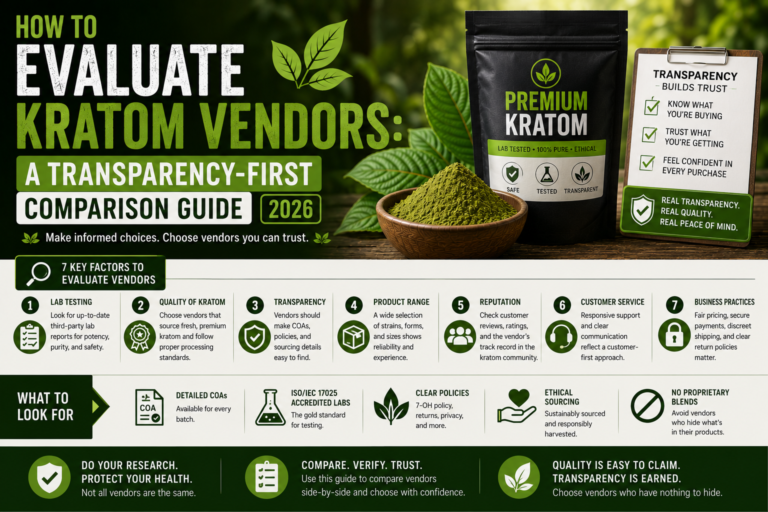
- Verifiable sourcing — given the region’s remoteness and the strain’s reputation for loose branding, look for vendors who can speak specifically to their supply chain rather than relying on the name alone
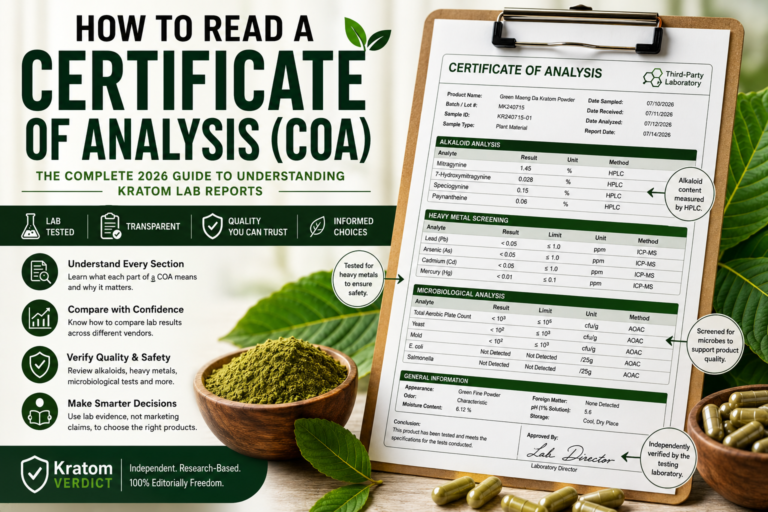
- Third-party lab testing for alkaloid content, heavy metals, microbials, and 7-OH concentration by dry weight, ideally with a certificate of analysis (COA) available per batch
- Kratom Consumer Protection Act (KCPA) compliance, where applicable in your state
- AKA (American Kratom Association) GMP certification or equivalent, which several reputable vendors in this space cite
- Age-gating (21+), now standard practice across most reputable vendors
Frequently Asked Questions
Is Hulu Kapuas the same as Jongkong kratom? No, though both come from the West Kalimantan region of Borneo and are sometimes confused or even used as alternate names by some vendors. Hulu Kapuas is specifically tied to the upper Kapuas River region (Kapuas Hulu Regency), while Jongkong refers to a separate district in the same general area. Treat vendor claims that the two are identical with some caution.
Is Hulu Kapuas kratom real, or is it a marketing name? The region and the strain are real and well documented. The caution worth flagging is that “Hulu” branding has sometimes been applied by vendors more loosely than the name implies — so sourcing transparency matters more here than with some other strains.
What’s the difference between Gold Hulu and Yellow Hulu? Both are blended, non-single-vein products, but they’re typically produced differently: Gold Hulu usually involves an additional fermentation step that darkens the final product and is associated with more relaxing effects, while Yellow-style Hulu blends tend to be marketed as slightly lighter and more balanced. Exact methods vary by vendor for both.
Is Hulu Kapuas kratom legal? It depends on your state. As of 2026, kratom leaf is legal in most U.S. states but banned in a handful of others, while concentrated 7-OH products face additional federal restriction. Always confirm current state and local law before buying.
Where does Hulu Kapuas kratom come from? The upper Kapuas River region (Kapuas Hulu Regency) in West Kalimantan, Indonesian Borneo — one of the more remote kratom-growing areas, accessible in many parts only by boat.
This article is for informational purposes only and does not constitute medical or legal advice. Kratom is not FDA-approved for any medical use, and its legal status varies by state and changes frequently. Consult a healthcare provider before using kratom, and verify current local law before purchasing or possessing any kratom product.