Reviewed by Kratom Verdict Editorial Team
Last Updated: July 2026
Estimated Reading Time: 18–22 minutes
Guide Type: Independent Editorial Strain Guide
Research Basis: Publicly available botanical information, third-party laboratory transparency, publicly available regulatory resources, scientific literature, and independent editorial research.
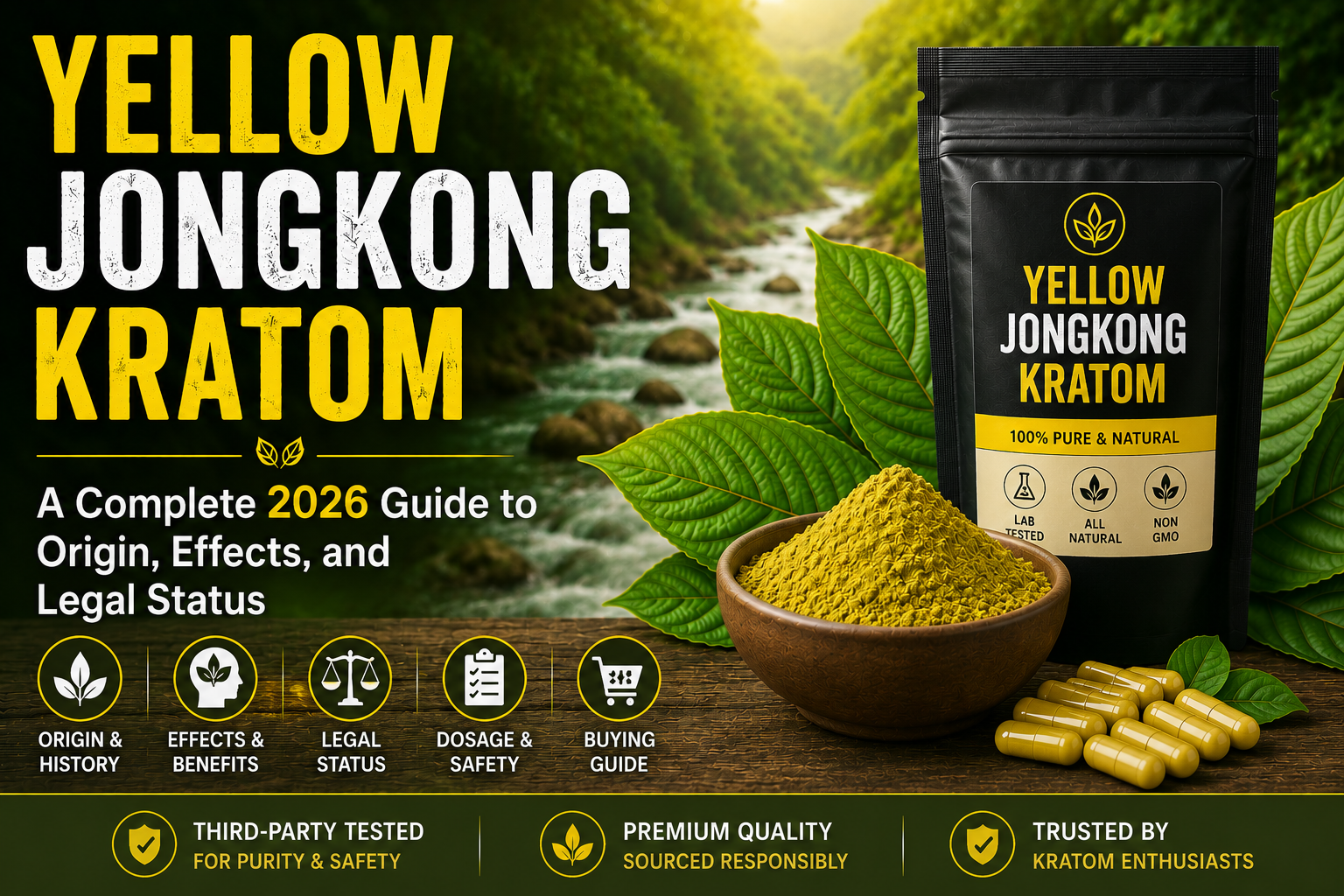
Yellow Jongkong is one of the rarer names in the Jongkong lineup, and also one of the more loosely defined — different vendors describe it differently, which is worth knowing before you buy. Here’s a clear, current breakdown of what Yellow Jongkong actually is, what’s marketing versus what’s verifiable, what users report, and the legal landscape as of 2026.
What Is Yellow Jongkong Kratom?
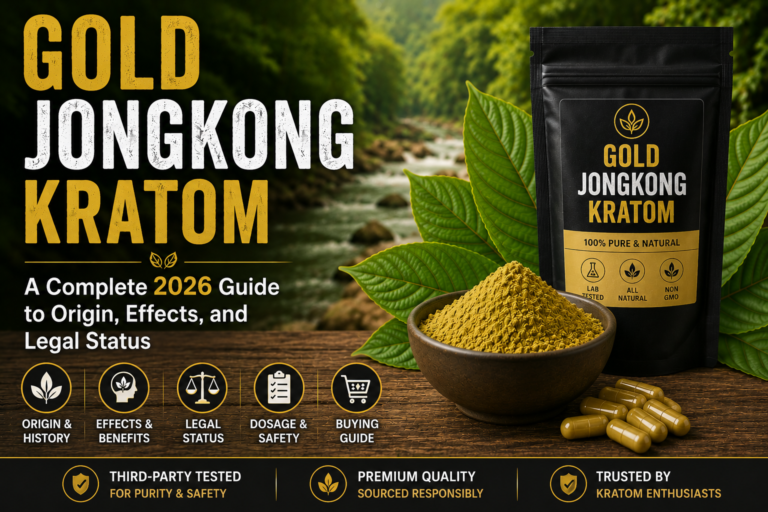
Like other “yellow” kratom products across the industry, Yellow Jongkong isn’t a distinct vein color that grows naturally on the tree — it’s a specialty product created through processing. That said, vendors aren’t fully consistent about which process: some describe Yellow Jongkong as a blend of two vein colors (most often red and green, or red and white), similar to how Gold Jongkong is made. Others describe it as red-vein leaf put through an extended fermentation or sun-drying process that shifts its color and alkaloid profile without blending in a second strain. Because there’s no single industry standard, it’s worth asking a specific vendor how their Yellow Jongkong is actually produced before assuming a particular method.
What’s consistent across sources is the origin: the leaf (or leaves, if blended) comes from the Jongkong growing region of West Kalimantan, on the Indonesian side of Borneo, near the Kapuas River and Danau Sentarum National Park — an area known for fertile, mineral-rich soil that’s frequently credited with the region’s high alkaloid content.
Alkaloid Profile
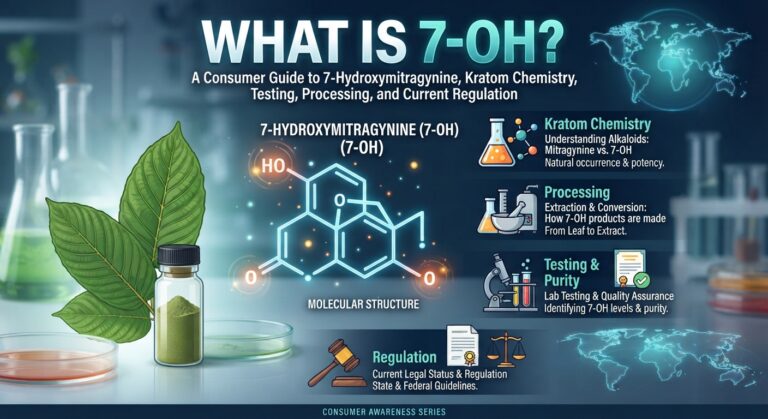
Yellow Jongkong’s chemistry — like all kratom — centers on mitragynine and smaller natural amounts of 7-hydroxymitragynine (7-OH), the two primary alkaloids that interact with opioid receptors in the body. Because production methods vary by vendor, the exact ratio and concentration in a given batch of Yellow Jongkong can differ meaningfully from one brand to the next, more so than with single-vein strains like pure Red or Green Jongkong.
Reported Effects (Marketing Claims vs. What’s Actually Known)
This is an area where it’s especially important to separate vendor marketing language from anything verified. The FDA has not approved kratom for any medical use, and no kratom product — Yellow Jongkong included — has been clinically shown to treat pain, anxiety, or sleep conditions. Some vendor product pages go further than user-report language and describe Yellow Jongkong in terms closer to a remedy; treat those claims with real skepticism.
With that said, community and vendor descriptions of Yellow Jongkong commonly include:
- A “middle ground” experience — often described as blending some stimulating and some relaxing qualities, positioned between white and red strains
- Mood lift and mental clarity — frequently cited alongside “gentle” or “smooth” language, distinguishing it from more intense strains
- Daytime-to-evening versatility — some vendors position it for use at any time of day given its balanced profile
As with any blended or specially processed kratom product, individual experience will vary — and vendor copy tends to be optimistic by design.
Yellow Jongkong vs. Other Jongkong Strains
| Strain | How It’s Made | Typical Positioning |
|---|---|---|
| Yellow Jongkong | Blend (varies by vendor) or extended fermentation of red leaf | Balanced, described as “gentle” |
| Gold Jongkong | Blend of Green + White (commonly ~60/40) | Balanced, flexible day/evening use |
| Green Jongkong | Pure green-vein leaf | Balanced daytime strain |
| White Jongkong | Green-vein leaf plus reincorporated stems/veins | Strong stimulation, sharp focus |
| Red Jongkong | Pure red-vein leaf | Sedating, evening use |
Because Yellow and Gold Jongkong are both specialty, non-single-vein products, they’re sometimes used somewhat interchangeably in marketing — but the underlying processing (and therefore the actual leaf color and alkaloid content) can differ by vendor, so it’s worth reading a specific product’s description rather than assuming.
Kratom Legal Status in 2026: What You Need to Know
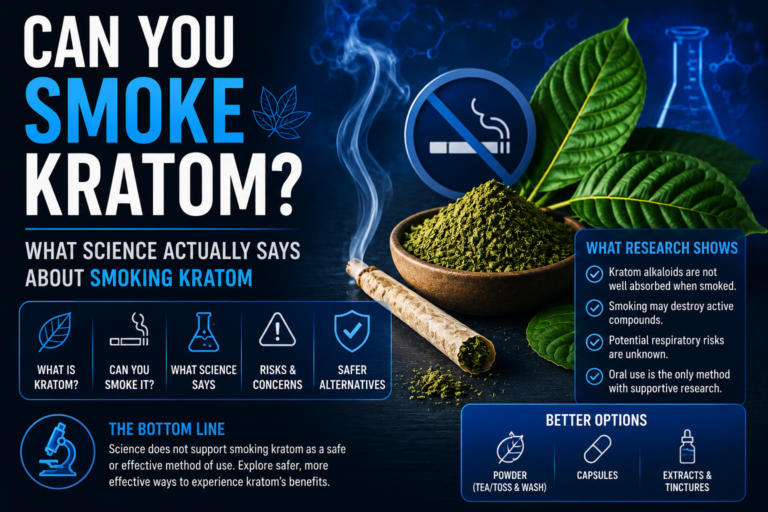
Federal status: Whole-leaf kratom remains unscheduled under the federal Controlled Substances Act. The DEA has not classified natural kratom leaf as a controlled substance, and a 2016 attempt at emergency scheduling was withdrawn after significant public and congressional pushback.
7-OH scheduling action: On July 1, 2026, the DEA moved to temporarily place concentrated and synthetic 7-hydroxymitragynine — along with several related lab-made compounds — into Schedule I, with HHS support. This targets concentrated and synthesized 7-OH products specifically, not natural or fermented leaf products like Yellow Jongkong, which contain 7-OH only in low, naturally occurring amounts.
State-by-state patchwork: As of mid-2026, kratom is banned in roughly seven states — including Alabama, Arkansas, Connecticut, Indiana, Louisiana, Vermont, and Wisconsin — plus Washington, D.C. Rhode Island became the first state to reverse a kratom ban, moving to a regulated framework (21+ age limits, lab testing, labeling requirements) effective April 1, 2026. Other states, such as California, have used food-safety statutes to pull kratom products from shelves even without a dedicated ban law, and additional restriction or ban bills remain active in several state legislatures.
Bottom line: Because rules change at both the state and federal level, verify current local law before purchasing, possessing, or shipping Yellow Jongkong kratom.
Safety Considerations
- The FDA has never approved kratom as a dietary supplement, food additive, or drug, and maintains it has no approved medical use — regardless of what individual product pages claim.
- CDC data published in early 2026 showed a sharp rise in kratom-related poison control exposure reports over the past decade, with 2025 alone accounting for a large share of that increase.
- Because Yellow Jongkong production methods vary by vendor, effects, potency, and even alkaloid content can be less predictable than with single-vein products — a reason to lean more heavily on lab testing rather than marketing descriptions.
- Broader kratom risks — including dependence with regular heavy use and rare reports of liver toxicity — apply to Yellow Jongkong as they do to any kratom product.
If you already use kratom regularly and have concerns about dependence, or notice symptoms like unusual fatigue or withdrawal-type effects, talk to a healthcare provider. Kratom dependence is treatable, and your state’s legal status has no bearing on whether care is available to you.
Buying Yellow Jongkong: What to Check
- Clear production disclosure — ask or look for whether the product is a blend (and of which strains) or a fermented/extended-dry red-vein product
- Third-party lab testing for alkaloid content, heavy metals, microbials, and 7-OH concentration by dry weight
- Kratom Consumer Protection Act (KCPA) compliance, where applicable in your state
- Realistic marketing language — be cautious of product pages that promise specific medical outcomes (pain relief, anxiety treatment, sleep therapy) rather than describing general user experience
- Age-gating (21+), now standard practice across most reputable vendors
Frequently Asked Questions
Is Yellow Jongkong a natural kratom vein color? No. Like Gold Jongkong, “yellow” kratom is a specialty product created either by blending strains or through extended fermentation/drying of red-vein leaf — it doesn’t grow that way on the tree.
How is Yellow Jongkong different from Gold Jongkong? Both are specialty, non-single-vein products, but they’re typically produced differently: Gold Jongkong is usually a Green + White blend, while Yellow Jongkong is more often described as a Red-based blend or a fermented red-vein product — though exact methods vary by vendor for both.
Does Yellow Jongkong really relieve pain and anxiety? No kratom product, including Yellow Jongkong, has FDA approval or robust clinical evidence for treating pain, anxiety, or any medical condition. Claims like these on product pages are marketing language, not verified medical fact.
Is Yellow Jongkong kratom legal? It depends on your state. As of 2026, kratom leaf is legal in most U.S. states but banned in a handful of others, while concentrated 7-OH products face additional federal restriction. Always confirm current state and local law before buying.
Where does Yellow Jongkong kratom come from? The Jongkong growing region of West Kalimantan, Indonesia, near the Kapuas River and Danau Sentarum National Park on the island of Borneo.
This article is for informational purposes only and does not constitute medical or legal advice. Kratom is not FDA-approved for any medical use, and its legal status varies by state and changes frequently. Consult a healthcare provider before using kratom, and verify current local law before purchasing or possessing any kratom product.