Reviewed by Kratom Verdict Editorial Team
Last Updated: July 2026
Estimated Reading Time: 16 minutes
Guide Type: Independent Editorial Strain Guide
Research Basis: Publicly available botanical information, third-party laboratory transparency, publicly available regulatory resources, scientific literature, and independent editorial research.
Kratom shoppers who’ve already explored red, white, and green vein strains are increasingly turning their attention to a newer specialty category: Yellow Aceh Kratom. Like gold kratom, “yellow” isn’t a naturally occurring vein color — it’s a specialty processing style, and Aceh-grown yellow kratom has started to build its own reputation among enthusiasts who enjoy trying regional variations of specialty strains.
This guide covers everything worth knowing about Yellow Aceh Kratom — what “yellow vein” actually means, where it’s grown, how it’s processed, what makes it different from gold kratom and the traditional vein colors, and how to evaluate quality and legality before buying.
This article is for informational purposes only. Kratom is not evaluated or approved by the FDA for any medical use, its legal status varies by state and country, and nothing here should be taken as medical or health advice. Always check your local regulations and speak with a licensed healthcare provider before making decisions about any botanical supplement.
Table of Contents
- What Is Yellow Aceh Kratom?
- The Origin Story: Aceh, Sumatra
- How Yellow Vein Kratom Is Made
- Alkaloid Profile: What Makes Aceh Kratom Unique
- Reported Effects of Yellow Aceh Kratom
- Yellow Aceh vs. Green, Red, White, and Gold Aceh
- Yellow Aceh vs. Other Popular Yellow Strains
- Who Tends to Reach for Yellow Aceh Kratom
- Quality, Lab Testing, and Why It Matters
- Kratom Legality in 2026: A Quick Overview
- How to Choose a Reputable Kratom Vendor
- Storage and Freshness Tips
- Common Mistakes First-Time Buyers Make
- Frequently Asked Questions
- Final Thoughts
1. What Is Yellow Aceh Kratom?
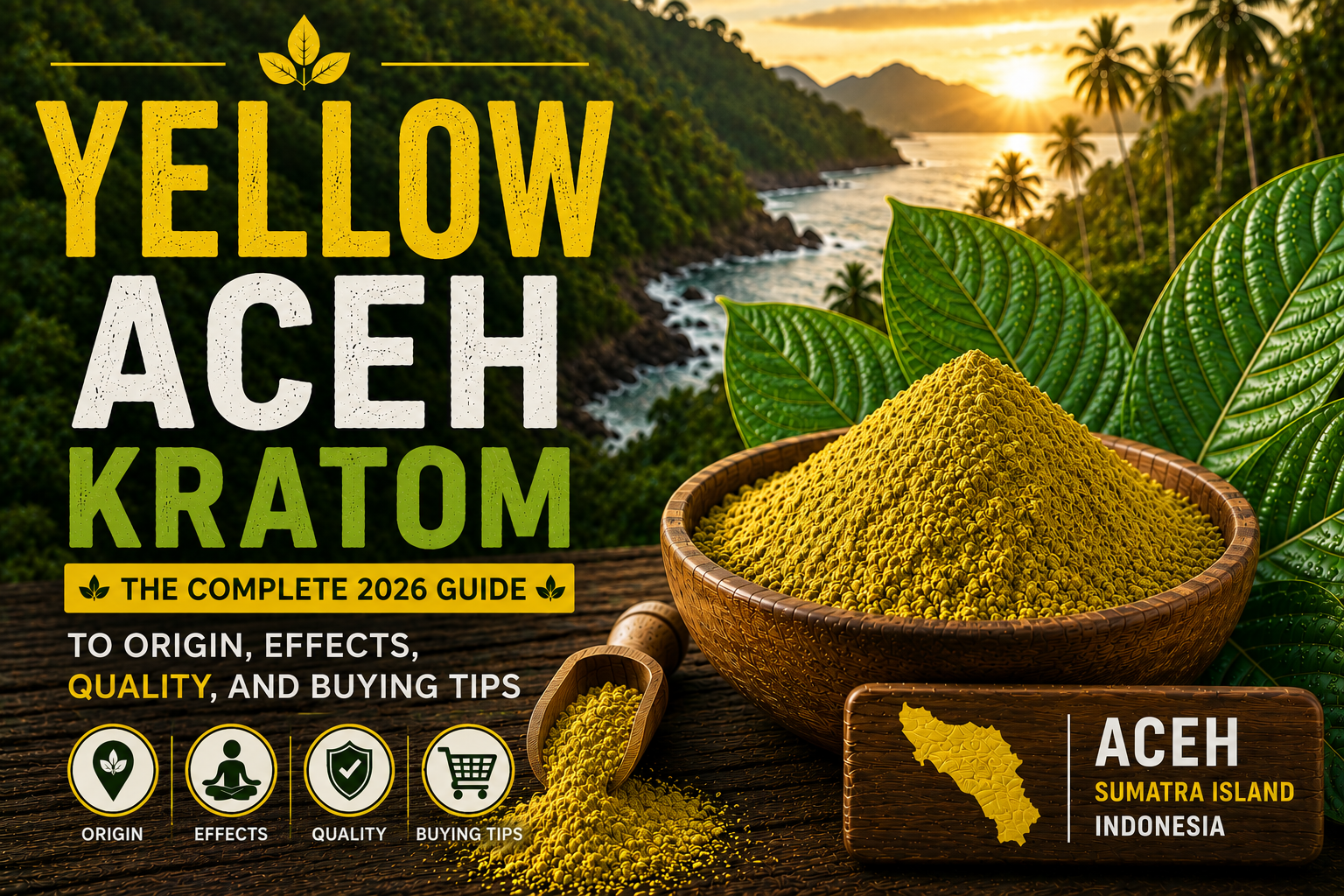
Yellow Aceh Kratom is a specialty variety of Mitragyna speciosa — the tropical evergreen tree native to Southeast Asia commonly known as kratom — grown in the Aceh province at the northern tip of Sumatra, Indonesia, and processed using a unique drying or blending technique that produces a lighter, yellow-toned leaf color rather than the traditional red, white, or green.
Much like gold kratom, yellow kratom is generally understood to be a processing-based category rather than a naturally occurring vein color at harvest. Different vendors describe their yellow production methods differently — some use an extended sun-drying process applied to white or green vein leaf, while others describe yellow as a carefully managed blend of two or more vein types dried together. This lack of a single industry-wide standard is one of the most important things to understand before buying Yellow Aceh Kratom.
Aceh’s reputation as a smaller-scale, boutique kratom-growing region — in contrast to more industrialized hubs like Kapuas Hulu in Borneo — carries over directly into its yellow-processed products. Within kratom communities, Yellow Aceh has developed a niche following among users who enjoy trying specialty, small-batch strains that don’t fit neatly into the traditional red-white-green framework.
2. The Origin Story: Aceh, Sumatra
Aceh sits at Indonesia’s westernmost point, a region known for its distinct local culture, volcanic soil, and warm, humid tropical climate — conditions especially well suited to kratom cultivation. Consistent rainfall and rich jungle terrain give Aceh’s kratom trees favorable, stable growing conditions throughout the year.
Compared to larger, more commercialized kratom-producing regions, Aceh has historically relied on smaller, family-run farms rather than large plantations. This matters for Yellow Aceh Kratom in a few specific ways:
- Batch variability. Because yellow processing techniques vary more from producer to producer than traditional vein-color processing, and because Aceh harvests tend to be smaller-scale, batch-to-batch differences can be more pronounced — making lab testing and vendor transparency especially important.
- Boutique, niche appeal. Yellow-processed Aceh kratom is even more of a specialty product than the standard vein colors, and this relative rarity has helped it build a small but dedicated following among enthusiasts specifically seeking it out.
Aceh farmers have grown and processed kratom for generations, and the region’s willingness to experiment with different drying and blending techniques — including the methods used to produce yellow kratom — is frequently cited by vendors as part of what gives Aceh-grown specialty strains their distinct character.
3. How Yellow Vein Kratom Is Made
To understand Yellow Aceh Kratom, it helps to first understand how it differs from the three traditional vein classifications, as well as from gold kratom, its closest specialty relative.
- White vein leaves are harvested earlier in maturity and dried with limited light exposure, associated with a brighter, more stimulating alkaloid profile.
- Green vein leaves are harvested at a middle point of maturity and dried with partial light exposure, producing a more balanced effect profile.
- Red vein leaves are harvested at full maturity and dried with more direct heat or light exposure, associated with a calming, relaxing profile.
- Gold vein is typically produced by extending the fermentation or drying process of red or green vein leaf.
- Yellow vein is generally described as a separate specialty technique — often involving a longer, more controlled sun-drying process applied to white or green vein leaf, or in some cases a deliberate blend of multiple vein types dried together to achieve a specific color and effect balance.
Because there’s no single, universally agreed-upon definition of “yellow” kratom across the industry, different vendors describe their Yellow Aceh production methods somewhat differently. Some emphasize a longer curing time than green vein processing; others describe a specific fermentation technique distinct from how gold kratom is made. This is part of why reading a vendor’s specific description of their process — rather than assuming all “Yellow Aceh” listings are produced identically — is especially important with this strain.
4. Alkaloid Profile: What Makes Aceh Kratom Unique
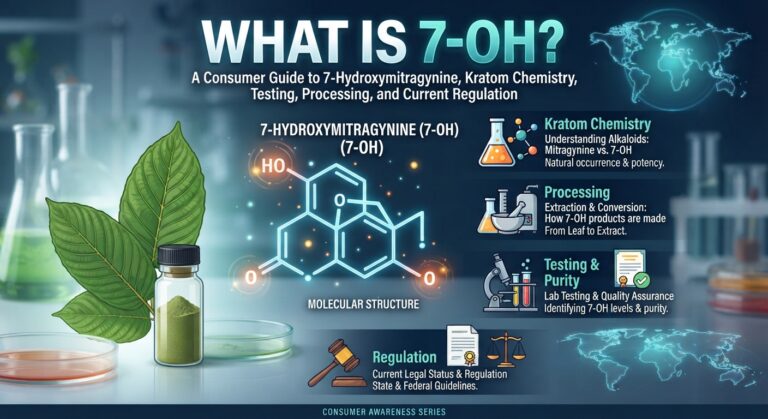
Kratom leaves naturally contain more than 40 alkaloids, with mitragynine and 7-hydroxymitragynine being the two most studied and most frequently referenced in kratom research and lab testing. These compounds are central to why kratom continues to attract both consumer interest and regulatory attention.
The specialty processing methods used to produce yellow vein kratom are believed by some producers to shift the alkaloid ratio compared to the base leaf used, though — as with gold kratom — the extent of this shift can vary significantly depending on the specific technique and duration used by each farm.
Environmental factors also matter significantly: soil composition, humidity, rainfall, and harvest timing all influence alkaloid content, and Aceh’s volcanic soil and humid jungle climate are frequently cited by growers as giving Aceh-grown kratom — including yellow-processed batches — a distinct signature compared to kratom grown in Borneo, Bali, or Malaysia.
Reputable vendors selling Yellow Aceh Kratom typically publish Certificates of Analysis (COAs) from independent third-party labs, covering:
- Mitragynine concentration
- 7-hydroxymitragynine concentration
- Heavy metal screening (lead, arsenic, cadmium, mercury)
- Microbial and pathogen testing (salmonella, E. coli, yeast, mold)
Because yellow kratom is one of the least standardized categories in the market, checking for a batch-specific COA — and reading the vendor’s specific process description — is especially important when shopping for Yellow Aceh Kratom.
5. Reported Effects of Yellow Aceh Kratom
It’s important to be precise here: kratom is not FDA-approved for any medical condition, and the following reflects anecdotal reports commonly shared across kratom forums, review sites, and vendor communities — not clinical or scientific claims.
Users discussing Yellow Aceh Kratom online commonly describe it using these recurring themes:
- Gentle, moderate energy — often described as lighter than white vein strains but with more noticeable lift than red vein kratom.
- Balanced mood support — a theme that comes up frequently in discussions of yellow-processed strains generally.
- Smooth, easygoing feel — many users describe Yellow Aceh as one of the more mellow specialty strains, without the heavier sedation associated with red vein or the sharper stimulation associated with white vein.
- Gradual onset and comedown — frequently mentioned as a defining characteristic of yellow kratom’s extended drying process.
- Daytime versatility — some long-time users describe Yellow Aceh as an approachable option that doesn’t feel too strong in either direction.
Because body chemistry, tolerance, hydration, and product quality all vary from person to person, individual experiences can differ significantly — and this variability tends to be even more pronounced with less standardized specialty strains like Yellow Aceh. Responsible use starts with going slowly, understanding personal sensitivity, and never combining kratom with alcohol, prescription medications, or other substances without first consulting a doctor.
6. Yellow Aceh vs. Green, Red, White, and Gold Aceh
Since Aceh now produces all the traditional vein colors plus both major specialty categories, comparing them side by side helps clarify what makes Yellow Aceh distinct.
White Aceh Kratom Harvested earlier and dried to preserve a brighter alkaloid mix, frequently associated with strong energy, alertness, and motivation.
Green Aceh Kratom Harvested at a middle point of maturity, offering a balanced profile that’s less stimulating than white and less sedating than red.
Red Aceh Kratom Harvested at full maturity and dried with more heat and light exposure, commonly associated with a calming, relaxing profile.
Gold Aceh Kratom Produced through an extended fermentation process, typically starting from red or green leaf, resulting in a smoother, more rounded profile than the base strain.
Yellow Aceh Kratom Produced through a distinct specialty drying or blending process, typically associated with a gentler, more balanced profile that many users describe as falling somewhere between white and green in terms of energy, but with a smoother overall feel attributed to its extended processing.
Many long-time users describe Yellow Aceh as an interesting middle-ground option for people who want a bit more lift than green vein kratom typically offers, without going all the way to the more intense stimulation associated with white vein.
7. Yellow Aceh vs. Other Popular Yellow Strains
Aceh isn’t the only region producing yellow-processed kratom, and comparing it to other well-known yellow strains helps put it into useful context for shoppers.
Yellow Sumatra One of the more commonly available yellow strains, often praised for a smooth, mellow profile. Yellow Aceh is frequently compared to it directly, since both are grown on the island of Sumatra, though Aceh’s smaller-batch farming practices are often cited by vendors as producing a slightly more refined character.
Yellow Bali Known for a more relaxed overall profile, since Bali-grown strains generally trend toward the calmer end of the spectrum. Yellow Aceh is sometimes described by users as having a bit more noticeable lift by comparison.
Yellow Borneo Recognized for a long-lasting, mellow profile. Yellow Aceh is often compared favorably here, with some users noting a cleaner, brighter character in Aceh-grown batches.
Yellow Maeng Da Generally associated with a stronger overall profile, since Maeng Da strains across all colors tend to be marketed as more potent. Yellow Aceh is sometimes described as gentler and more approachable by comparison.
These comparisons reflect recurring patterns seen across user reviews, forum discussions, and vendor descriptions rather than scientific rankings. Because yellow kratom lacks a standardized production method across the industry, individual results can vary even more than with traditional vein-color strains.
8. Who Tends to Reach for Yellow Aceh Kratom
Based on how it’s marketed and discussed across kratom communities, Yellow Aceh tends to attract:
- People looking for a gentler, more approachable specialty strain compared to gold or red vein kratom
- Long-time kratom users curious about trying regional variations of less common specialty categories
- Buyers who specifically seek out Aceh-grown batches for their described boutique, small-farm character
- People who want a strain that sits between green vein balance and white vein stimulation without leaning too far in either direction
As with any botanical, individual goals, tolerance, and body chemistry play the biggest role in determining what works for any one person, and there’s no single “best” strain that performs identically across different users.
9. Quality, Lab Testing, and Why It Matters
The kratom market remains unregulated by the FDA, and this is especially relevant for specialty categories like yellow kratom, where processing methods vary more from producer to producer than they do with standard vein colors — and even more than with gold kratom, which at least has a somewhat more consistent fermentation-based definition. This makes quality verification one of the most important topics for anyone shopping for Yellow Aceh Kratom in 2026.
Here’s what serious buyers look for:
Third-party lab testing. Reputable vendors test every batch for heavy metals, microbial contamination, and alkaloid concentration, and they make Certificates of Analysis available directly on the product page or upon request.
American Kratom Association (AKA) GMP compliance. Some sellers participate in Good Manufacturing Practices qualification programs, involving audited handling, packaging, and labeling standards.
Batch and harvest transparency. Trustworthy vendors specify harvest region, processing method, batch number, and testing date rather than relying on vague or unverifiable marketing language — this is especially critical for yellow kratom, where “yellow” can mean different things depending on the vendor.
Independent reviews across multiple platforms, not just testimonials hosted on the seller’s own website.
Clear labeling, including batch numbers, net weight, and ideally a “best by” or expiration date.
Skipping this step is one of the most common — and riskiest — mistakes new buyers make, particularly with a specialty strain where processing claims are harder to verify than with traditional vein-color products.
10. Kratom Legality in 2026: A Quick Overview
Kratom’s legal status remains a patchwork across the U.S. and internationally, so treat this section as a general starting point rather than a legal guarantee.
- Kratom is legal at the federal level in the United States, but individual states — and in some cases individual cities — have enacted their own bans or restrictions.
- States that have historically restricted or banned kratom include Alabama, Arkansas, Indiana, Rhode Island, Vermont, and Wisconsin, though some jurisdictions have moved toward regulating rather than banning the product through Kratom Consumer Protection Acts (KCPA).
- Internationally, kratom’s legal status varies widely, including restrictions in parts of Southeast Asia where the plant originates, alongside more permissive rules in other countries.
- Because this regulatory landscape continues to shift, anyone interested in buying or possessing Yellow Aceh Kratom should check current state or national laws before making a purchase.
11. How to Choose a Reputable Kratom Vendor
With so many kratom sellers competing online, here’s a practical checklist to apply to any vendor selling Yellow Aceh Kratom:
- Look for lab-tested products with published, verifiable Certificates of Analysis.
- Check for AKA GMP-qualified vendor status, if available.
- Read independent, third-party reviews rather than relying only on testimonials on the vendor’s own site.
- Compare pricing — prices well below the market average can be a red flag for quality issues, especially for a specialty product like yellow kratom.
- Check return and satisfaction policies before purchasing.
- Look for a clear description of the specific processing method used — since “yellow” isn’t standardized, ask or look for details on how the vendor actually produces it.
- Avoid vendors making explicit medical claims, since legitimate sellers typically avoid language suggesting kratom treats, cures, or prevents any disease.
- Evaluate shipping and packaging practices, since proper sealing and moisture control directly affect product freshness.
12. Storage and Freshness Tips
Like most dried botanicals, yellow kratom quality can degrade over time if it isn’t stored properly. General best practices include:
- Keeping kratom powder or leaf in an airtight container
- Storing in a cool, dry, dark place away from direct sunlight
- Avoiding humidity, which can reduce potency and encourage mold growth
- Buying only what you’ll reasonably use within a few months rather than stockpiling large quantities
- Watching for changes in smell, color, or texture, which can signal degradation
13. Common Mistakes First-Time Buyers Make
- Assuming “yellow” means the same thing across every vendor, when processing methods can vary significantly from one producer to another
- Choosing based on price alone, without checking lab testing or vendor reputation
- Not checking state or local legal status before ordering
- Expecting effects identical to gold kratom, when yellow and gold are produced using different specialty techniques
- Combining kratom with alcohol or other substances without medical guidance
- Skipping a small trial order before committing to a large purchase from an unfamiliar vendor, especially with a less standardized specialty strain
14. Frequently Asked Questions
Is Yellow Aceh Kratom a natural vein color like red, white, or green? No. “Yellow” refers to a specialty processing method — typically an extended drying technique or a blend of vein types — rather than a naturally occurring vein color at harvest.
Is Yellow Aceh Kratom the same as Gold Aceh Kratom? No, though they’re often confused. Gold kratom is generally produced through extended fermentation of red or green vein leaf, while yellow kratom typically involves a different drying process or a deliberate blend of vein types. Descriptions vary by vendor, so it’s worth checking each seller’s specific process.
Is Yellow Aceh Kratom legal? It depends entirely on where you live. Kratom is legal at the U.S. federal level but restricted in several states, and legality varies significantly by country. Always verify current local law before purchasing.
Is Yellow Aceh Kratom good for beginners? Because yellow kratom is one of the least standardized categories in the market, some experienced users recommend trying the traditional red, white, or green vein Aceh strains first to establish a baseline before exploring specialty processed varieties.
How do I know if a vendor is trustworthy? Look for third-party lab testing, a clear and specific description of the processing method used, verifiable independent reviews, and AKA GMP compliance where available.
Does Yellow Aceh Kratom have any FDA-approved uses? No. Kratom is not approved by the FDA for treating, curing, or preventing any disease. It is sold strictly as a botanical product, not a regulated medication.
Can Yellow Aceh Kratom be combined with other strains? Some experienced users blend strains for specific reasons, but doing so adds another layer of variability. Beginners are generally better off understanding how a single strain affects them before experimenting with blends.
15. Final Thoughts
Yellow Aceh Kratom represents one of the more niche, specialty corners of the kratom market — not a traditional vein color, but a distinct processing technique applied to the same small-batch, boutique farms of northern Sumatra that have made Aceh kratom a name serious enthusiasts seek out by region. Its described gentleness, balance, and smooth onset are a big part of why it continues to draw comparisons to other yellow strains like Sumatra, Bali, Borneo, and Maeng Da.
That said, because “yellow” is one of the least standardized terms in the kratom industry, extra diligence matters even more here than with gold kratom or the traditional vein-color products. Responsible buyers should prioritize transparency — lab testing, specific processing details, and vendor reputation — over marketing language alone. Whether you’re exploring specialty kratom for the first time or you’re a long-time buyer comparing regional yellow strains, taking the time to verify quality and check local legality will always matter more than chasing the lowest price or the boldest claim.
This article is for informational purposes only and does not constitute medical advice. Kratom products are not evaluated by the FDA for safety or efficacy. Consult a licensed healthcare professional and verify your local laws before making any purchasing decisions.