Reviewed by Kratom Verdict Editorial Team
Last Updated: July 2026
Estimated Reading Time: 5 minutes
Guide Type: Independent Editorial Strain Guide
Research Basis: Publicly available botanical information, third-party laboratory transparency, publicly available regulatory resources, scientific literature, and independent editorial research.
What Is Yellow Hulu Kapuas Kratom?
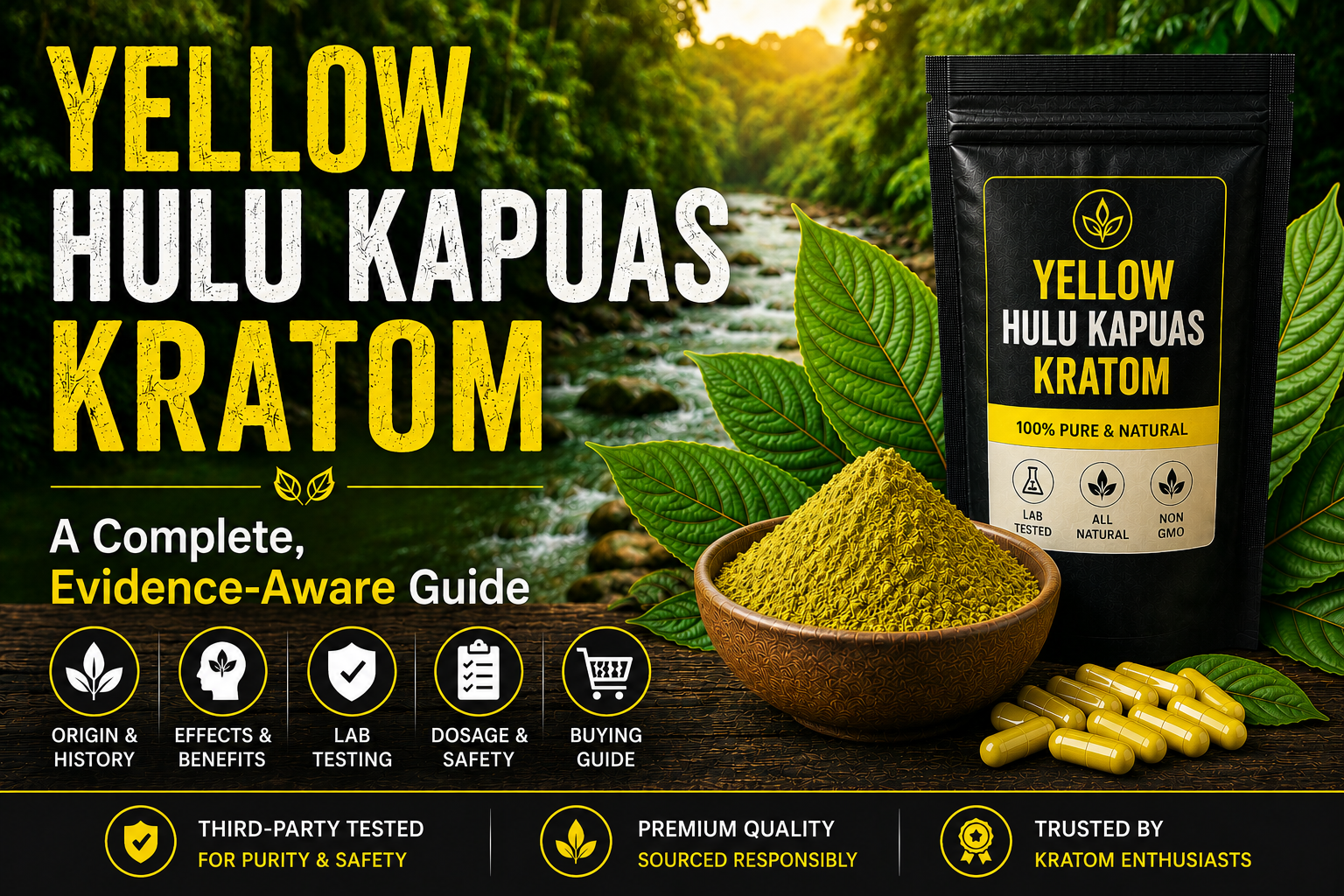
Yellow Hulu Kapuas kratom is a specialty variety of Mitragyna speciosa sourced from the remote Hulu Kapuas region along the Kapuas River in West Kalimantan, Borneo — the same area behind the red, green, white, and gold Hulu Kapuas strains. Like gold, “yellow” isn’t a naturally occurring leaf-vein color. It’s created through a specific post-harvest drying and fermentation process that vendors say gives the leaf its golden-yellow appearance and shifts its alkaloid profile compared to unprocessed strains from the same region.
Because the underlying leaves are already limited by the region’s remote, low-volume harvest, and the yellow process adds an extra production step, genuine Yellow Hulu Kapuas is considered a rare, specialty product — one that’s also frequently blended or mislabeled by vendors, since there’s no industry-wide standard for what “yellow” processing means.
Origin and Processing
Yellow strains are typically produced by fermenting or extending the drying time of leaves that would otherwise be sold as white, green, or red vein kratom, blending multiple vein colors, or using a specific sun-drying technique — the exact process differs by producer. Because there’s no standardized definition across the industry, two products both labeled “Yellow Hulu Kapuas” can be made differently and may not have consistent effects.
Reported Effects
Kratom is not FDA-approved for any medical use, and claims about Yellow Hulu Kapuas come mostly from user reports and vendor marketing rather than controlled clinical trials. With that caveat, people commonly describe:
- A gentle, balanced lift in energy paired with a calmer mood
- Effects described as less intense or “smoother” than typical red or white strains
- A sense of focus without strong stimulation
As with the region’s other strains, individual results vary considerably based on tolerance, body chemistry, and product quality — and because processing methods aren’t standardized, results may vary more between yellow-labeled products specifically than between more consistently defined red, green, or white strains.
How Yellow Hulu Kapuas Compares to Other Hulu Kapuas Strains
| Strain | Commonly Reported Character |
|---|---|
| Yellow Hulu Kapuas | Mild, balanced energy and mood support; described as gentler/smoother |
| Gold Hulu Kapuas | Relaxing, with mild sociability; smoother than standard red |
| Red Hulu Kapuas | More calming/sedating |
| Green Hulu Kapuas | Dual-phase — energizing early, relaxing later |
| White Hulu Kapuas | Stimulating, associated with focus and alertness |
These characterizations reflect general vendor and community descriptions, not standardized lab comparisons — this is especially true for yellow strains, given inconsistent processing.
Is Yellow Hulu Kapuas Kratom Legal?
Kratom’s legal status varies by location and continues to shift, so treat this as a general starting point rather than a definitive answer for your area:
- Federal (U.S.): Kratom is not currently a federally scheduled controlled substance and remains unregulated by the FDA, though the DEA has previously considered scheduling it, which adds some uncertainty to the long-term legal landscape.
- State and local: Most U.S. states allow kratom, often with age restrictions (commonly 18+ or 21+), but several states and individual cities or counties restrict or ban it outright.
- Outside the U.S.: Regulation varies widely by country, including within Southeast Asia where kratom is grown.
Because rules can change, verify current state and local law before purchasing or using kratom.
Safety Considerations
- Reported side effects across kratom strains generally include nausea, dry mouth, appetite loss, and constipation; higher amounts have been associated with increased adverse effects and faster tolerance buildup in user reports.
- Regular, heavy use has been associated with tolerance and dependence risk in some users.
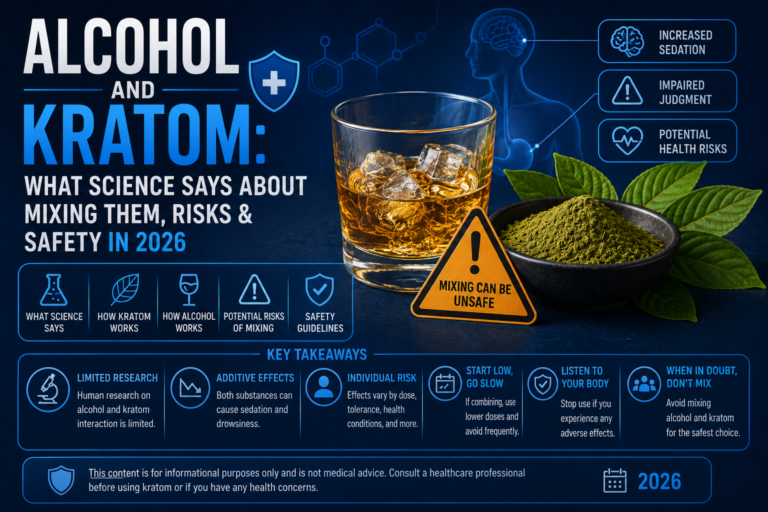
- Combining kratom with other substances, including alcohol or other kratom strains, carries added and not-well-studied risk — go slowly and pay attention to how you respond.
- Because yellow processing isn’t standardized, product consistency and quality vary more between vendors than for more clearly defined strains; the FDA has documented contamination issues (including heavy metals and salmonella) in some tested kratom products historically, making third-party lab testing meaningfully important.
Talk to a healthcare provider before using kratom, especially if you’re pregnant, nursing, managing a health condition (including anxiety), or taking other medications.
Buying Yellow Hulu Kapuas Kratom
Because “yellow” processing varies so much by vendor, it’s worth checking:
- A clear explanation of how the vendor actually produces their yellow strain (fermentation, blending, or drying method)
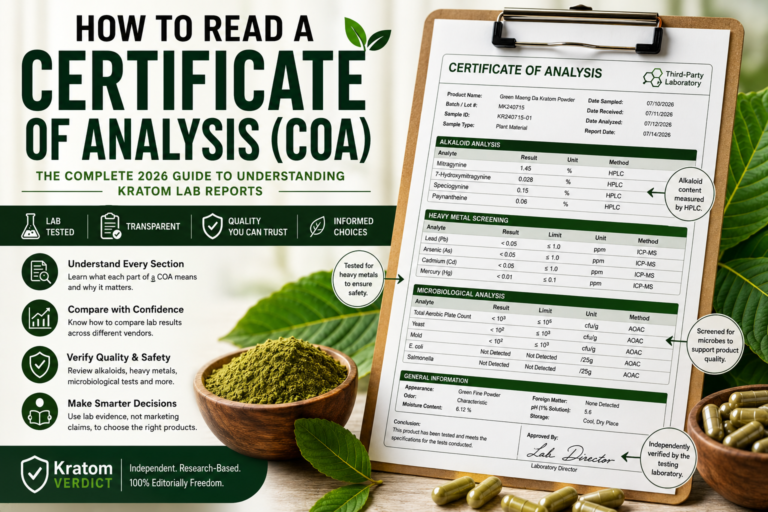
- Batch-specific, third-party Certificates of Analysis (COAs)
- Membership in a recognized quality program, such as the American Kratom Association’s GMP certification
- Transparent sourcing tied to the authentic Hulu Kapuas region
Frequently Asked Questions
Is Yellow Hulu Kapuas a natural vein color? No. Unlike red, green, or white, yellow kratom is created through post-harvest processing — typically fermentation, extended drying, or blending — rather than being a distinct vein color at harvest.
Is Yellow Hulu Kapuas the same across every vendor? Not necessarily. Because there’s no industry-standard definition of “yellow” processing, products labeled this way can differ meaningfully between vendors.
Is Yellow Hulu Kapuas good for anxiety? Some users report a calming effect that they find helpful for stress, but kratom is not an approved treatment for anxiety or any other condition, effects vary by individual, and some users report the opposite — increased anxiety, particularly at higher amounts. Speak with a healthcare provider about anxiety management.
Is kratom addictive? Kratom interacts with opioid receptors, and regular heavy use has been associated with dependence in some users. This remains an active area of research and a genuine risk to weigh.
This article is for general informational purposes only and is not medical, legal, or professional advice. Yellow Hulu Kapuas kratom is not FDA-approved to diagnose, treat, cure, or prevent any disease. Consult a licensed healthcare provider before using kratom, particularly if you are pregnant, nursing, have a health condition, or take other medications. Check your local and state laws, as kratom’s legal status varies by location and can change.