Reviewed by Kratom Verdict Editorial Team
- Last Updated: July 2026
- Estimated Reading Time: 30–38 Minutes
- Article Type: Independent Editorial Buying Guide
- Research Basis: Publicly available manufacturer information, independent laboratory documentation, Certificates of Analysis (COAs), botanical research, quality-control practices, manufacturing standards, and regulatory resources.
Editorial Notice
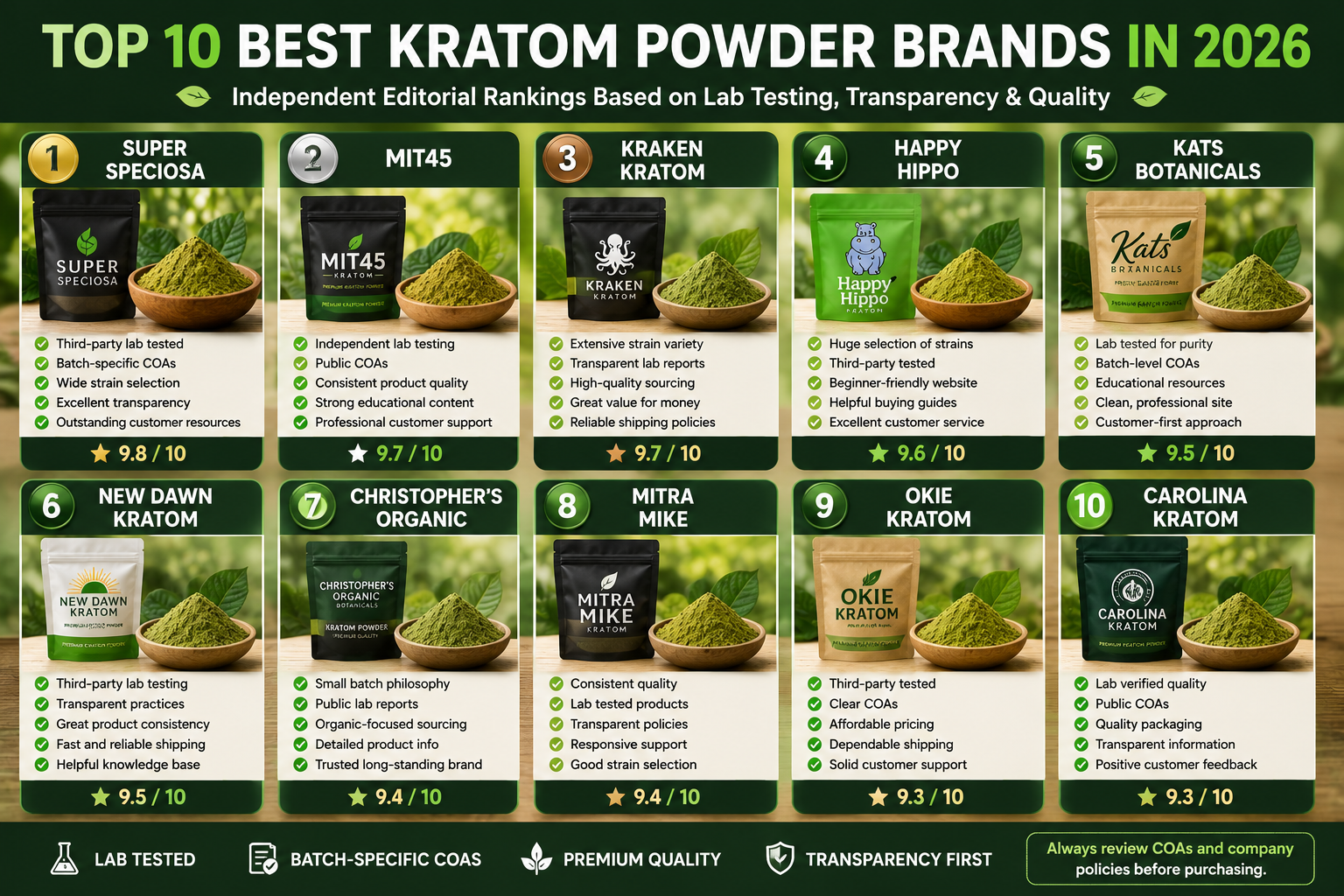
This guide evaluates the Best Kratom Powder Brands using Kratom Verdict’s documentation-first editorial methodology. Rankings and analysis are based on publicly available information, including laboratory testing, Certificates of Analysis (COAs), manufacturing transparency, quality-control procedures, and consumer education. This article does not rank brands by potency or make medical claims.
Research Snapshot
| Category | Summary |
|---|---|
| Product Category | Kratom Powder |
| Primary Evaluation | Transparency & Documentation |
| Laboratory Testing | Independent Third-Party Testing Recommended |
| COA Availability | Batch-Specific Certificates Preferred |
| Manufacturing Standards | GMP & Quality-Control Documentation |
| Editorial Methodology | Documentation-First |
| Medical Recommendations | None |
| Last Editorial Review | July 2026 |
Table of Contents
- Executive Summary
- What Are the Best Kratom Powder Brands?
- How Kratom Verdict Evaluates Powder Brands
- Understanding Kratom Powder
- Botanical Background
- Manufacturing & Processing
- Laboratory Science
- Certificates of Analysis (COAs)
- Vendor Evaluation Framework
- References
- External Authority Resources
- Related Kratom Verdict Guides
- Kratom Verdict Transparency Scorecard
- Editorial Conclusion
Executive Summary
Finding the Best Kratom Powder Brands has become increasingly challenging as the global kratom market continues to expand. Hundreds of companies now sell kratom powder online, yet the quality, transparency, manufacturing standards, and laboratory documentation available from one brand to another can vary significantly. While many businesses promote themselves as offering “premium,” “ultra,” or “highest quality” products, these marketing claims often provide little objective information that consumers can independently verify.
At Kratom Verdict, we believe the Best Kratom Powder Brands should be evaluated using measurable evidence rather than advertising language. Documentation such as independent third-party laboratory testing, batch-specific Certificates of Analysis (COAs), manufacturing transparency, quality-control procedures, and traceable sourcing practices provides consumers with far more meaningful information than promotional descriptions alone. Throughout this guide, every recommendation and educational section follows a documentation-first methodology designed to help readers understand how reputable brands demonstrate transparency.
Another challenge when researching the Best Kratom Powder Brands is that there is no universally accepted scientific definition of what makes one brand “the best.” Botanical products naturally vary based on cultivation conditions, harvesting practices, processing methods, storage, and manufacturing procedures. Rather than attempting to identify a single perfect company, this guide explains the measurable characteristics shared by brands that consistently publish laboratory reports, provide batch traceability, disclose manufacturing standards, and educate consumers through publicly available documentation.
Consumers should also understand that kratom powder is an agricultural botanical product derived from Mitragyna speciosa, a tree native to Southeast Asia. Because it is a natural botanical material, responsible evaluation extends beyond product appearance or price. The Best Kratom Powder Brands generally invest in raw-material inspection, independent laboratory analysis, quality-control systems, microbiological screening, heavy-metal testing, moisture analysis, and transparent production records that allow consumers to verify the documentation associated with each batch.
This independent guide explores the Best Kratom Powder Brands from a scientific and educational perspective. Rather than focusing on popularity or unsupported marketing claims, we examine the manufacturing processes, laboratory science, Certificates of Analysis (COAs), quality-control systems, and transparency practices that help consumers make informed purchasing decisions. Whether you are researching kratom for the first time or comparing established vendors, this guide aims to provide a comprehensive framework for evaluating documentation, understanding laboratory reports, and recognizing the characteristics shared by the most transparent kratom powder brands operating today.
1. What Are the Best Kratom Powder Brands?
The phrase Best Kratom Powder Brands is widely used throughout the botanical marketplace, but its meaning often varies depending on who is making the claim. From an editorial perspective, Kratom Verdict does not define the Best Kratom Powder Brands by advertising, popularity, or product descriptions alone. Instead, our evaluation focuses on measurable documentation that consumers can independently review before making a purchasing decision.
In practical terms, the Best Kratom Powder Brands are companies that consistently demonstrate transparency throughout their manufacturing and quality-control processes. This includes publishing batch-specific Certificates of Analysis (COAs), using independent third-party laboratories, explaining manufacturing procedures, maintaining traceability, and providing educational resources that help consumers understand the products they are purchasing.
It is important to recognize that kratom powder itself originates from the leaves of Mitragyna speciosa, a tropical tree native to Southeast Asia. After harvesting, the leaves are cleaned, dried, milled into a fine powder, and packaged according to each manufacturer’s production procedures. Although many companies sell products derived from the same botanical species, differences in cultivation, processing, storage, laboratory testing, and documentation can significantly influence how transparent one manufacturer is compared with another.
Throughout this guide, the Best Kratom Powder Brands are evaluated using objective criteria rather than subjective marketing language. Companies that openly publish laboratory reports, provide batch-specific documentation, maintain quality-control systems, and support independent verification generally offer consumers a stronger foundation for making informed purchasing decisions. This documentation-first approach reflects Kratom Verdict’s commitment to independent editorial standards, scientific transparency, and consumer education rather than promotional rankings.
2. How Kratom Verdict Evaluates the Best Kratom Powder Brands
Choosing the Best Kratom Powder Brands requires far more than comparing product names, prices, or advertising slogans. The kratom marketplace contains hundreds of vendors, many of which describe their products using similar promotional language. Words such as “premium,” “ultra,” “highest quality,” or “best-selling” appear frequently throughout the industry, yet these descriptions rarely provide objective evidence that consumers can independently verify.
For this reason, Kratom Verdict developed a documentation-first editorial methodology specifically designed to evaluate the Best Kratom Powder Brands using measurable information rather than marketing claims. Every guide published on Kratom Verdict follows this same framework to ensure consistency, transparency, and editorial independence.
Rather than assigning rankings based on popularity alone, we examine publicly available information that demonstrates a manufacturer’s commitment to quality assurance and consumer transparency. This includes independent laboratory documentation, Certificates of Analysis (COAs), batch traceability, manufacturing standards, quality-control procedures, supplier disclosure, educational resources, and overall documentation practices.
This methodology also recognizes that no single company is perfect. Instead of attempting to identify one universally superior brand, Kratom Verdict encourages consumers to compare documentation across multiple manufacturers and make informed decisions based on evidence rather than promotional messaging.
Editorial Evaluation Criteria
Every company considered among the Best Kratom Powder Brands is reviewed using the following editorial categories.
| Evaluation Area | Why It Matters |
|---|---|
| Independent Laboratory Testing | Demonstrates commitment to objective product analysis |
| Batch-Specific Certificates of Analysis | Improves transparency and traceability |
| Manufacturing Documentation | Explains production standards |
| Quality-Control Procedures | Supports production consistency |
| Batch Traceability | Connects finished products with laboratory reports |
| Consumer Education | Helps buyers understand documentation |
| Label Accuracy | Improves purchasing confidence |
| Transparency Practices | Indicates willingness to disclose manufacturing information |
These categories form the foundation of every Kratom Verdict review and remain consistent across vendor guides, strain guides, and educational articles.
Why Documentation Matters More Than Marketing
One of the largest challenges facing consumers researching the Best Kratom Powder Brands is separating objective information from promotional language. Nearly every manufacturer claims to sell “premium” products, but these descriptions are subjective and often impossible to verify without supporting documentation.
Marketing can introduce consumers to a brand, but it should never replace measurable evidence. Documentation provides tangible information that can be reviewed, compared, and verified independently. A manufacturer that openly publishes batch-specific laboratory reports, explains its quality-control process, and identifies the testing laboratory offers consumers far greater transparency than one relying solely on advertising claims.
When evaluating the Best Kratom Powder Brands, documentation helps answer important questions such as:
- Was this batch independently tested?
- Is a current Certificate of Analysis available?
- Can the laboratory report be matched to the batch number?
- Does the company explain its manufacturing process?
- Are heavy-metal and microbiological analyses included?
- Is the laboratory identified?
- Are testing dates provided?
These questions help consumers move beyond marketing and focus on verifiable information.
Understanding Kratom Powder
To understand what distinguishes the Best Kratom Powder Brands, it is important to first understand kratom powder itself. Kratom powder is produced from the leaves of Mitragyna speciosa, an evergreen tree belonging to the Rubiaceae family, which also includes coffee. Native to Southeast Asia, the tree has been cultivated and harvested for generations in regions such as Indonesia, Malaysia, Thailand, and surrounding areas.
After harvesting, the leaves are cleaned, dried, and milled into a fine botanical powder. Although the finished products sold by different companies may appear similar, significant differences can arise from harvesting methods, drying environments, milling techniques, storage conditions, and quality-control procedures.
The Best Kratom Powder Brands distinguish themselves not by changing the botanical identity of the plant but by documenting every stage of production. This includes transparent sourcing, controlled processing, laboratory verification, and comprehensive batch documentation.
Botanical Background of Mitragyna speciosa
Mitragyna speciosa is a tropical tree that grows naturally in warm, humid climates with abundant rainfall. Mature trees can reach considerable heights and produce broad green leaves that are harvested for commercial processing.
The botanical characteristics of Mitragyna speciosa remain the same regardless of how a finished product is marketed. Whether sold as powder, capsules, or other processed forms, the underlying botanical material originates from the same plant species. Consequently, differences among the Best Kratom Powder Brands generally relate to cultivation, processing, testing, and documentation rather than botanical identity.
Understanding this distinction helps consumers evaluate products based on manufacturing transparency rather than brand-specific marketing narratives.
Regional Sourcing Across Southeast Asia
Many of the Best Kratom Powder Brands source botanical material from regions within Southeast Asia where Mitragyna speciosa has historically been cultivated. These regions differ in climate, rainfall, soil composition, elevation, and agricultural practices, all of which may influence cultivation conditions.
Common sourcing regions include:
- West Kalimantan
- Central Kalimantan
- Kapuas
- Ketapang
- Pontianak
- Aceh
- Riau
- North Sumatra
- South Sumatra
- Malay Peninsula
Commercial names often reference these regions, although the names themselves are not standardized scientific classifications. Instead, they generally indicate geographic origin, commercial tradition, or marketing terminology.
For this reason, Kratom Verdict encourages consumers to focus on documentation rather than assuming that geographic names alone indicate superior quality.
Common Commercial Powder Types
Consumers researching the Best Kratom Powder Brands frequently encounter products marketed using color designations such as Red, Green, White, Gold, or Yellow. These names are widely used throughout the industry, yet they do not represent officially recognized botanical varieties.
Instead, these commercial categories generally reflect processing methods, drying techniques, blending practices, or long-standing marketplace terminology. While manufacturers may use different production methods, consumers should understand that these color names are commercial identifiers rather than formal scientific classifications.
Educational transparency requires distinguishing between botanical facts and marketing conventions. The Best Kratom Powder Brands often provide additional information explaining how their products are processed rather than relying solely on color-based descriptions.
Why Supply Chain Transparency Matters
The journey from harvested leaf to finished kratom powder involves numerous stages, including harvesting, transportation, drying, milling, packaging, laboratory testing, and distribution. Each stage presents opportunities for documentation that help consumers better understand product history.
Manufacturers recognized among the Best Kratom Powder Brands frequently provide information regarding:
- Supplier relationships
- Harvesting regions
- Batch identification
- Processing facilities
- Quality-control checkpoints
- Laboratory submissions
- Packaging procedures
Although not every company discloses the same level of detail, greater transparency generally allows consumers to make more informed comparisons.
Consumer Checklist Before Choosing the Best Kratom Powder Brands
Before selecting a product, consumers should review several important factors beyond price or marketing claims.
Documentation Checklist
✔ Independent third-party laboratory testing
✔ Batch-specific Certificate of Analysis (COA)
✔ Clearly displayed batch number
✔ Heavy-metal screening
✔ Microbiological testing
✔ Manufacturing transparency
✔ Quality-control documentation
✔ Accurate labeling
✔ Accessible customer support
✔ Educational resources
These factors provide a stronger basis for evaluating the Best Kratom Powder Brands than promotional language alone.
6. Laboratory Science Behind the Best Kratom Powder Brands
The Best Kratom Powder Brands distinguish themselves not only through manufacturing practices but also through the quality and transparency of their laboratory documentation. Independent laboratory analysis allows manufacturers to verify production batches using standardized scientific methods rather than relying on promotional descriptions. For consumers, laboratory reports provide measurable information that can be reviewed before purchasing and compared across different vendors.
Kratom Verdict places laboratory science at the center of its documentation-first editorial methodology. Companies that openly publish current laboratory reports, identify the testing laboratory, explain their analytical methods, and provide batch-specific Certificates of Analysis (COAs) generally demonstrate a stronger commitment to transparency than companies offering little or no supporting documentation.
Laboratory testing is particularly important because kratom is an agricultural botanical product. Environmental conditions, cultivation practices, harvesting methods, drying techniques, and storage procedures may influence the characteristics of individual batches. Independent testing documents the specific production lot that was analyzed, helping consumers understand the information associated with the exact product they are considering.
The Best Kratom Powder Brands typically integrate laboratory testing into broader quality-management systems that include raw material inspection, manufacturing controls, batch traceability, and final product verification. Although laboratory testing alone cannot guarantee overall product quality, it remains one of the most valuable tools available for evaluating transparency.
Independent Third-Party Laboratory Testing
Independent laboratory testing is one of the strongest indicators of transparency among the Best Kratom Powder Brands. Rather than relying solely on internal quality checks, reputable manufacturers submit representative production batches to external laboratories that operate independently from the manufacturing facility.
Comprehensive laboratory reports for the Best Kratom Powder Brands may include:
- Botanical identity verification
- Alkaloid profile analysis
- Heavy-metal screening
- Microbiological testing
- Moisture determination
- Batch identification
- Sample traceability
- Laboratory methodology
- Date of analysis
- Laboratory authorization
Publishing these reports allows consumers to review objective analytical data instead of depending entirely on advertising claims.
ISO/IEC 17025 Laboratory Accreditation
Many laboratories used by the Best Kratom Powder Brands operate under ISO/IEC 17025, the internationally recognized standard for testing and calibration laboratories. This accreditation evaluates the laboratory’s competence and quality-management system rather than certifying the kratom product itself.
An ISO/IEC 17025-accredited laboratory generally maintains documented procedures for:
- Equipment calibration
- Method validation
- Sample handling
- Traceability
- Staff competency
- Quality assurance
- Internal audits
- Corrective actions
- Record management
When reviewing laboratory reports, consumers should verify whether the testing laboratory identifies its accreditation status and provides sufficient documentation regarding the analytical methods used.
High-Performance Liquid Chromatography (HPLC)
High-Performance Liquid Chromatography (HPLC) is one of the analytical techniques most frequently referenced by the Best Kratom Powder Brands. HPLC separates naturally occurring compounds within botanical samples, allowing laboratories to identify and quantify individual alkaloids present in the tested batch.
A typical HPLC report may include measurements relating to:
| Analytical Component | Purpose |
|---|---|
| Mitragynine | Primary alkaloid analysis |
| 7-Hydroxymitragynine | Secondary alkaloid analysis |
| Paynantheine | Alkaloid characterization |
| Speciogynine | Botanical profiling |
| Speciociliatine | Additional composition analysis |
These results apply only to the tested production batch and should always be interpreted within the context of the complete Certificate of Analysis.
Liquid Chromatography–Mass Spectrometry (LC-MS)
Some of the Best Kratom Powder Brands publish laboratory reports generated using Liquid Chromatography–Mass Spectrometry (LC-MS). This analytical technique combines chromatographic separation with mass spectrometry to provide detailed characterization of complex botanical materials.
LC-MS may be used to:
- Confirm botanical identity
- Characterize alkaloid composition
- Verify analytical findings
- Improve compound identification
- Support advanced laboratory research
Although not every manufacturer uses LC-MS for routine testing, its inclusion demonstrates an expanded analytical capability.
Ultra-Performance Liquid Chromatography (UPLC)
Ultra-Performance Liquid Chromatography (UPLC) represents another analytical method occasionally referenced by the Best Kratom Powder Brands. Compared with conventional HPLC, UPLC may provide faster separations and increased analytical resolution while maintaining high precision.
Manufacturers that reference UPLC often use it as part of broader laboratory programs designed to support product documentation and batch verification.
ICP-MS Heavy-Metal Screening
Agricultural botanical products may be evaluated for elemental contaminants using Inductively Coupled Plasma Mass Spectrometry (ICP-MS). The Best Kratom Powder Brands frequently publish heavy-metal screening results as part of their Certificates of Analysis.
Commonly screened elements include:
| Element | Laboratory Purpose |
|---|---|
| Lead (Pb) | Heavy-metal screening |
| Arsenic (As) | Heavy-metal screening |
| Cadmium (Cd) | Heavy-metal screening |
| Mercury (Hg) | Heavy-metal screening |
Heavy-metal analysis forms one component of a comprehensive quality-control program and should be reviewed alongside the complete laboratory report.
Microbiological Testing
Chemical analysis alone does not provide a complete picture of product documentation. Many of the Best Kratom Powder Brands also publish microbiological testing results to evaluate potential microbial contamination.
Common microbiological analyses include:
- Total Aerobic Plate Count
- Yeast screening
- Mold screening
- Escherichia coli testing
- Salmonella screening
These analyses contribute to overall documentation and demonstrate additional quality-control measures.
Moisture Analysis
Moisture content plays an important role in botanical storage and manufacturing. Excess moisture may influence storage stability and product preservation. For this reason, the Best Kratom Powder Brands frequently include moisture analysis within their laboratory documentation.
Moisture testing helps manufacturers evaluate:
- Storage stability
- Batch consistency
- Packaging effectiveness
- Production quality
- Long-term preservation
Although moisture analysis represents only one aspect of laboratory evaluation, it contributes to a more complete understanding of the production batch.
7. Certificates of Analysis (COAs)
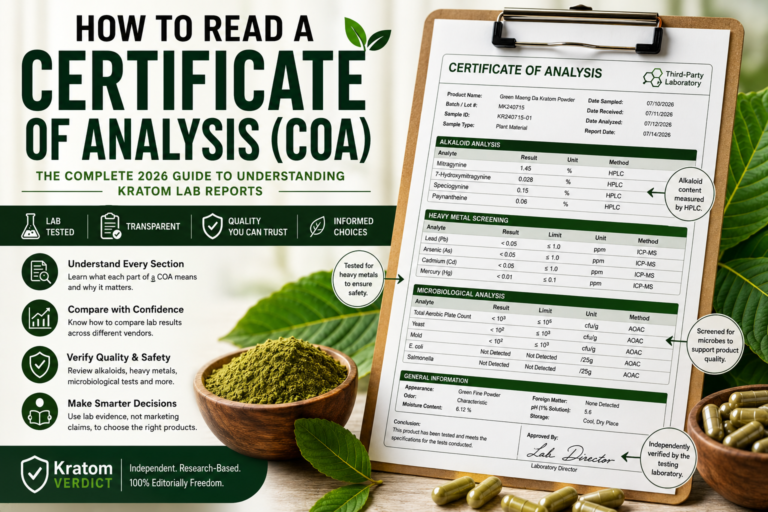
The Certificate of Analysis (COA) remains one of the most valuable transparency documents available when evaluating the Best Kratom Powder Brands. A COA summarizes the laboratory findings for a specific production batch and provides analytical information that consumers can compare across manufacturers.
A comprehensive COA generally contains:
- Laboratory name
- Batch number
- Lot number
- Sample identification
- Date received
- Date analyzed
- Analytical methods
- Laboratory findings
- Authorized approval
- Report reference number
Consumers should confirm that the batch number shown on the product matches the batch number referenced on the Certificate of Analysis.
COA Review Checklist
Before selecting one of the Best Kratom Powder Brands, consumers should verify that the Certificate of Analysis includes:
✅ Matching batch number
✅ Laboratory identification
✅ Date of analysis
✅ Analytical methodology
✅ Heavy-metal screening
✅ Microbiological testing
✅ Moisture analysis
✅ Authorized laboratory approval
✅ Complete batch-specific documentation
A complete COA provides substantially more information than generalized quality claims or promotional language.
Common COA Red Flags
Not every laboratory report offers the same level of transparency. Consumers should carefully review Certificates of Analysis and remain cautious when encountering:
- Missing batch numbers
- Undated reports
- Missing laboratory information
- Generic certificates used across multiple products
- Incomplete analytical methods
- Missing authorization
- Unverifiable documentation
- Edited or partially obscured reports
These issues may limit the usefulness of the documentation and warrant additional due diligence.
8. Kratom Verdict Vendor Evaluation Framework
To consistently evaluate the Best Kratom Powder Brands, Kratom Verdict uses a documentation-based framework rather than popularity rankings.
| Evaluation Category | Editorial Weight |
|---|---|
| Independent Laboratory Testing | Essential |
| Batch-Specific COAs | Essential |
| Manufacturing Transparency | Essential |
| Heavy-Metal Screening | High |
| Microbiological Testing | High |
| Quality-Control Documentation | High |
| Batch Traceability | High |
| Educational Resources | High |
| Consumer Transparency | High |
| Accurate Product Labeling | High |
Manufacturers that consistently provide this documentation demonstrate a stronger commitment to transparency and consumer education.
References
The information presented in this guide is based on publicly available scientific literature, botanical references, manufacturing documentation, laboratory standards, and regulatory resources. Readers are encouraged to consult original source materials when reviewing laboratory methodologies and industry guidance.
External Authority Resources
Readers who wish to learn more about Best Kratom Powder Brands, botanical science, laboratory testing, Certificates of Analysis, and current regulatory developments are encouraged to review the following authoritative resources.
Government & Regulatory Resources
Industry Standards
Botanical References
Kew Science – Plants of the World Online
Scientific Literature
Laboratory Standards
International Organization for Standardization (ISO)
Related Kratom Verdict Guides
Kratom Fundamentals
- What Is Kratom? (2026): The Complete Beginner’s Guide
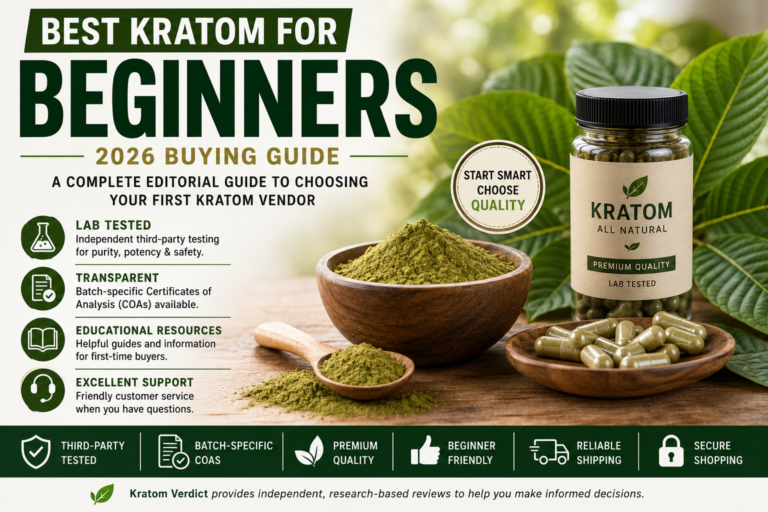
- Kratom Buying Guide (2026)
- Kratom Safety & Side Effects (2026)
- Kratom Legality Guide (2026)
Laboratory & Transparency
- Kratom Alkaloids Explained
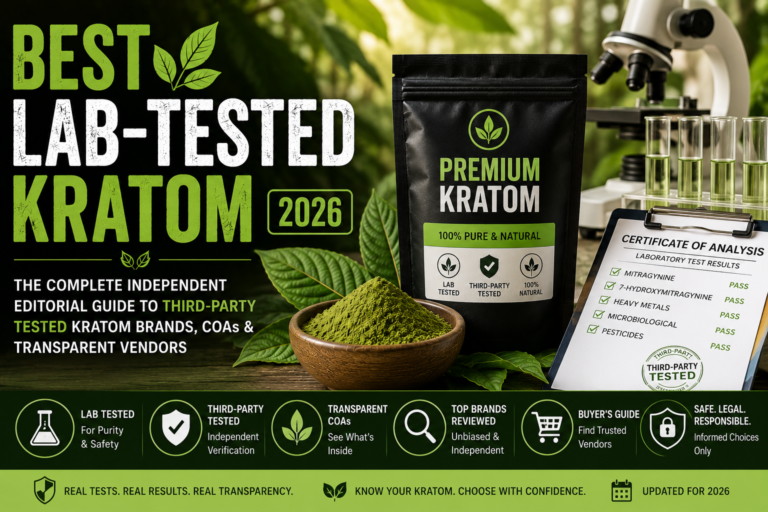
- Kratom Lab Testing Explained
- Third-Party Lab Testing Explained
- How to Read a Kratom Certificate of Analysis (COA)
- How to Verify a Kratom COA
- AKA GMP Certification Explained
Related Indo Kratom Guides
Related Comparison Guides
- Gold Kratom vs. Yellow Kratom
- White Kratom vs. Green Kratom
- Bali vs. Maeng Da Kratom
- Borneo vs. Sumatra Kratom
- Thai vs. Malay Kratom
Vendor Transparency Guides
- How to Identify a Trusted Kratom Vendor
- How to Evaluate Kratom Vendors
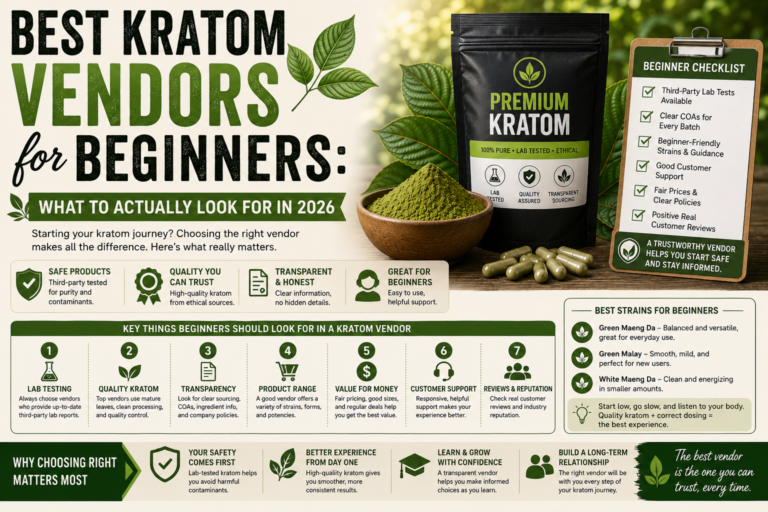
- Best Kratom Vendors for Beginners
- Full Spectrum Kratom Explained
- Kratom Extract Powder Explained
- Enhanced Kratom Powder Guide
Kratom Verdict Transparency Scorecard
| Category | Status |
|---|---|
| Independent Laboratory Testing Explained | ✅ |
| ISO/IEC 17025 Standards Covered | ✅ |
| HPLC Analysis Explained | ✅ |
| LC-MS & UPLC Overview | ✅ |
| ICP-MS Heavy-Metal Screening | ✅ |
| Microbiological Testing | ✅ |
| Moisture Analysis | ✅ |
| Certificate of Analysis (COA) Guide | ✅ |
| COA Review Checklist | ✅ |
| Vendor Evaluation Framework | ✅ |
| External Authority Resources | ✅ |
| Internal Educational Resources | ✅ |
| Documentation-First Methodology | ✅ |
Overall Editorial Transparency Rating
★★★★★ 5/5 – Comprehensive Independent Educational Guide
Editorial Conclusion
Selecting the Best Kratom Powder Brands requires careful evaluation of documentation rather than reliance on marketing language or popularity alone. Throughout this guide, Kratom Verdict has emphasized a documentation-first methodology that prioritizes independent laboratory testing, batch-specific Certificates of Analysis (COAs), manufacturing transparency, quality-control systems, and publicly available educational resources. These objective criteria provide consumers with a stronger foundation for comparing products than promotional claims.
The Best Kratom Powder Brands are typically those that demonstrate a consistent commitment to transparency by publishing current laboratory reports, maintaining batch traceability, explaining manufacturing practices, and supporting consumers with accessible documentation. While no editorial guide can determine which product is right for every individual, measurable evidence allows readers to make more informed comparisons based on facts rather than advertising.
As the kratom industry continues to evolve, transparency is likely to become an increasingly important standard for both manufacturers and consumers. Companies that invest in independent testing, comprehensive documentation, and clear educational resources are better positioned to build trust over time. By applying the evaluation framework outlined in this guide, readers can assess the Best Kratom Powder Brands using verifiable information and consistent editorial criteria, supporting informed purchasing decisions grounded in transparency and scientific documentation rather than marketing alone.