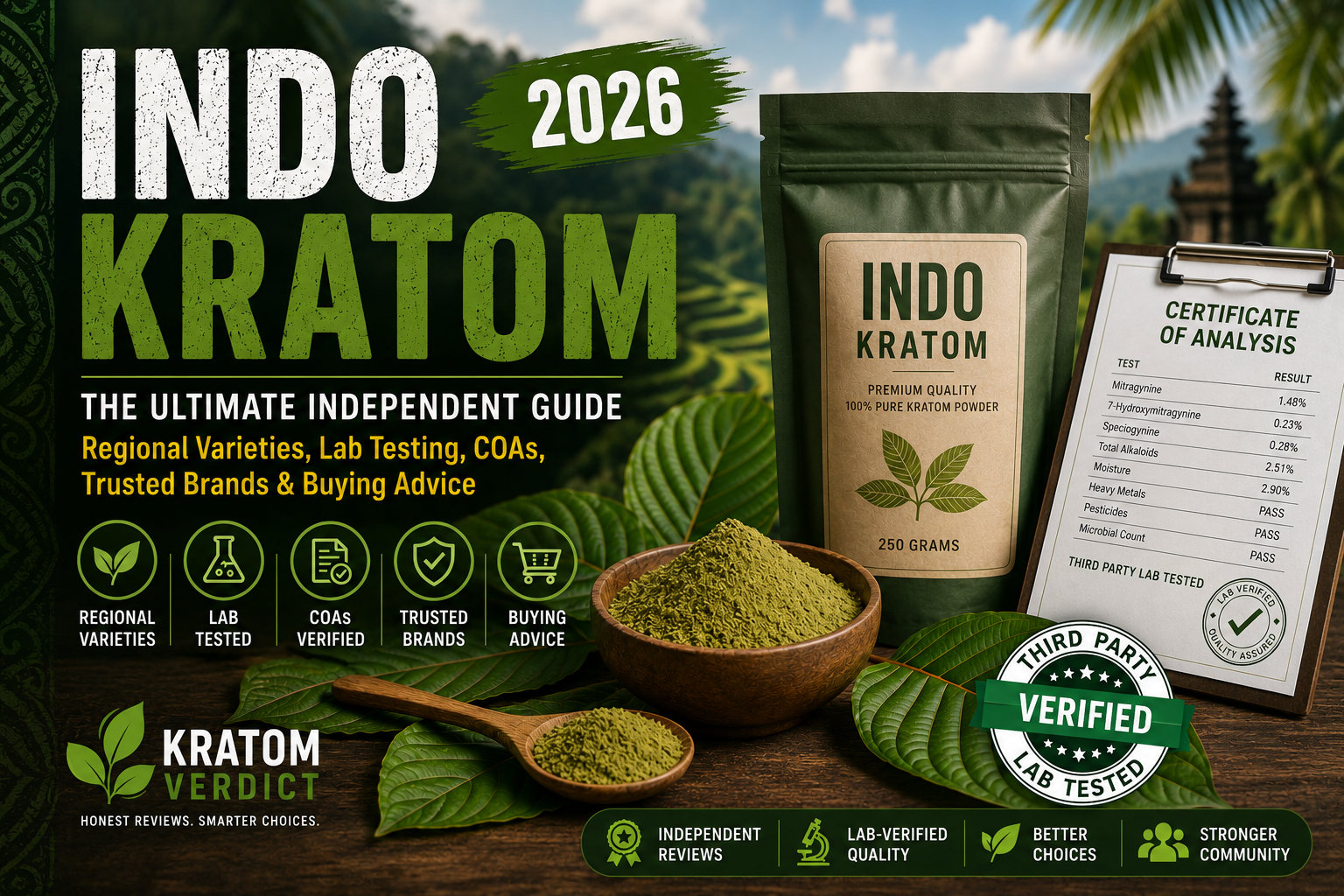
- Reviewed by Kratom Verdict Editorial Team
- Last Updated: July 2026
- Estimated Reading Time: 18–22 minutes
- Guide Type: Independent Editorial Strain Guide
- Research Basis: Publicly available botanical information, third-party laboratory transparency, publicly available regulatory resources, scientific literature, and independent editorial research.
Research Methodology
This guide is based on botanical references, peer-reviewed scientific literature, publicly available laboratory documentation, regulatory resources, quality-management standards, and educational material relating to Mitragyna speciosa. It is intended to help readers understand documentation, transparency, manufacturing practices, and quality evaluation rather than promote any specific product.
Editorial Policy
Kratom Verdict publishes educational content designed to distinguish documented evidence from commercial marketing claims. Where scientific evidence is limited or evolving, that uncertainty is stated rather than filled with speculation.
Medical Disclaimer
This article is provided for educational purposes only. It does not constitute medical advice, diagnosis, or treatment. Readers should consult a qualified healthcare professional regarding medical questions.
Affiliate Disclosure
Some pages on Kratom Verdict may contain affiliate links. Any affiliate relationships are disclosed separately and do not influence our editorial analysis or the information presented in this guide.
Research Snapshot
| Research Category | Summary |
|---|---|
| Botanical Species | Mitragyna speciosa |
| Botanical Family | Rubiaceae |
| Commercial Classification | Indo Kratom |
| Scientific Recognition | Commercial marketplace name, not a separate botanical species or officially recognized cultivar |
| Primary Regions Discussed | Indonesia and other documented Southeast Asian sourcing regions |
| Laboratory Testing | Independent third-party testing is recommended |
| Preferred Laboratory Standard | ISO/IEC 17025 Accredited Laboratories |
| Key Documentation | Certificate of Analysis (COA), batch number, contaminant screening, analytical methods |
| Main Focus | Botanical background, regional sourcing, manufacturing, laboratory science, transparency, and consumer education |
| Intended Audience | Readers seeking an evidence-based understanding of Indo Kratom rather than promotional marketing information |
Executive Summary
Among the many commercial names used within the global kratom marketplace, Indo Kratom is one of the most widely recognized. The designation has become common across retail catalogs, educational websites, and vendor product listings, yet its meaning is often simplified or misunderstood. In many cases, consumers assume that every product labeled “Indo Kratom” represents a uniform botanical variety or follows a standardized production process. Current botanical knowledge and publicly available manufacturing documentation do not support those assumptions.
From a scientific perspective, products marketed as Indo Kratom originate from Mitragyna speciosa, the tropical evergreen tree belonging to the Rubiaceae family. “Indo” is a commercial marketplace designation rather than an officially recognized botanical classification. As a result, production methods, sourcing practices, laboratory documentation, and quality-control systems may differ significantly between manufacturers even when they use the same commercial name.
This guide examines Indo Kratom through an evidence-based lens. Rather than repeating common marketing descriptions, it explores the documented history behind the name, botanical classification, regional sourcing, manufacturing processes, laboratory testing, Certificates of Analysis (COAs), supply-chain transparency, and quality assurance practices. It also explains how readers can interpret publicly available documentation, recognize incomplete laboratory reports, and evaluate products using measurable information instead of branding alone.
Throughout this guide, documented evidence is clearly distinguished from commercial terminology. Where scientific literature provides established information, that evidence is presented directly. Where the marketplace relies on tradition, vendor descriptions, or evolving industry practices, those distinctions are made explicit. The objective is to provide readers with the knowledge necessary to critically evaluate documentation, understand quality systems, and make informed decisions based on transparency rather than promotional claims.
Historical Background
Why the Name “Indo Kratom” Became So Widely Used
The commercial designation Indo Kratom emerged alongside the expansion of the international kratom trade. As global demand increased, vendors required practical naming systems that would allow consumers to distinguish between broad categories of products. Geographic terminology became one of the most common approaches, with names such as Indo, Bali, Malay, Sumatra, Borneo, and Maeng Da appearing throughout retail catalogs.
The word “Indo” is widely understood within the marketplace as a reference to Indonesia, which has become one of the world’s principal sources of commercially cultivated and exported kratom. However, the commercial name should not be interpreted as a guarantee that every stage of cultivation, processing, packaging, and distribution occurred exclusively within Indonesia. Modern botanical supply chains often involve multiple production and logistics stages before products reach international consumers.
As international commerce expanded, additional marketplace designations such as Green Indo, Red Indo, White Indo, Gold Indo, and Yellow Indo also became common. These names help organize products within commercial catalogs, but they are not standardized scientific classifications. Different manufacturers may apply the same terminology while using different sourcing practices, drying methods, or quality-control procedures.
Understanding this distinction is essential because it shifts the focus from branding toward documentation. Rather than assuming that a familiar commercial name guarantees consistent quality, informed readers should evaluate independent laboratory testing, Certificates of Analysis, manufacturing transparency, and batch traceability. These documented factors provide a more reliable basis for comparison than commercial terminology alone.
Botanical Classification
Understanding Indo Kratom begins with separating scientific taxonomy from commercial terminology. Although the name “Indo Kratom” appears on thousands of retail products worldwide, it is not recognized as a separate botanical species or officially described cultivar. From a botanical perspective, products marketed under this name originate from the same species: Mitragyna speciosa.
Scientific taxonomy classifies Mitragyna speciosa as follows:
| Botanical Classification | Description |
|---|---|
| Kingdom | Plantae |
| Clade | Angiosperms |
| Clade | Eudicots |
| Order | Gentianales |
| Family | Rubiaceae |
| Genus | Mitragyna |
| Species | Mitragyna speciosa |
The Rubiaceae family also includes well-known plants such as coffee (Coffea spp.) and gardenia (Gardenia spp.), highlighting the botanical relationships within this diverse plant family.
Unlike agricultural crops with formally registered cultivars, kratom does not currently have internationally standardized commercial varieties recognized through botanical taxonomy. Terms such as Indo, Malay, Bali, Maeng Da, Horn, and Elephant developed through commercial practice rather than scientific classification.
Understanding this distinction helps readers evaluate product descriptions more critically. While commercial names may provide useful marketplace categories, they should not be interpreted as evidence of distinct botanical species, unique genetic varieties, or standardized chemical profiles.
Botanical Characteristics of Mitragyna speciosa
Mitragyna speciosa is a tropical evergreen tree native to parts of Southeast Asia. Under suitable environmental conditions, mature trees may reach significant heights and develop broad canopies with glossy green leaves, clustered flowers, and characteristic seed structures.
Typical botanical characteristics include:
- Evergreen tropical tree
- Broad oval leaves
- Opposite leaf arrangement
- Smooth leaf margins
- Prominent lateral veins
- Small spherical flower clusters
- Rapid vegetative growth in humid environments
These characteristics remain consistent regardless of the commercial name assigned after harvesting.
Commercial Names vs Botanical Science
One of the most common misconceptions within the botanical marketplace is that names such as Indo Kratom represent genetically unique plants. Current scientific literature does not support that conclusion.
Instead, commercial names often reflect one or more of the following:
- Historical trading terminology
- Regional sourcing traditions
- Vendor classification systems
- Drying or processing methods
- Marketing conventions
- Consumer familiarity
Because no internationally recognized authority standardizes these commercial names, two manufacturers may market products under the same designation while sourcing leaves from different regions or following different manufacturing processes.
Geographic Distribution & Regional Sourcing
Indonesia plays a central role in today’s commercial kratom supply chain. The country’s tropical climate, extensive rainforest ecosystems, and long history of cultivating Mitragyna speciosa have contributed to its importance within the international botanical market.
However, Indo Kratom should not be viewed as originating from a single location. Indonesia consists of thousands of islands with diverse climates, soils, and growing conditions. Commercial production may involve multiple provinces, independent farming communities, processors, exporters, and distributors.
Regions commonly referenced within public documentation and vendor descriptions include:
| Frequently Referenced Region | Notes |
|---|---|
| West Kalimantan | One of the most frequently discussed sourcing regions |
| Kapuas Hulu | Frequently referenced in commercial supply chains |
| Ketapang | Mentioned by several exporters |
| Pontianak | Important logistics and export center |
| Borneo (Kalimantan) | Broad geographic designation |
| Sumatra | Sometimes referenced within regional marketing |
The presence of a regional name on packaging does not necessarily verify that every stage of cultivation, processing, testing, and packaging occurred exclusively in that region. Modern supply chains often involve transportation between farms, processors, laboratories, exporters, and international distributors.
Climate and Environmental Conditions
The natural habitat of Mitragyna speciosa is characterized by:
- High annual rainfall
- Warm tropical temperatures
- High humidity
- Nutrient-rich soils
- River systems and floodplains
- Dense forest ecosystems
Environmental factors influence agricultural production, but they should not be interpreted as guarantees of specific product characteristics. Quality ultimately depends on cultivation practices, harvesting, manufacturing controls, and independent laboratory documentation.
Documentation vs Marketplace Terminology
Consumers frequently encounter statements claiming that a product originates from a specific Indonesian province. Responsible manufacturers increasingly support these claims with documentation such as:
- Batch records
- Supplier documentation
- Processing logs
- Export documentation
- Laboratory reports
- Lot identification
When documentation is unavailable, regional descriptions should be understood as commercial information rather than independently verified evidence.
Cultivation & Harvesting
Every product marketed as Indo Kratom begins as an agricultural crop. Before any laboratory testing or commercial packaging occurs, leaves must be cultivated, harvested, transported, and prepared for processing.
Cultivation practices vary considerably between producers. Factors influencing agricultural production include:
- Tree age
- Seasonal rainfall
- Soil conditions
- Temperature
- Harvest timing
- Farm management
- Local agricultural practices
Unlike pharmaceutical manufacturing, agriculture naturally introduces variability. For this reason, documentation and laboratory testing remain essential components of quality evaluation.
Harvest Timing
Producers generally harvest mature leaves suitable for commercial processing according to their own operational practices and production schedules.
Harvest timing may be influenced by:
- Leaf maturity
- Weather conditions
- Workforce availability
- Production demand
- Drying capacity
Public documentation rarely supports claims that a particular harvest schedule guarantees superior quality. Instead, consumers should prioritize manufacturers providing transparent production records and independent testing.
Sustainable Agricultural Practices
Interest in sustainable cultivation continues to grow throughout the botanical industry.
Responsible agricultural programs may include:
- Forest conservation
- Controlled harvesting
- Responsible land management
- Worker safety
- Environmental stewardship
- Long-term cultivation planning
Although sustainability programs vary significantly between producers, greater transparency allows consumers to better understand agricultural practices.
Processing & Manufacturing
Harvested leaves undergo several manufacturing stages before reaching international markets.
Although individual production methods vary between facilities, processing commonly includes:
- Initial inspection
- Sorting
- Drying
- Moisture stabilization
- Milling
- Sieving
- Laboratory sampling
- Packaging
- Warehouse storage
- Export preparation
Each stage contributes to overall product consistency and documentation.
Initial Inspection
Freshly harvested botanical material is commonly inspected before entering the production line.
Inspection procedures may include:
- Removal of damaged leaves
- Visual quality assessment
- Foreign material screening
- Initial moisture evaluation
Documented inspection procedures help strengthen manufacturing quality systems.
Drying
Drying remains one of the most important manufacturing stages because excessive moisture can reduce storage stability and increase the risk of microbial growth.
Manufacturers may use:
- Indoor drying
- Covered drying
- Mechanical airflow
- Controlled ventilation
- Climate-controlled drying rooms
Public scientific literature does not establish one universally accepted drying method specifically associated with Indo Kratom.
Milling and Particle Size Control
After drying, botanical material is milled into powder suitable for packaging and laboratory analysis.
Modern facilities frequently employ:
- Stainless-steel milling systems
- Particle-size screening
- Sieving
- Dust-control systems
- Equipment sanitation procedures
Consistent particle size improves laboratory sampling because analytical results more accurately represent the production batch.
Moisture Control
Maintaining appropriate moisture content helps preserve botanical material during storage and transportation.
Manufacturers may monitor moisture throughout production to reduce the likelihood of degradation during warehousing or export.
Moisture analysis is often included as part of broader quality-assurance programs.
Equipment Sanitation
Responsible manufacturing includes documented sanitation procedures designed to reduce contamination risks.
Typical sanitation programs may include:
- Scheduled equipment cleaning
- Production-line inspections
- Employee hygiene procedures
- Cross-contamination controls
- Cleaning verification records
These practices contribute to stronger manufacturing consistency and quality assurance.
Packaging Before Export
Packaging represents the final manufacturing stage before products enter distribution.
Professional packaging commonly includes:
- Product identification
- Batch number
- Lot number
- Storage recommendations
- Manufacturer information
- Packaging date
- Traceability information
High-quality packaging also helps protect botanical material from excessive humidity, oxygen exposure, ultraviolet light, and physical contamination throughout transportation.
Why Manufacturing Documentation Matters
Consumers often focus on product names while overlooking manufacturing records. In reality, documented production practices provide a far stronger indication of transparency than commercial branding.
Manufacturers that publish information about cultivation, harvesting, processing, sanitation, laboratory testing, and quality assurance enable readers to evaluate products using measurable evidence rather than marketing language alone.
Laboratory Science
Independent laboratory testing has become one of the most important components of evaluating Indo Kratom products in today’s botanical marketplace. While the commercial name Indo Kratom may describe a product category or sourcing tradition, laboratory testing provides measurable analytical data that helps manufacturers, retailers, and consumers evaluate documentation for a specific production batch.
Unlike marketing descriptions, laboratory analysis relies on validated scientific methods performed under controlled conditions. A comprehensive laboratory program for Indo Kratom may include botanical identity confirmation, alkaloid profiling, heavy-metal screening, microbiological testing, moisture determination, and contaminant analysis. These results are typically summarized within a Certificate of Analysis (COA), allowing consumers to review objective documentation rather than relying solely on product descriptions.
It is important to understand that laboratory testing does not determine whether Indo Kratom is “better” than another commercial designation. Instead, laboratory testing documents what was analyzed in a specific batch, using recognized analytical procedures. This documentation supports transparency and allows readers to compare manufacturers based on published evidence rather than promotional language.
Why Independent Laboratory Testing Matters for Indo Kratom
Independent laboratories provide analytical services that are separate from manufacturing operations. For Indo Kratom, this separation improves transparency because testing is performed by an external laboratory using documented procedures rather than by the manufacturer alone.
A professionally prepared laboratory report for Indo Kratom commonly evaluates multiple quality parameters rather than focusing on a single measurement. Comprehensive reports may include:
- Botanical identity confirmation
- Alkaloid analysis
- Heavy-metal screening
- Microbiological testing
- Moisture analysis
- Sample identification
- Batch documentation
- Laboratory methodology
When manufacturers publish complete laboratory reports, consumers have greater visibility into the documentation supporting a specific batch of Indo Kratom.
ISO/IEC 17025 Laboratory Accreditation
Many manufacturers choose laboratories accredited to ISO/IEC 17025, the internationally recognized standard for testing and calibration laboratories. Although ISO/IEC 17025 accreditation does not certify the quality of Indo Kratom itself, it demonstrates that the laboratory follows documented quality-management procedures when performing analytical testing.
An ISO/IEC 17025 laboratory generally maintains procedures covering:
- Instrument calibration
- Method validation
- Sample handling
- Analyst competency
- Quality-control documentation
- Internal audits
- Record management
- Corrective actions
For consumers evaluating Indo Kratom, accreditation provides additional confidence that laboratory procedures follow internationally recognized testing practices. Accreditation should always be considered alongside the complete laboratory report rather than viewed as the only indicator of transparency.
High-Performance Liquid Chromatography (HPLC)
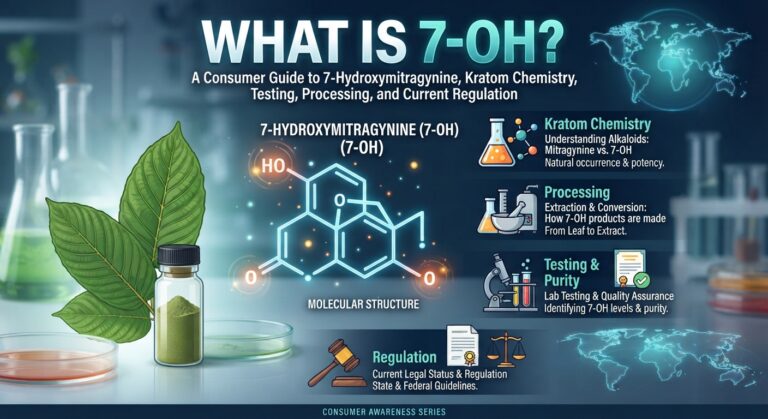
One of the primary analytical techniques used when testing Indo Kratom is High-Performance Liquid Chromatography (HPLC). This analytical method separates naturally occurring compounds within botanical material so laboratories can identify and measure specific alkaloids present in a production batch.
An HPLC report for Indo Kratom may include measurements for several naturally occurring alkaloids:
| Alkaloid | Purpose of Analysis |
|---|---|
| Mitragynine | Primary alkaloid profile |
| 7-Hydroxymitragynine | Secondary alkaloid analysis |
| Paynantheine | Botanical composition |
| Speciogynine | Alkaloid profile |
| Speciociliatine | Botanical characterization |
These analytical values describe the submitted sample and should always be interpreted within the context of the complete laboratory report rather than in isolation.
LC-MS and UPLC Analysis
Some laboratories analyzing Indo Kratom also employ Liquid Chromatography-Mass Spectrometry (LC-MS) or Ultra-Performance Liquid Chromatography (UPLC). These advanced analytical techniques provide additional resolution and sensitivity when evaluating complex botanical materials.
Depending on the laboratory and testing objectives, LC-MS or UPLC may be used to:
- Confirm botanical identity
- Characterize alkaloid profiles
- Improve analytical sensitivity
- Verify compound separation
- Support research applications
The analytical method used should be clearly documented within the Certificate of Analysis so readers understand how laboratory results were generated.
ICP-MS Heavy-Metal Screening
Because Indo Kratom originates from agricultural environments, laboratories often evaluate samples for naturally occurring heavy metals using Inductively Coupled Plasma Mass Spectrometry (ICP-MS).
ICP-MS is capable of detecting very small concentrations of elemental contaminants, including:
- Lead (Pb)
- Arsenic (As)
- Cadmium (Cd)
- Mercury (Hg)
Heavy-metal screening contributes to the overall documentation of a production batch. Results should always be interpreted together with the complete analytical report, applicable reporting limits, and any relevant laboratory notes.
Microbiological Testing
Chemical analysis alone does not provide a complete assessment of Indo Kratom documentation. Comprehensive quality-control programs often include microbiological testing to evaluate microbial contamination that cannot be detected through visual inspection.
Typical microbiological testing panels include:
| Test | Purpose |
|---|---|
| Total Aerobic Plate Count | Overall microbial population |
| Yeast Count | Yeast screening |
| Mold Count | Mold screening |
| Escherichia coli | Indicator organism testing |
| Salmonella spp. | Pathogen screening |
Microbiological testing strengthens documentation by providing additional information about the production batch and manufacturing controls associated with Indo Kratom.
Moisture Content Analysis
Moisture determination is another important component of laboratory testing for Indo Kratom. Excess moisture may influence storage stability, packaging performance, and long-term preservation of botanical material.
Laboratories use validated procedures to determine moisture content so manufacturers can monitor production consistency. Moisture analysis is generally reviewed together with packaging practices, storage recommendations, and transportation conditions when evaluating documentation for Indo Kratom.
Botanical Identity Verification
Before laboratories report analytical findings, many perform procedures to confirm the identity of the submitted botanical material. Identity verification helps ensure that subsequent analytical testing corresponds to the plant material provided for examination.
Identity confirmation for Indo Kratom may involve:
- Botanical examination
- Microscopic evaluation
- Chemical fingerprinting
- Comparison with authenticated reference materials
Identity testing does not establish commercial quality, but it contributes to a more complete documentation package for the analyzed batch.
Understanding the Certificate of Analysis (COA)
A Certificate of Analysis (COA) is one of the most important documents available when evaluating Indo Kratom. Rather than functioning as a marketing brochure, a COA is a laboratory record describing the analytical procedures performed on a specific production batch.
For Indo Kratom, a professional COA helps connect laboratory results to a particular lot or batch through documented identification numbers. Consumers should review the complete report instead of relying on isolated values or promotional summaries.
A comprehensive COA typically includes:
- Laboratory name
- Laboratory accreditation
- Sample identification
- Batch number
- Lot number
- Date received
- Date analyzed
- Report issue date
- Analytical methods
- Laboratory findings
- Authorized approval
Reviewing these sections helps consumers understand the documentation supporting a specific Indo Kratom batch and compare transparency between manufacturers.
References
Peer-Reviewed Scientific Literature
- Singh D, Narayanan S, Vicknasingam B. Traditional and non-traditional uses of Mitragynine (Kratom): A survey of the literature.
- Prozialeck WC, Jivan JK, Andurkar SV. Pharmacology of Kratom.
- Hassan Z, Muzaimi M, Navaratnam V, et al. From Kratom to Mitragynine and Its Derivatives.
- Kruegel AC, Grundmann O. The Medicinal Chemistry and Neuropharmacology of Kratom.
- Cinosi E, Martinotti G, Simonato P, et al. Following “The Roots” of Kratom.
Botanical References
- Mitragyna speciosa botanical classification
- Rubiaceae family documentation
- Tropical botanical references
- Southeast Asian botanical literature
Laboratory References
- ISO/IEC 17025 Testing and Calibration Laboratories
- High-Performance Liquid Chromatography (HPLC)
- Liquid Chromatography-Mass Spectrometry (LC-MS)
- Ultra-Performance Liquid Chromatography (UPLC)
- ICP-MS Heavy Metal Analysis
- Standard microbiological testing procedures
17. External Authority Resources
Readers seeking additional information about Indo Kratom, laboratory testing, botanical science, and regulatory developments may find the following authoritative resources useful.
Government & Regulatory Resources
Industry Standards
Botanical References
Scientific Literature
Laboratory Standards
18. Related Kratom Verdict Guides
Continue your research with these comprehensive educational resources available on Kratom Verdict.
Beginner Guides
- What Is Kratom? (2026): The Complete Beginner’s Guide
- Kratom Buying Guide (2026)
- Kratom Legality Guide (2026)
- Kratom Safety & Side Effects (2026)
Laboratory & Transparency
- Kratom Alkaloids Explained
- Kratom Lab Testing Explained
- How to Read a Kratom Certificate of Analysis (COA)
- How to Verify a Kratom COA
- Third-Party Lab Testing Explained
- AKA GMP Certification Explained
Related Indo Kratom Guides
Related Comparison Guides
- Bali vs. Maeng Da Kratom
- Borneo vs. Sumatra Kratom
- Thai vs. Malay Kratom
- Gold Kratom vs. Yellow Kratom
- White Kratom vs. Green Kratom
Transparency Guides
- Best Kratom Vendors for Beginners
- How to Evaluate Kratom Vendors
- How to Identify a Trusted Kratom Vendor
- Full Spectrum Kratom Explained
- Kratom Extract Powder Explained
- Enhanced Kratom Powder Guide
19. Kratom Verdict Transparency Scorecard
| Transparency Category | Evaluation |
|---|---|
| Botanical Identification | ✓ Documented |
| Commercial Classification Explained | ✓ Yes |
| Regional Sourcing Discussed | ✓ Yes |
| Independent Laboratory Testing Explained | ✓ Yes |
| ISO/IEC 17025 Standards Covered | ✓ Yes |
| Certificate of Analysis (COA) Explained | ✓ Yes |
| HPLC Method Explained | ✓ Yes |
| LC-MS / UPLC Discussed | ✓ Yes |
| ICP-MS Heavy Metal Testing Covered | ✓ Yes |
| Microbiological Testing Explained | ✓ Yes |
| Moisture Analysis Covered | ✓ Yes |
| Supply Chain Transparency | ✓ Covered |
| Vendor Evaluation Framework | ✓ Included |
| Regulatory Overview | ✓ Included |
| Scientific References | ✓ Included |
| External Authority Resources | ✓ Included |
| Educational Purpose | ✓ Independent Editorial Analysis |
Transparency Rating: ★★★★★ (Documentation-Focused Educational Guide)
Editorial Note:
This transparency scorecard evaluates the completeness of documentation and educational coverage presented within this guide. It is not a rating of any specific Indo Kratom product, manufacturer, vendor, or brand.
20. Editorial Conclusion
Indo Kratom remains one of the most widely recognized commercial designations within the global kratom marketplace, yet its widespread use often leads to confusion between marketing terminology and botanical science. Throughout this guide, Indo Kratom has been examined from a documentation-first perspective, emphasizing scientific classification, regional sourcing, manufacturing practices, laboratory testing, Certificates of Analysis (COAs), and supply-chain transparency rather than promotional claims.
Current scientific literature recognizes Mitragyna speciosa as the underlying botanical species, while Indo Kratom functions primarily as a commercial marketplace designation rather than a formally recognized botanical cultivar. For this reason, consumers should avoid relying solely on product names when evaluating quality. Instead, batch-specific documentation, independent laboratory testing, ISO/IEC 17025-accredited laboratories, and complete Certificates of Analysis provide a stronger foundation for informed decision-making.
As laboratory standards, analytical methods, and industry transparency continue to evolve, documentation will likely play an increasingly important role in helping consumers understand the products they purchase. Readers are encouraged to consult the external authority resources listed above, review publicly available scientific literature, and evaluate vendor transparency using measurable documentation rather than marketing language.
At Kratom Verdict, our editorial mission is to provide independent, evidence-based educational resources that distinguish documented information from commercial claims. Every guide is designed to help readers better understand botanical science, laboratory testing, regulatory developments, and transparency standards so they can make informed decisions based on verifiable information rather than assumptions.