- Reviewed by Kratom Verdict Editorial Team
- Last Updated: July 2026
- Estimated Reading Time: 18–22 minutes
- Guide Type: Independent Editorial Strain Guide
- Research Basis: Publicly available botanical information, third-party laboratory transparency, publicly available regulatory resources, scientific literature, and independent editorial research.
Introduction
Few commercial names in the kratom marketplace have achieved the international recognition of Malay Kratom. It appears in vendor catalogs throughout North America, Europe, Australia, and Asia, and is frequently referenced in consumer discussions, educational resources, and marketplace comparisons. Yet despite its popularity, many assumptions surrounding Malay Kratom are based on marketing traditions rather than documented botanical evidence.
One reason for this confusion is that the word “Malay” naturally suggests a direct connection with Malaysia. While the commercial name almost certainly originated from historical associations with the Malay Peninsula and surrounding regions, the modern supply chain is considerably more complex. Products sold under this marketplace designation may involve cultivation, collection, processing, laboratory testing, packaging, and export occurring across different locations within Southeast Asia. As global demand expanded over the past two decades, commercial naming conventions often evolved faster than standardized documentation.
This creates an important distinction between botanical science and marketplace terminology. Botanically, all kratom products originate from Mitragyna speciosa, a tropical evergreen tree belonging to the Rubiaceae family. Scientific literature does not recognize Malay Kratom as a separate botanical species or cultivar. Instead, the name functions primarily as a commercial classification used by growers, processors, exporters, and retailers. Understanding that distinction is essential because it shifts the focus from branding toward measurable indicators such as laboratory testing, Certificates of Analysis (COAs), manufacturing standards, batch traceability, and supply-chain transparency.
Consumer expectations have also changed. Today’s buyers increasingly expect documented evidence rather than promotional descriptions. Independent laboratory testing, ISO/IEC 17025-accredited analytical facilities, contaminant screening, heavy-metal analysis, microbiological testing, and QR-code batch documentation have become important quality indicators throughout the botanical industry. Rather than asking which commercial name sounds most appealing, informed consumers increasingly ask whether the documentation supporting a product is complete, current, and independently verifiable.
This guide therefore approaches Malay Kratom from an evidence-based perspective. Instead of repeating common marketplace claims, it examines what is currently documented about its historical development, botanical background, regional sourcing, commercial naming, laboratory science, manufacturing practices, regulatory landscape, and quality assurance systems. Throughout the article, verified information is clearly distinguished from vendor terminology and long-standing industry traditions. The objective is not to promote a particular product but to help readers understand how to evaluate documentation critically, compare manufacturers objectively, and interpret technical information with confidence.
Why Malay Kratom Became One of the World’s Most Recognized Commercial Names
Unlike many newer marketplace names, Malay Kratom developed alongside the international expansion of the kratom industry. As exports increased, vendors needed memorable commercial categories that consumers could recognize easily. Names associated with geographic regions became particularly useful because they provided a convenient way to organize catalogs, even when production practices differed among suppliers.
Over time, Malay Kratom became associated with a broad family of products marketed under related names such as Green Malay, Red Malay, White Malay, Gold Malay, and Yellow Malay. Although these designations became familiar throughout the marketplace, no universal industry authority established formal standards defining exactly how each product should be classified. As a result, two manufacturers may legitimately use the same commercial name while applying different sourcing practices, drying procedures, or quality-control systems.
For consumers, this means that the commercial designation alone should never be interpreted as proof of identical manufacturing standards or product characteristics. Documentation remains far more important than branding.
Botanical Classification: Separating Science from Marketplace Language
All products marketed as Malay Kratom originate from Mitragyna speciosa, a member of the Rubiaceae botanical family. Scientific classification identifies the species according to internationally accepted taxonomic standards rather than commercial product names.
Commercial terminology evolved independently of botanical taxonomy. Names such as Malay, Bali, Maeng Da, Horn, Sumatra, and Elephant help organize products within the marketplace, but they do not represent officially recognized plant species or cultivars. Understanding this distinction allows consumers to evaluate product information more accurately and reduces confusion caused by marketing terminology.
The Historical Connection with the Malay Peninsula
The commercial use of the word “Malay” likely reflects historical associations with the broader Malay world, including Malaysia and neighboring regions that have long shared cultural, linguistic, and trading connections. Over time, as kratom commerce expanded across Southeast Asia, the name remained in use even as cultivation, processing, and export networks evolved.
Today, publicly available documentation indicates that many products marketed internationally under regional names may pass through several stages of collection, processing, laboratory testing, packaging, and export before reaching consumers. This highlights why modern supply-chain documentation is more valuable than assumptions based solely on historical naming conventions.
Regional Sourcing: What Is Documented?
Publicly available evidence shows that commercial kratom cultivation occurs across parts of Southeast Asia, particularly Indonesia. Vendor descriptions sometimes reference Malaysia, West Kalimantan, Kapuas, Ketapang, Borneo, or Sumatra when describing sourcing practices.
However, consumers should distinguish between documented origin information and commercial branding. A regional name on a package does not necessarily confirm that every stage of cultivation, processing, or packaging occurred exclusively within that location. Reliable suppliers increasingly address this uncertainty by publishing sourcing documentation, batch records, and independent laboratory reports that improve traceability throughout the supply chain.
Why Documentation Matters More Than the Name
One of the most important lessons for consumers is that a commercial name alone cannot verify quality. A product labeled “Malay Kratom” may be supported by comprehensive laboratory documentation—or by almost none at all. The meaningful difference lies in the evidence provided.
Independent Certificates of Analysis, ISO/IEC 17025 laboratory testing, contaminant screening, batch traceability, manufacturing transparency, and quality-assurance documentation provide measurable indicators that consumers can evaluate objectively. These factors offer far greater insight into product quality than branding alone.
From Cultivation to Consumer: Understanding the Malay Kratom Supply Chain
Understanding Malay Kratom requires looking beyond the finished package and examining the entire supply chain. Every production batch begins long before laboratory testing or retail distribution. Between cultivation and final packaging, botanical material passes through harvesting, transportation, sorting, drying, milling, laboratory sampling, packaging, warehousing, export, import, and retail distribution.
Each stage introduces variables that may influence documentation, traceability, and overall manufacturing consistency. Environmental conditions, storage practices, transportation methods, moisture management, equipment sanitation, and production controls all become important considerations when evaluating product quality. Rather than assuming every product marketed under the Malay name follows identical procedures, consumers should examine the documentation supporting each stage of production.
Modern supply chains have become increasingly sophisticated. Many manufacturers now maintain digital production records, batch identification systems, laboratory sampling procedures, and documented quality assurance programs that allow greater transparency than was available only a decade ago.
Harvesting Practices: Agriculture Before Manufacturing
Every batch of Malay Kratom begins as an agricultural crop rather than a manufactured chemical product. Mature Mitragyna speciosa trees grow under tropical environmental conditions where rainfall, humidity, temperature, soil composition, and seasonal changes influence leaf development.
Harvesting schedules differ between producers according to local cultivation practices and operational logistics. Leaves are generally inspected before entering processing, with damaged or visibly unsuitable material removed before drying begins.
Unlike standardized pharmaceutical manufacturing, agricultural production naturally introduces variability. This reality explains why documentation and batch-specific laboratory testing are far more meaningful than assumptions based solely on commercial product names.
Drying Methods and Processing Terminology
Drying is one of the least understood yet most important production stages within the botanical industry.
Vendor descriptions sometimes associate Malay Kratom with particular drying traditions or post-harvest processing methods. However, publicly available scientific literature does not establish one universally accepted drying protocol associated exclusively with Malay products.
Different manufacturers may use:
- Indoor drying
- Covered drying
- Climate-controlled drying
- Mechanical airflow systems
- Natural ventilation
- Sequential drying procedures
Because drying influences moisture content, storage stability, and downstream processing, companies that openly explain their drying workflow provide consumers with greater transparency than those relying only on marketing descriptions.
Milling, Sieving and Particle Consistency
After drying, botanical material is milled into powder suitable for laboratory testing and packaging.
Modern production facilities commonly use stainless-steel milling equipment designed to improve consistency while reducing contamination risks. Depending on the manufacturer, additional processing may include particle-size screening, sieving, dust management, magnetic separation, and equipment sanitation.
Uniform particle size assists laboratory sampling because analytical results become more representative of the overall production batch. Manufacturers documenting these procedures demonstrate stronger production transparency.
Quality Assurance Throughout Manufacturing
Quality assurance extends far beyond laboratory testing.
Responsible manufacturers frequently maintain documented procedures covering every stage of production, including:
- Incoming botanical inspection
- Raw material identification
- Equipment sanitation
- Employee hygiene protocols
- Cross-contamination prevention
- Production record management
- Packaging verification
- Warehouse inspection
- Distribution documentation
Publishing these procedures allows consumers to better understand how manufacturing consistency is maintained before products enter the marketplace.
ISO/IEC 17025 Accreditation: Why Laboratory Standards Matter
Independent laboratory testing is only as reliable as the quality systems supporting it.
Many manufacturers choose laboratories operating under ISO/IEC 17025, the internationally recognized standard governing testing and calibration laboratories. Accreditation demonstrates that laboratories maintain documented quality management systems, validated analytical procedures, equipment calibration, personnel competency records, and ongoing proficiency testing.
For consumers, ISO/IEC 17025 accreditation does not guarantee a specific product outcome, but it does increase confidence that analytical results are generated using recognized scientific procedures rather than informal testing methods.
High-Performance Liquid Chromatography (HPLC)
One of the most widely used analytical techniques within botanical laboratories is High-Performance Liquid Chromatography (HPLC).
HPLC enables laboratories to separate and quantify naturally occurring alkaloids present within Mitragyna speciosa samples. Reports commonly include:
- Sample identification
- Analytical methodology
- Instrument calibration
- Laboratory controls
- Measured alkaloid concentrations
- Quality control verification
Consumers do not need to understand every technical detail of HPLC to benefit from laboratory documentation, but recognizing the analytical method helps readers interpret Certificates of Analysis more confidently.
Heavy Metal Screening Using ICP-MS
Heavy metal screening has become an increasingly important component of botanical quality assurance.
Many accredited laboratories perform elemental analysis using Inductively Coupled Plasma Mass Spectrometry (ICP-MS) because of its ability to detect very small concentrations of metals.
Testing commonly includes screening for:
- Lead
- Arsenic
- Cadmium
- Mercury
These results contribute to broader manufacturing transparency and demonstrate whether independent contaminant screening has been completed for a production batch.
Microbiological Analysis
Visual inspection alone cannot identify microbial contamination.
For this reason, laboratory reports frequently include microbiological evaluation covering:
- Total aerobic count
- Yeast
- Mold
- Coliform organisms
- Escherichia coli
- Salmonella
Publishing microbiological reports provides consumers with additional information about documented quality assurance practices and demonstrates that manufacturers evaluate more than chemical composition alone.
Understanding a Certificate of Analysis (COA)
A Certificate of Analysis (COA) is one of the most important documents available to consumers researching Malay Kratom.
An informative COA generally includes:
- Laboratory name
- Accreditation information
- Testing date
- Sample identification
- Batch number
- Analytical methods
- Alkaloid profile
- Heavy metal screening
- Microbiological testing
- Authorized laboratory signature
Consumers should verify that the batch number shown on the laboratory report matches the number printed on the product packaging whenever possible. Batch matching strengthens confidence that published laboratory results correspond to the purchased product.
How to Read a COA Critically
A Certificate of Analysis should be interpreted carefully rather than accepted at face value.
Questions consumers should consider include:
- Was testing performed recently?
- Does the report identify the laboratory?
- Is the batch number clearly shown?
- Are analytical methods described?
- Are contaminant tests included?
- Is the laboratory accredited?
- Does the report appear complete?
Learning to evaluate documentation critically helps consumers distinguish detailed laboratory reporting from incomplete or outdated information.
Batch Traceability
Batch traceability connects finished products with production records throughout the manufacturing process.
Well-developed traceability systems typically document:
- Harvest collection
- Processing batch
- Milling records
- Laboratory sample identification
- Packaging lot
- Warehouse inventory
- Distribution records
Strong documentation supports quality assurance while enabling manufacturers to investigate production issues if necessary.
Supply Chain Transparency
Transparency has become one of the defining characteristics of responsible botanical manufacturing.
Companies increasingly publish information describing:
- Cultivation regions
- Collection procedures
- Processing facilities
- Laboratory testing
- Packaging operations
- Export documentation
- Distribution systems
Although transparency levels vary widely between manufacturers, companies providing detailed documentation generally allow consumers to make better-informed comparisons.
Packaging and Product Protection
Packaging serves both protective and informational purposes.
Professional packaging commonly includes:
- Product identity
- Batch number
- Storage instructions
- Manufacturer information
- Lot identification
- Packaging date
High-quality packaging also protects botanical material from excessive moisture, oxygen exposure, ultraviolet light, and physical contamination throughout transportation and storage.
Storage Recommendations
Appropriate storage supports long-term product stability.
General recommendations include:
- Store in airtight containers.
- Avoid prolonged exposure to sunlight.
- Keep products in cool, dry environments.
- Protect against excessive humidity.
- Minimize repeated exposure to air.
Although storage cannot alter manufacturing quality, appropriate handling helps preserve documented product integrity after purchase.
Evaluating Vendors Using Documentation Rather Than Marketing
Instead of asking which brand appears most impressive, consumers should evaluate manufacturers using objective documentation.
Questions worth asking include:
- Is a recent Certificate of Analysis available?
- Was testing performed by an independent laboratory?
- Does the company discuss manufacturing practices?
- Are batch numbers clearly identified?
- Is sourcing information available?
- Does the manufacturer explain quality assurance procedures?
- Are educational resources provided?
Comparing documentation rather than advertising allows consumers to evaluate products using measurable evidence.
Regulatory Documentation and Industry Developments
The regulatory environment surrounding botanical products continues to evolve. Manufacturers increasingly respond by strengthening documentation, expanding laboratory testing, and improving traceability throughout production.
Recent industry trends include:
- Greater publication of Certificates of Analysis
- Increased use of ISO/IEC 17025 laboratories
- QR-code laboratory reports
- Expanded contaminant screening
- Digital batch tracking
- Improved supply-chain documentation
- Enhanced manufacturing transparency
These developments indicate that documentation—not branding—is becoming one of the most valuable tools available to consumers evaluating botanical products.
Evidence vs. Marketplace Claims
One of the biggest challenges when researching Malay Kratom is separating long-standing marketplace terminology from information that is supported by documentation. Commercial names have developed over many years through vendor traditions, regional marketing, and consumer familiarity. Scientific literature, however, evaluates botanical material using taxonomy, laboratory analysis, and documented research rather than commercial branding.
| Common Marketplace Claim | Current Documentation | What Consumers Should Verify |
|---|---|---|
| Malay is a unique botanical strain | Not supported by botanical taxonomy | Botanical classification |
| Every Malay product comes from Malaysia | Not consistently documented | Batch traceability and sourcing records |
| Premium branding guarantees quality | Marketing claim only | Independent laboratory testing |
| Similar names indicate identical products | Not documented | Manufacturing documentation |
| Laboratory reports are always current | Not always | Test date and batch number |
| Regional name guarantees origin | Not necessarily | Supply-chain transparency |
This comparison demonstrates why independent documentation remains significantly more useful than promotional terminology when evaluating botanical products.
Common Consumer Misconceptions
The popularity of Malay Kratom has also resulted in several misconceptions that continue circulating throughout online discussions and vendor descriptions.
The first misconception is that Malay Kratom represents a distinct botanical variety. Current botanical literature recognizes Mitragyna speciosa as the accepted species, while “Malay” functions as a commercial marketplace designation.
Another misconception assumes every product carrying the Malay name originates from identical cultivation or processing practices. In reality, harvesting methods, drying procedures, quality-control systems, laboratory testing, and packaging standards may differ considerably between manufacturers.
Consumers also sometimes believe that attractive packaging or premium branding confirms superior quality. While professional packaging may improve storage and product protection, independent Certificates of Analysis, accredited laboratory testing, manufacturing transparency, and traceable batch documentation provide much stronger evidence of production quality.
Industry Trends Transforming the Botanical Market
The botanical industry has evolved considerably over the past decade. Rather than relying primarily on reputation or marketing language, many manufacturers now compete through transparency and documentation.
Several developments illustrate this shift:
- Wider publication of independent Certificates of Analysis.
- Increased adoption of ISO/IEC 17025 laboratory testing.
- QR-code access to laboratory reports.
- Improved batch traceability systems.
- Expanded contaminant screening.
- Stronger manufacturing documentation.
- Greater educational content for consumers.
- More transparent quality assurance procedures.
These changes suggest that documentation and traceability will continue becoming central competitive advantages within the botanical marketplace.
Documentation-First Buying Framework
Rather than selecting products based solely on commercial names, consumers may benefit from evaluating objective documentation.
A responsible evaluation includes reviewing:
- Independent laboratory reports.
- Certificate of Analysis availability.
- ISO/IEC 17025 laboratory accreditation.
- Heavy-metal screening.
- Microbiological testing.
- Manufacturing transparency.
- Batch traceability.
- Storage recommendations.
- Packaging information.
- Customer education resources.
Using this structured approach allows consumers to compare products according to measurable documentation rather than promotional descriptions.
Transparency Checklist
Before considering any product marketed as Malay Kratom, consumers should ask:
✔ Is there an independent Certificate of Analysis?
✔ Does the COA correspond to the current production batch?
✔ Is laboratory accreditation identified?
✔ Are heavy metals tested?
✔ Are microbiological analyses included?
✔ Does the manufacturer explain sourcing practices?
✔ Are manufacturing procedures discussed?
✔ Is batch traceability available?
✔ Are storage recommendations published?
✔ Does the company maintain educational documentation?
The more questions answered positively, the greater the overall transparency available to consumers.
Real Certificate of Analysis (COA) Walkthrough
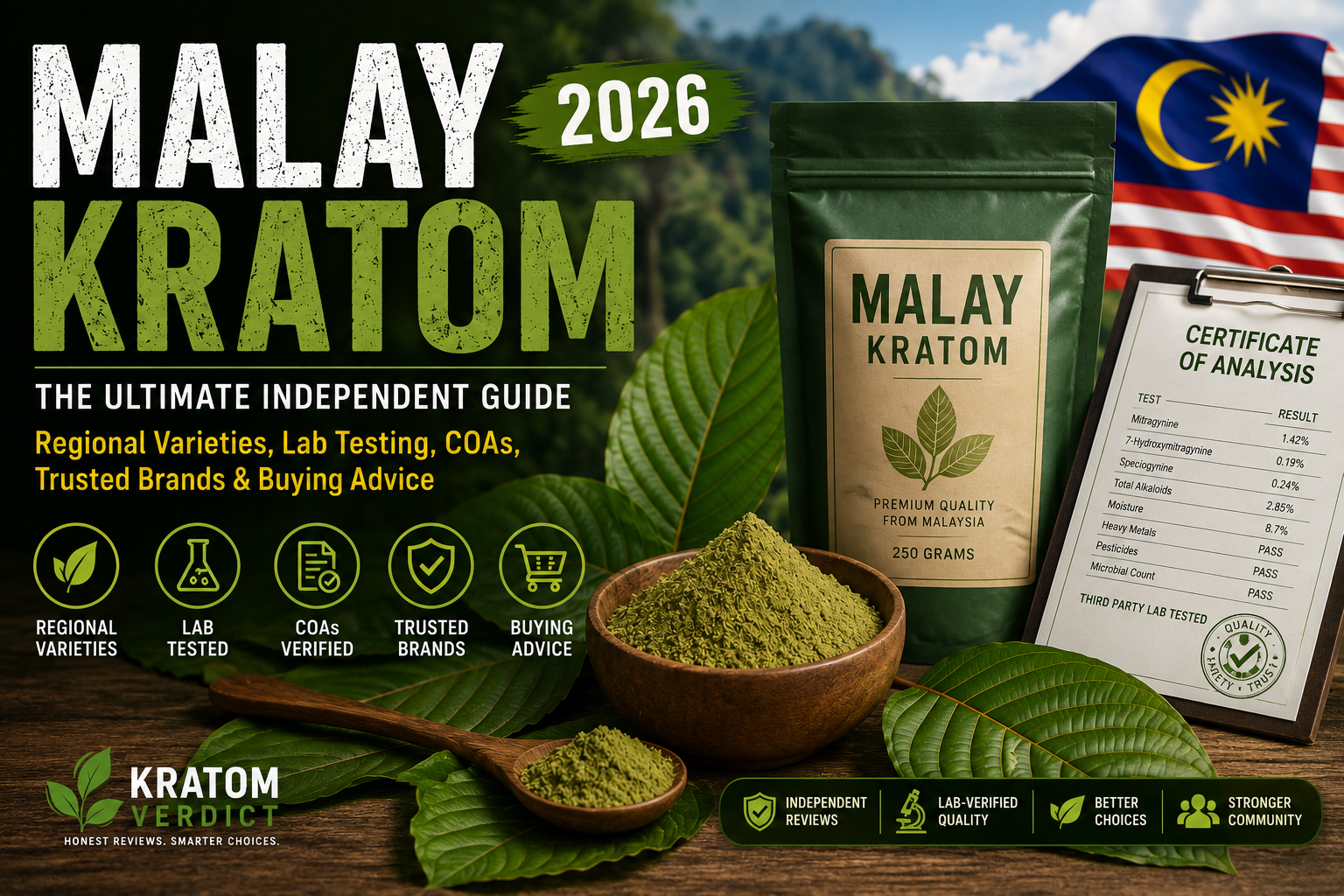
One of the most valuable resources available to consumers is a Certificate of Analysis (COA) issued by an independent third-party laboratory. A COA documents the analytical testing performed on a specific production batch and provides information about laboratory methods, contaminant screening, and quality assurance.
The example below references the structure of publicly available COAs published by transparent vendors and accredited laboratories. It is included for educational purposes to help readers understand what information to review before purchasing botanical products.
Example COA Overview
| Laboratory Information | Example |
|---|---|
| Laboratory Type | Independent Third-Party Laboratory |
| Accreditation | ISO/IEC 17025 Accredited |
| Botanical Material | Mitragyna speciosa Leaf Powder |
| Commercial Classification | Malay Kratom |
| Sample Identification | Laboratory Assigned Sample ID |
| Batch / Lot Number | Listed on Product Packaging |
| Date Received | Recorded by Laboratory |
| Date Tested | Included on COA |
| Report Date | Included on COA |
| Analytical Methods | HPLC, ICP-MS, Microbiological Culture |
Reference: Public COA archives and laboratory documentation published by Hudson Valley Botanicals and ACS Laboratory provide examples of the structure and information commonly included in modern botanical Certificates of Analysis.
Step 1 — Verify the Laboratory
The first section of a COA identifies the laboratory that performed the analysis.
Before reviewing any analytical results, consumers should verify:
- Laboratory name
- ISO/IEC 17025 accreditation
- Contact information
- Report identification number
- Authorized laboratory signature
Independent laboratories generally provide greater confidence than in-house testing because the analytical work is performed by a separate organization following documented quality-management procedures.
Step 2 — Confirm the Batch Number
One of the most overlooked parts of a COA is the batch or lot number.
The batch number printed on the laboratory report should match the number shown on the product packaging whenever possible.
Matching batch numbers help demonstrate that the published laboratory report corresponds to the product being purchased rather than a different production lot.
Step 3 — Review the Alkaloid Analysis
Most kratom COAs include an alkaloid profile generated using High-Performance Liquid Chromatography (HPLC).
Depending on the laboratory, the report may identify naturally occurring alkaloids such as:
| Alkaloid | Why It Appears on the COA |
|---|---|
| Mitragynine | Primary alkaloid commonly quantified |
| 7-Hydroxymitragynine | Reported when included in the analytical panel |
| Paynantheine | Naturally occurring alkaloid |
| Speciogynine | Naturally occurring alkaloid |
| Speciociliatine | Naturally occurring alkaloid |
The presence of these analytical results demonstrates that the laboratory performed quantitative testing rather than relying solely on visual inspection.
Step 4 — Heavy Metal Screening
Professional laboratories commonly screen botanical materials for elemental contaminants using Inductively Coupled Plasma Mass Spectrometry (ICP-MS).
Typical reports include:
| Heavy Metal | Purpose of Testing |
|---|---|
| Lead | Environmental contaminant screening |
| Arsenic | Environmental contaminant screening |
| Cadmium | Environmental contaminant screening |
| Mercury | Environmental contaminant screening |
Rather than focusing on marketing claims, consumers should verify that contaminant screening was actually performed and documented.
Step 5 — Microbiological Testing
A comprehensive COA usually includes microbiological analysis.
Typical tests include:
- Total Aerobic Plate Count
- Yeast
- Mold
- Escherichia coli
- Salmonella
These analyses help determine whether microbial screening formed part of the laboratory evaluation.
Step 6 — Understanding Analytical Methods
Many modern laboratories identify the analytical methods used during testing.
Common methods include:
| Method | Purpose |
|---|---|
| HPLC | Alkaloid analysis |
| ICP-MS | Heavy metal screening |
| Microbiological Culture | Detection of microbial contamination |
| Moisture Analysis | Water content determination |
Publishing analytical methodology allows consumers to understand how the laboratory generated its reported results.
COA Red Flags Every Consumer Should Know
Not every published laboratory report provides the same level of transparency.
Consumers should exercise additional caution if they notice:
- No laboratory identified
- Missing batch number
- Undated report
- No ISO/IEC 17025 accreditation mentioned
- No heavy-metal screening
- No microbiological testing
- No analyst approval
- Report older than the production batch
- Report cannot be verified
- No QR code or verification method when the laboratory normally provides one
A complete, batch-specific COA generally offers more useful information than a generic laboratory summary without supporting details.
References for Further Reading
These resources explain laboratory testing, COAs, and botanical quality assurance in greater detail:
- ACS Laboratory – Kratom Testing Services:
- Hudson Valley Botanicals – Public COA Archive:
- Amazing Botanicals – Understanding Kratom COAs:
Future of Documentation Within the Kratom Industry
Consumer expectations continue changing rapidly.
Manufacturers increasingly recognize that transparency builds long-term confidence more effectively than advertising claims alone.
Future developments are likely to include:
- Digital batch verification.
- Blockchain supply-chain documentation.
- Expanded laboratory reporting.
- QR-code Certificates of Analysis.
- Greater manufacturing disclosure.
- Standardized documentation practices.
- More consumer education.
- Stronger quality assurance systems.
Although implementation will vary between manufacturers, these developments indicate an industry-wide movement toward evidence-based transparency.
Long-Tail SEO Expansion
What Is Malay Kratom?
Malay Kratom is a commercial marketplace designation applied to products derived from Mitragyna speciosa. Understanding Malay Kratom requires distinguishing botanical classification from commercial terminology while evaluating documentation, manufacturing practices, laboratory testing, and independent quality assurance.
Malay Kratom Botanical Classification
Consumers researching Malay Kratom should recognize that scientific taxonomy identifies Mitragyna speciosa as the accepted botanical species. Malay Kratom represents marketplace terminology rather than an officially recognized botanical cultivar, making documentation more valuable than commercial naming.
Malay Kratom Laboratory Testing
Independent laboratory testing helps consumers evaluate Malay Kratom objectively. Reviewing Malay Kratom laboratory reports allows comparisons of contaminant screening, alkaloid analysis, microbiological testing, analytical methodology, and manufacturing transparency.
Malay Kratom Certificate of Analysis
A Malay Kratom Certificate of Analysis provides batch-specific documentation supporting laboratory testing. Consumers reviewing a Malay Kratom COA should verify laboratory identification, testing date, batch number, analytical methods, and contaminant screening.
Malay Kratom Quality Standards
Evaluating Malay Kratom quality involves more than commercial branding. Independent documentation supporting Malay Kratom manufacturing, laboratory testing, quality assurance, packaging controls, and traceability provides stronger evidence than promotional descriptions.
Malay Kratom Manufacturing
Manufacturing transparency has become increasingly important for Malay Kratom products. Responsible Malay Kratom manufacturers often explain harvesting, drying, milling, sanitation, packaging, and quality-control procedures throughout production.
Malay Kratom Supply Chain
The Malay Kratom supply chain includes cultivation, harvesting, transportation, processing, laboratory testing, packaging, export, and distribution. Understanding Malay Kratom supply-chain documentation helps consumers evaluate transparency objectively.
Malay Kratom Batch Testing
Independent batch testing improves manufacturing transparency for Malay Kratom. Reviewing Malay Kratom batch documentation enables consumers to compare analytical procedures, contaminant screening, laboratory accreditation, and quality assurance systems.
Malay Kratom Third-Party Testing
Third-party laboratories provide independent evaluation for Malay Kratom products. Documented Malay Kratom testing commonly includes alkaloid analysis, heavy metals, microbiological screening, and batch verification.
How to Verify Malay Kratom
Consumers can verify Malay Kratom by reviewing Certificates of Analysis, laboratory accreditation, manufacturing documentation, and batch identification. Verifying Malay Kratom through objective documentation provides greater confidence than relying on marketing terminology.
Malay Kratom Transparency
Transparency continues becoming one of the strongest indicators of manufacturing quality. Companies selling Malay Kratom increasingly publish documentation supporting laboratory testing, quality assurance, and traceable production practices.
Malay Kratom Buying Guide
A responsible Malay Kratom buying guide focuses on documentation rather than advertising. Consumers evaluating Malay Kratom products should compare laboratory reports, manufacturing transparency, sourcing documentation, and quality assurance procedures.
Malay Kratom Vendor Comparison
Comparing Malay Kratom vendors becomes easier when standardized evaluation criteria are applied. Laboratory documentation, Certificates of Analysis, manufacturing transparency, educational resources, and customer support provide meaningful comparison points.
Malay Kratom Documentation
Comprehensive Malay Kratom documentation includes laboratory reports, Certificates of Analysis, manufacturing information, batch identification, and supply-chain transparency. Consumers benefit from reviewing Malay Kratom documentation before evaluating products.
Independent Malay Kratom Guide
An independent Malay Kratom guide emphasizes evidence, documentation, botanical science, laboratory testing, manufacturing transparency, and consumer education. Using an independent Malay Kratom guide encourages objective evaluation rather than reliance on marketplace terminology.
More articles for you to read
- What Is Kratom?
- Green Malay Kratom
- Red Malay Kratom
- White Malay Kratom
- Yellow Malay Kratom
- Kratom Alkaloids Explained
- Kratom Lab Testing Explained
- How to Read a Kratom Certificate of Analysis (COA)
- Third-Party Lab Testing Explained
- Kratom Buying Guide
- Kratom Safety & Side Effects
- Kratom Legality Guide
- How to Identify a Trusted Kratom Vendor
- How to Verify a Kratom COA
- Kratom Extract Powder Explained
- Full Spectrum Kratom Explained
- Borneo vs. Sumatra Kratom
- Thai vs. Malay Kratom
External Authority References
Consumers researching Malay Kratom should supplement vendor information with independent botanical, scientific, laboratory, and regulatory resources. These organizations publish peer-reviewed research, botanical classification data, laboratory quality standards, Certificates of Analysis guidance, manufacturing information, and regulatory updates that help distinguish documented evidence from commercial marketing terminology.
Links to Embed
- U.S. Food and Drug Administration (FDA) —
- American Kratom Association (AKA) —
- Kew Science – Plants of the World Online —
- Journal of Ethnopharmacology —
- Frontiers in Pharmacology —
- National Center for Biotechnology Information (NCBI/PubMed) —
Editorial Conclusion
Malay Kratom remains one of the most recognizable commercial names within the global kratom marketplace, but the name itself provides only limited information about a specific product. Modern consumers are better served by evaluating independently verifiable documentation, including Certificates of Analysis, ISO/IEC 17025 laboratory testing, contaminant screening, manufacturing transparency, batch traceability, and supply-chain documentation.
By distinguishing botanical science from marketplace terminology and emphasizing evidence over branding, readers can make more informed comparisons across manufacturers. As transparency standards continue to improve throughout the botanical industry, documentation—not marketing language—is likely to remain the most reliable foundation for evaluating products marketed under the Malay Kratom name.
🔬 Kratom Verdict Laboratory Review
| Evaluation Item | Status |
|---|---|
| Third-Party COA Available | ✓ / ✗ |
| ISO/IEC 17025 Laboratory | ✓ / ✗ |
| Alkaloid Analysis Included | ✓ / ✗ |
| Heavy Metal Screening | ✓ / ✗ |
| Microbiological Testing | ✓ / ✗ |
| Batch Number Verified | ✓ / ✗ |
| QR-Code Verification | ✓ / ✗ |
| Report Date Current | ✓ / ✗ |
| Transparency Rating | Excellent / Good / Fair / Limited |