Reviewed by Kratom Verdict Editorial Team
Last Updated: July 2026
Estimated Reading Time: 16 minutes
Guide Type: Independent Editorial Strain Guide
Research Basis: Publicly available botanical information, third-party laboratory transparency, publicly available regulatory resources, scientific literature, and independent editorial research.
Ultra Enhanced Indo — commonly abbreviated UEI in kratom communities — is one of the longest-standing and most recognized names in the concentrated kratom market. Unlike the Ultra Enhanced Maeng Da products covered elsewhere in kratom guides, UEI has a distinctive twist: several vendors describe it not as one strain fortified with its own extract, but specifically as a blend of Bali and Indo extracts combined together, marketed as a “full-spectrum” concentrated product built for maximum versatility. As with every product in this “Ultra Enhanced” category, it’s essential to understand upfront that this isn’t a regional strain in the way Green Bali or Red Riau are — it’s a manufactured, concentrated product, and that distinction carries real weight for both safety and current regulatory context.
This guide explains what Ultra Enhanced Indo actually is, how it’s made and marketed, how its specific blend-based approach differs from other enhanced products, what users report, and — most importantly — the safety and legal picture every buyer needs heading into the second half of 2026. This is an educational resource, not medical or legal advice, and nothing here should be read as an endorsement of kratom use.
What Is Kratom, Exactly?
Kratom is the common name for Mitragyna speciosa, an evergreen tree in the coffee family (Rubiaceae) native to Southeast Asia — Indonesia, Thailand, Malaysia, and neighboring countries. Communities across the region have used the leaves, chewed fresh or brewed as tea, as part of traditional practices for generations.
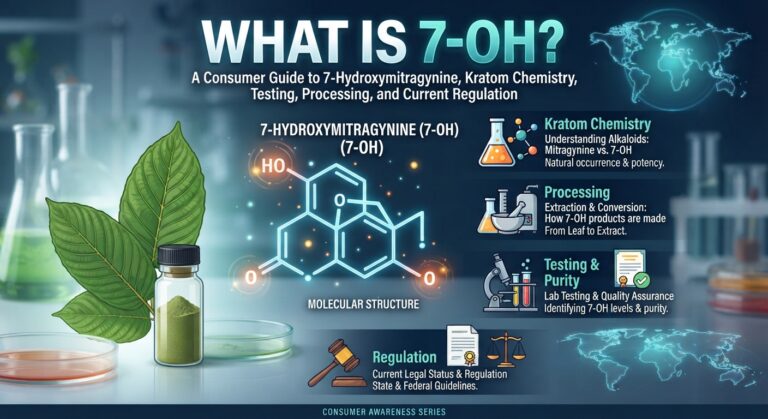
The leaves contain naturally occurring alkaloids, chiefly mitragynine, along with a much smaller amount of 7-hydroxymitragynine (7-OH). Both interact with opioid receptors in the brain, which is why kratom is frequently discussed alongside opioids in regulatory conversations, despite being botanically unrelated to the poppy plant. Standard, dried kratom leaf typically contains total alkaloid content in the low single digits by percentage — a baseline figure worth keeping in mind, since it puts the concentration levels described later in this guide into perspective.
What “Indo” Kratom Means on Its Own
Before addressing the enhancement, it helps to understand the base strain. “Indo” is short for Indonesian kratom — a broad category rather than a single, narrowly defined regional strain, reflecting the fact that Indonesia is one of the world’s oldest and most prolific sources of commercially available kratom. Vendors generally describe Indo strains as offering relaxing, centering effects, positioning them within the calmer end of the kratom spectrum, broadly comparable in reputation to other well-known Indonesian strains like Bali.
Because “Indo” functions more as a country-of-origin label than a precisely defined single strain, there’s inherent variability in what any given “Indo” product actually contains even before enhancement enters the picture — different growing regions within Indonesia, different harvest timing, and different vein colors can all be sold under this broad umbrella term.
What “Ultra Enhanced” Means — And Why UEI Specifically Is a Bit Different
This is the section that matters most for understanding this product, and Ultra Enhanced Indo has a wrinkle worth calling out clearly.
Like other products in this category, “Ultra Enhanced” generally describes a manufactured, two-part product: a base of leaf powder combined with a separately produced, concentrated kratom extract, engineered to push total alkaloid content well beyond what any leaf naturally contains. Manufacturers typically extract and concentrate alkaloids from raw leaf material — often through water-based extraction methods — into a dense resin or powder, which is then blended, coated, or infused into base leaf material.
Where Ultra Enhanced Indo specifically differs from single-strain enhanced products like Ultra Enhanced Green or White Maeng Da is that several vendor and enthusiast sources describe UEI as combining Bali and Indo extracts together, rather than a single strain fortified with an extract derived from that same strain. This blend-based approach is marketed as producing an especially “balanced” and “full-spectrum” concentrated product — one vendor source describes it as delivering a fuller range of effects (pain relief, relaxation, mild energy, and mood lift) than extracts that isolate for a narrower profile.
It’s also worth noting real inconsistency across the market in exactly how “Ultra Enhanced Indo” products are constructed. Some are sold as standard leaf powder infused with extract, similar to the Maeng Da products covered elsewhere. Others are sold as capsules or softgels containing concentrated extract material with little or no accompanying base leaf powder at all — some marketed with specific, disclosed concentration figures, such as a stated 45% mitragynine content in a 50:1 concentrated extract, or 65% mitragynine-content extract material within a softgel. For comparison, standard dried kratom leaf generally contains total alkaloid content in the low single digits by percentage — meaning some commercial UEI extract products are marketed at alkaloid concentrations dozens of times higher than raw leaf. This range — from lightly infused leaf powder to near-pure extract capsules — makes “Ultra Enhanced Indo” one of the least consistent labels in the entire kratom market, and underscores why a specific product’s actual composition, not just its name, is what matters.
How Ultra Enhanced Indo Is Marketed
Vendor marketing for UEI consistently returns to a few core themes:
Rarity and craftsmanship. Some vendors lean into a “rare, coveted, sought-after” framing, describing meticulous harvesting from larger, older leaves and positioning UEI as a premium, hard-to-source product.
Full-spectrum versatility. Unlike the sharply stimulant-focused marketing around white vein enhanced products, UEI is generally marketed around a broad combination of effects — pain relief, relaxation, mood elevation, and mild energy — with some products (particularly those marketed as “PM” or evening formulations) leaning more heavily into calm and sleep-support framing.
Euphoria. Several sources specifically describe UEI’s reputation for producing a pronounced euphoric or “heightened well-being” sensation, distinguishing it in marketing language from milder standard leaf products.
Consistency and lab testing claims. Some vendors emphasize third-party lab testing, GMP-compliant manufacturing facilities, and standardized extraction processes as differentiators — claims worth verifying through an actual current Certificate of Analysis rather than taking at face value.
Broad wellness and medical-adjacent claims. Marketing language for UEI is, across several sources, notably expansive — extending into claims about chronic pain, arthritis, migraines, insomnia, and anxiety. It’s worth stating plainly that none of these are FDA-evaluated claims, and that this kind of disease-adjacent marketing language generally isn’t compliant with FDA rules governing kratom and dietary supplement marketing.
The Alkaloid Profile: How Enhanced Indo Differs From Standard Leaf
This is the section that matters most for understanding why UEI sits in a materially different risk category than a standard Indo strain. As referenced above, commercial UEI products span an unusually wide range of actual concentration — from leaf lightly dusted with extract to capsules containing high-percentage standardized extract material. Some products disclose specific figures: one softgel product cites 50mg of 65%-concentration extract per capsule, working out to roughly 33mg of mitragynine per softgel; another capsule product cites a 50:1 concentration ratio with 45% mitragynine content and a separately disclosed 7-OH percentage. These are dramatically higher concentrations, gram for gram, than anything found in dried leaf, which is precisely the point of the product category — but it also means the practical difference between one “UEI” product and another can be enormous depending on which specific item a buyer selects.
Because UEI is frequently described as a blend of Bali and Indo extract material rather than single-strain leaf, the resulting mitragynine-to-7-OH ratio depends on both the underlying strains used and the specific extraction and blending process — variables that differ from vendor to vendor and are generally not fully disclosed in marketing copy beyond a headline potency figure. As with every enhanced product covered in this series, a vendor’s “total alkaloid” percentage does not, by itself, indicate how that concentration splits between mitragynine and 7-OH — and that split is exactly what matters both for personal safety and for understanding where a given product sits relative to current regulatory lines.
Ultra Enhanced Indo Compared to Other Enhanced Products
Versus Ultra Enhanced Maeng Da (green or white). The core distinction is the blend-based construction: where Maeng Da enhanced products are generally described as one strain fortified with its own extract, UEI is more commonly described as combining extract material from two different strains (Bali and Indo), aimed at a broader, more balanced effect profile rather than the narrower energy-forward or pain-forward positioning of single-strain enhanced products.
Versus standard Indo or Bali leaf. The relationship is the same one that applies across this entire product category: standard leaf has naturally variable, comparatively modest alkaloid content; UEI is that general strain character, concentrated substantially further through added extract — in some product formats, concentrated to an extreme degree, given the near-pure extract capsules some vendors sell under this name.
Versus other named concentrated products like “Gold Reserve.” Some enthusiast sources place UEI alongside other well-known named concentrated blends as a similarly “balanced, potent extract” — worth noting mainly because it illustrates that UEI exists within a broader informal category of named extract blends, each with its own marketing identity but built on the same underlying concentration principle.
What Users Report
In online kratom communities and vendor reviews, UEI is most consistently described in terms of strong euphoria, meaningful pain relief, deep relaxation, and — depending on the specific product and its underlying blend — some degree of mood lift or mild energy. Some reviewers specifically compare its effect profile to Bali kratom but describe it as substantially more intense given the higher potency, particularly regarding pain relief.
As with every product in this series, it’s worth being clear about what this evidence represents: self-reported, subjective accounts from forums, review sites, and vendor testimonials, not findings from controlled or blinded clinical research. This caveat carries particular weight for UEI given the wide range of actual product concentrations sold under the same name — a review describing one vendor’s lightly-infused UEI powder may have little relevance to a different vendor’s high-percentage extract capsule, even though both carry the identical “Ultra Enhanced Indo” label.
Safety, Risks, and What Regulators Are Saying in 2026
This is the section that matters most for anyone actually considering a purchase, and it applies with particular relevance to a concentrated product like this one — arguably more so than to the single-strain enhanced products covered elsewhere, given how far toward pure extract some commercial UEI products are marketed.
The FDA’s long-standing position. The FDA has not approved kratom for any medical use and has repeatedly warned about risks including liver toxicity, seizures, respiratory depression, and dependence with withdrawal symptoms resembling those associated with opioids. These concerns scale directly with alkaloid concentration — and, as described above, some commercial UEI products are marketed at concentrations many multiples higher than standard leaf.
The 2026 DEA action on concentrated 7-OH products. On July 1, 2026, the DEA filed notice of intent to temporarily place concentrated and synthetic 7-hydroxymitragynine — along with several related lab-made compounds — into Schedule I, the same category as heroin, a move supported by the Department of Health and Human Services and following a July 2025 FDA recommendation that concentrated 7-OH be scheduled. The notice published in the Federal Register on July 6, 2026 triggers a required 30-day waiting period, meaning the earliest the order could take effect is early August 2026, after which it would run for two years with a possible one-year extension while the DEA pursues permanent scheduling.
The DEA has been explicit that this action targets synthesized and concentrated 7-OH specifically — not natural kratom leaf containing 7-OH below a low threshold of about 0.05% by dry weight. The concern driving the action is products, frequently sold in gas stations and smoke shops, engineered to contain 7-OH concentrations far beyond anything naturally occurring in leaf, described by regulators as behaving pharmacologically like a potent opioid with correspondingly elevated dependence and overdose risk.
Why this distinction is especially important for UEI. Because some commercial Ultra Enhanced Indo products are sold as near-pure extract capsules with specific, disclosed potency figures — rather than lightly infused leaf powder — this is one of the enhanced products where a buyer most needs to check exactly how much 7-hydroxymitragynine, specifically, a given product contains, separate from its total mitragynine or “total alkaloid” figure. A product disclosing a specific 7-OH percentage, as at least one vendor does, is providing more useful safety information than one that only advertises a headline potency claim — though even a disclosed figure should be treated as a vendor claim requiring independent lab verification rather than something to be taken at face value.
Ongoing federal pressure beyond 7-OH. In March 2026, a group of U.S. senators sent a letter to the FDA urging broader federal scheduling action on kratom itself, signaling that regulatory attention extends past 7-OH alone and that the landscape could keep shifting through the rest of the year. Given how concentrated some UEI products are marketed to be, this category is a natural focal point for that broader scrutiny.
Additional safety notes specific to this category. Products this concentrated warrant particular caution around use frequency and combination with other substances. Tolerance to concentrated extracts is generally described as building faster than tolerance to standard leaf powder. Because of kratom’s activity at opioid receptors, combining any kratom product — and especially a highly concentrated one — with alcohol, benzodiazepines, or other central-nervous-system-depressant substances carries meaningfully elevated risk.
Given all of this, anyone considering Ultra Enhanced Indo or any concentrated kratom product should treat it as meaningfully higher-risk than a standard leaf strain, and should recognize that “UEI” specifically spans an unusually wide range of actual potency depending on the exact product selected. People who are pregnant, nursing, managing a health condition, or taking other medications should speak with a healthcare provider before considering any kratom product, and this caution applies with particular weight to a highly concentrated one. No one should use kratom, enhanced or otherwise, as a substitute for professional treatment of chronic pain, anxiety, insomnia, or substance use disorder — despite the broad, disease-adjacent marketing claims common in this specific product category.
Is Kratom Legal? State-by-State Snapshot (2026)
Kratom’s legal status in the United States remains a genuine patchwork, and it has continued to shift through 2026.
Federal level: Kratom remains unscheduled under the federal Controlled Substances Act as of mid-2026 — the DEA has not classified natural leaf kratom as a controlled substance, the FDA has not approved it as a drug, and Congress has not passed a federal ban. As described above, 2026’s regulatory focus has centered specifically on concentrated 7-OH products — a category that highly concentrated UEI extract products sit meaningfully closer to than standard leaf strains.
States with bans: As of 2026, seven states ban kratom outright: Alabama, Arkansas, Connecticut, Indiana, Louisiana, Vermont, and Wisconsin, along with Washington, D.C. Various city and county ordinances add further restrictions on top of state law even in places where kratom is otherwise permitted.
States moving toward regulation instead of bans: A growing number of states have adopted or are considering a Kratom Consumer Protection Act (KCPA) framework, which permits kratom sales under defined consumer-safety rules — typically 21+ age limits, mandatory lab testing, and labeling requirements — instead of outright prohibition. Some KCPA frameworks specifically address concentrated extract products with separate potency caps or labeling rules distinct from those for standard leaf, meaning highly concentrated UEI products may face additional restrictions even in states with a KCPA in place. Rhode Island became the first state in U.S. history to reverse a kratom ban, signing its KCPA into law in July 2025, with the regulated framework taking effect April 1, 2026.
States actively debating new restrictions: Legislative activity has been particularly heavy in 2026. Georgia’s House Bill 968, for example, has proposed placing both mitragynine and 7-hydroxymitragynine on the state’s Schedule I list, which would effectively criminalize possession, while other states have introduced bills ranging from repealing existing consumer-protection laws to imposing steep new taxes on kratom sales. Given the specific regulatory focus on concentrated products, and given how far toward pure extract some UEI products are marketed, this category is disproportionately likely to face new restrictions as this legislative activity continues.
The bottom line for buyers: Because rules can change at the state and even city level with little notice — and because concentrated extract products specifically are a focal point of 2026’s regulatory activity — anyone considering purchasing Ultra Enhanced Indo or any concentrated kratom product should verify current law in their specific state and locality before ordering, and should expect this category’s legal status to be more volatile going forward than standard leaf strains.
How to Evaluate a Vendor Selling Ultra Enhanced Indo
Given everything above — and given how wide a range of actual products are sold under the “UEI” name — vendor and product-level scrutiny matters more here than for almost any other product covered in this series. A few things worth checking before buying:
Understand exactly what form of product you’re looking at. Because “UEI” spans everything from lightly infused leaf powder to near-pure extract capsules, check specifically whether a given listing is leaf-based or extract-based, and what concentration or ratio figures the vendor discloses, before assuming you know what you’re buying from the name alone.
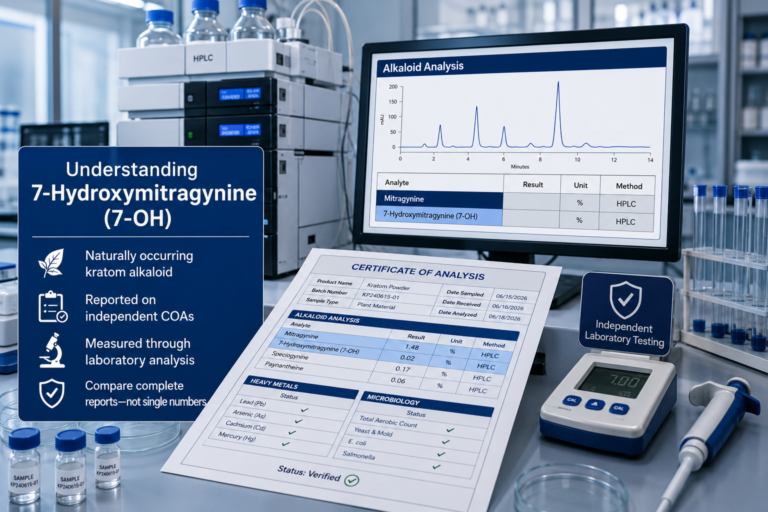
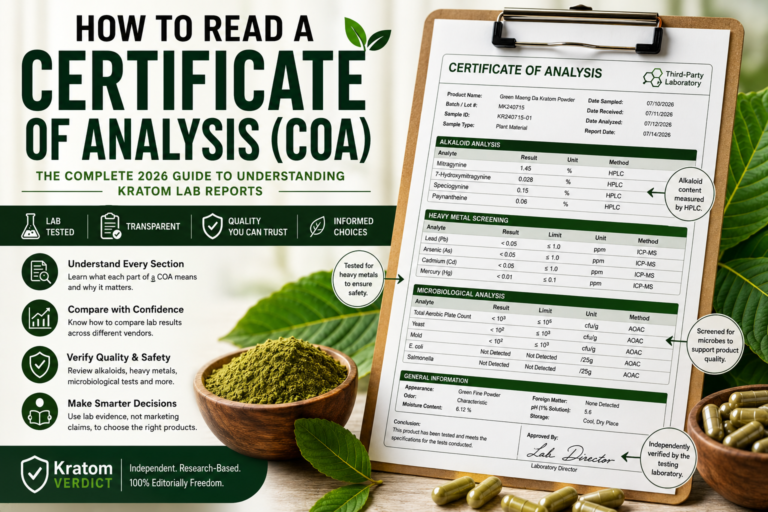
Independent, third-party lab testing that breaks down individual alkaloids. A listing showing only a “total alkaloid” or “total mitragynine” percentage is materially less useful than one separately reporting 7-hydroxymitragynine content. Given the DEA’s specific 0.05% dry-weight 7-OH threshold, a vendor unwilling or unable to provide that breakdown is a significant red flag — more so here than for less concentrated products.
Transparency about the underlying blend. A vendor who can explain specifically which strains (Bali, Indo, or others) and what extraction method went into their UEI product is offering more useful, checkable information than generic “premium” or “rare” marketing language.
Contaminant testing, not just potency testing. Look specifically for heavy metal and microbial screening results, not just a headline alkaloid percentage.
Industry quality program membership. The American Kratom Association’s Good Manufacturing Practices (GMP) qualification program is one benchmark some vendors reference, requiring adherence to specific processing, testing, and labeling standards.
Realistic, non-medicalized claims. Under FDA rules, kratom products cannot legally be marketed as treating or curing any disease. Given how expansive medical-adjacent marketing language tends to be for UEI specifically — spanning chronic pain, arthritis, migraines, and insomnia in some product descriptions — vendors leaning heavily on this kind of language are both on shakier legal ground and generally less trustworthy sources of accurate information.
Age verification and legal compliance. A vendor that verifies buyer age and declines to ship into states where kratom or concentrated extracts specifically are restricted is signaling it takes regulatory compliance seriously.
Frequently Asked Questions
Is Ultra Enhanced Indo a natural kratom strain? No. It’s a manufactured, concentrated product — generally described as combining Bali and Indo extract material, sometimes blended into leaf powder and sometimes sold as near-pure extract capsules — engineered to raise alkaloid content well beyond natural leaf levels.
Is UEI the same product no matter which vendor sells it? Not at all — arguably less so than any other product covered in this series. Commercial UEI products range from lightly extract-infused leaf powder to capsules containing high-percentage standardized extract, with genuinely different potency levels depending on the specific product.
Why is Ultra Enhanced Indo described as a blend of two strains? Several vendor and enthusiast sources describe UEI specifically as combining Bali and Indo extract material, aimed at producing a broader, more “full-spectrum” effect profile than a single-strain extract — though the exact blend and ratio isn’t standardized across the industry.
Is kratom addictive? Public health agencies, including the FDA, have warned that regular kratom use carries a risk of dependence and withdrawal symptoms similar to those associated with opioids, particularly with frequent, higher-level use — a risk that scales with alkaloid concentration and is especially relevant for a product category that includes some of the most concentrated commercial kratom extracts on the market.
Can I legally buy Ultra Enhanced Indo online? It depends entirely on your state and local jurisdiction, and this category faces more regulatory volatility than standard leaf strains given 2026’s focus on concentrated products specifically. Confirm your specific state and local law before ordering.
Should I talk to a doctor before trying a concentrated kratom extract? Yes, and this applies with particular weight given how concentrated some UEI products are. Anyone considering kratom — enhanced or otherwise — should speak with a healthcare provider first, particularly if pregnant or nursing, managing an existing health condition, taking other medications, or in recovery from substance use, given kratom’s activity at opioid receptors and its documented potential to interact with other central-nervous-system-affecting substances.
Final Thoughts
Ultra Enhanced Indo is, in some ways, the most extreme example of the “Ultra Enhanced” category covered in this guide series. Rather than a single strain fortified with a modest amount of extract, UEI is frequently described as a deliberate blend of Bali and Indo extract material — and commercial products sold under this name range from lightly infused powder all the way to capsules containing near-pure, highly concentrated extract at potency levels many multiples beyond natural leaf. That range makes understanding exactly which specific product you’re looking at more important here than almost anywhere else in the kratom market.
That same concentration is exactly what puts this category closer to the center of 2026’s regulatory conversation than any single-origin strain. Federal action is now specifically targeting concentrated and synthetic 7-OH products, and while the DEA has drawn a line intended to exempt natural leaf, a highly concentrated extract product like some forms of UEI requires real diligence — specifically, alkaloid-level-broken-down independent lab testing — to confirm where it actually falls relative to that line. Anyone considering Ultra Enhanced Indo or any concentrated kratom product should treat it with meaningfully more caution than a standard strain, understand exactly what form of product they’re buying, confirm current law in their own state, demand independent lab testing that separates mitragynine from 7-OH content rather than a single headline potency number, and talk to a healthcare provider before use.
This article is for general informational purposes only and does not constitute medical or legal advice. Kratom is not approved by the FDA to diagnose, treat, cure, or prevent any disease. Laws governing kratom vary by state and locality and are subject to change; consult current local law and a licensed professional before making any purchasing or health decisions.