Reviewed by Kratom Verdict Editorial Team
Last Updated: July 2026
Estimated Reading Time: 5 minutes
Guide Type: Independent Editorial Strain Guide
Research Basis: Publicly available botanical information, third-party laboratory transparency, publicly available regulatory resources, scientific literature, and independent editorial research.
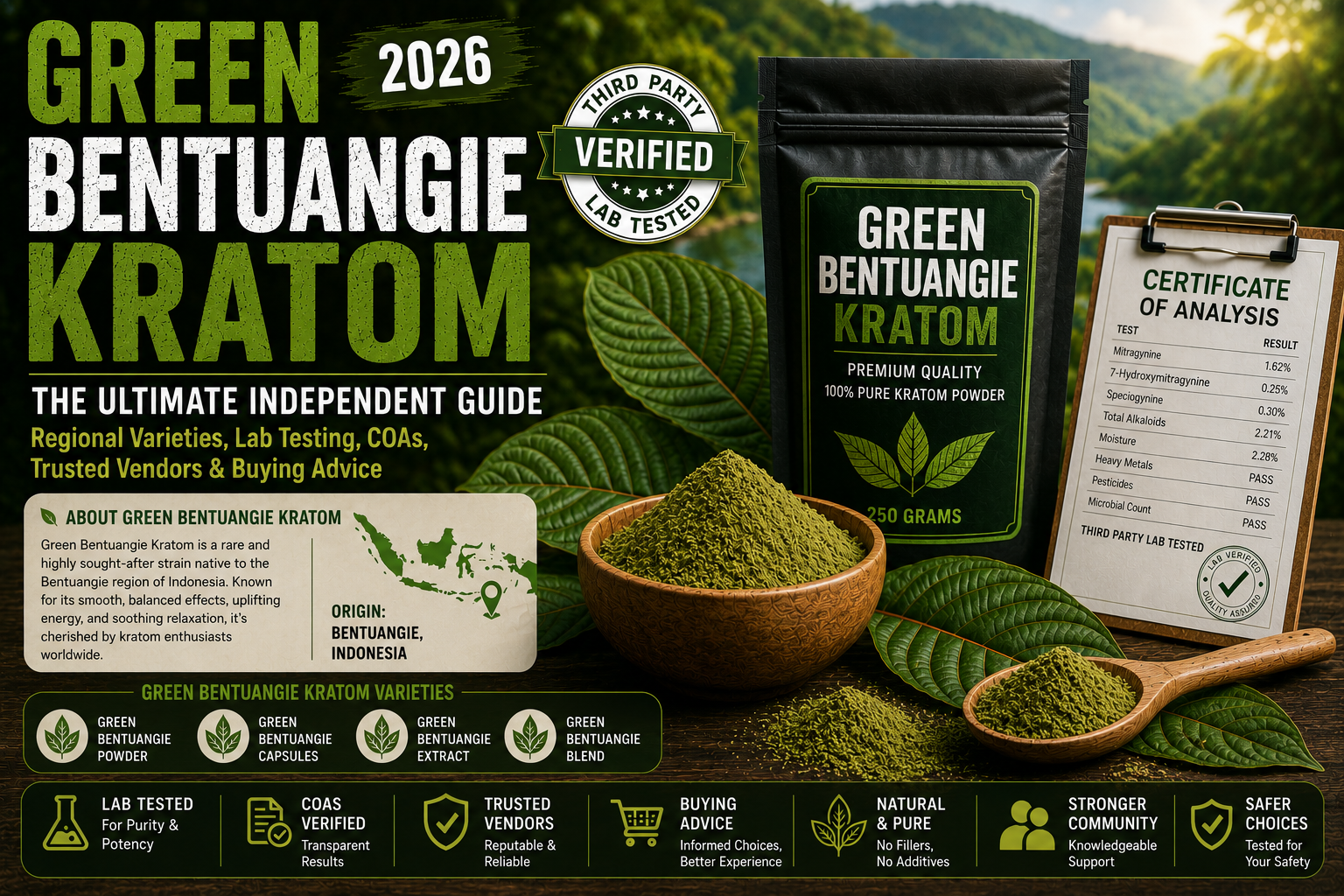
Green Bentuangie sits between the red and white ends of the Bentuangie family, and that “in-between” positioning is often used in marketing copy to imply a specific, standardized effect profile that no regulatory body actually defines or verifies. This guide covers what the name actually refers to, what a real Certificate of Analysis should contain, and the safety and regulatory context that most guides in this space leave out.
What “Green Bentuangie” Actually Means
Kratom comes from Mitragyna speciosa, a tree in the coffee family (Rubiaceae) native to Southeast Asia, primarily Indonesia. Commercial kratom names generally describe one of two things:
- A region (Bali, Borneo, Sumatra, Malay) — where the leaf was grown
- A processing method (vein color at harvest, drying/curing/fermentation technique) — which is what color names like “red,” “green,” “white,” and “gold” typically describe
“Bentuangie” refers to an extended fermentation or curing process applied after harvest — not a distinct strain or growing region. “Green” traditionally describes leaf harvested at a middle maturity point and dried with moderate (rather than extended) oxidation. Combined with Bentuangie processing, vendors typically market “Green Bentuangie” as a middle-ground product between the more heavily fermented red variants and the less-processed white ones — but that’s a marketing framework, not a chemically verified distinction, since there’s no standardized testing requirement tying vein color or product name to a specific, consistent alkaloid ratio.
That’s the practical reason to focus on documentation rather than the label: two vendors’ “Green Bentuangie” products can differ meaningfully in composition even if the marketing language around them sounds identical.
Important Context Most Guides Skip: Regulatory and Safety Status
A genuinely trustworthy guide includes this, so here it is plainly:
- The FDA has not approved kratom for any medical use and doesn’t recognize it as a safe dietary supplement. The agency has issued warnings tied to contamination (including past salmonella recalls) and to the addictive potential of kratom’s active compounds.
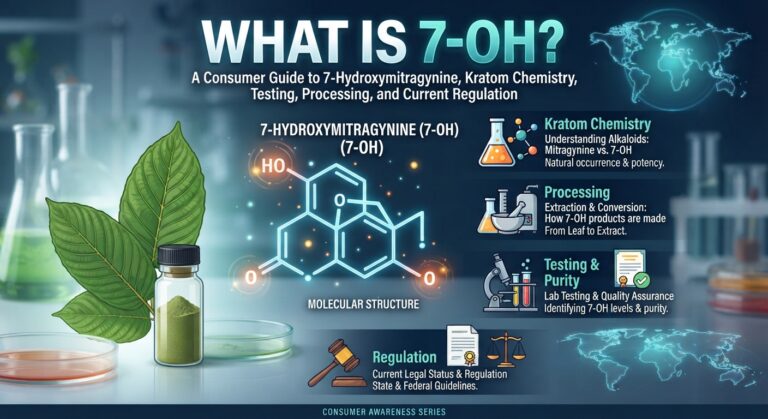
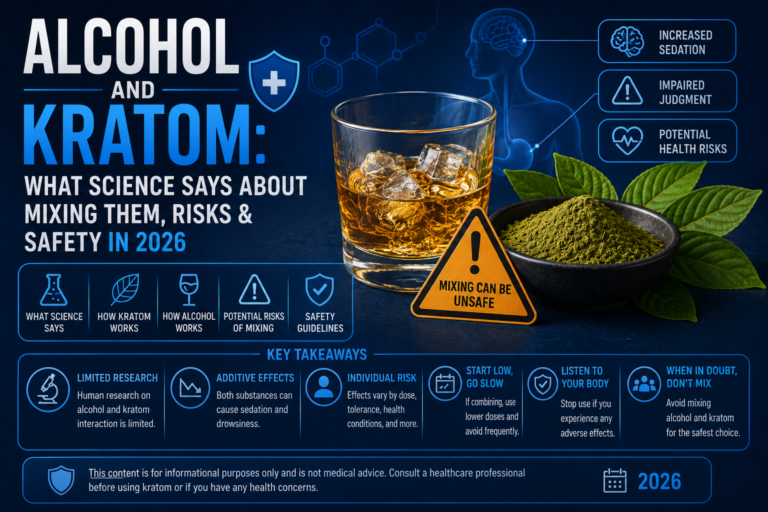
- Kratom’s primary alkaloids, mitragynine and 7-hydroxymitragynine, act on opioid receptors. That’s part of why some people use kratom to self-manage pain or opioid withdrawal — and also why dependency, withdrawal symptoms, and interactions with other substances (including alcohol and opioids) are documented, real risks rather than fringe concerns.
- Kratom is illegal or restricted in several U.S. states and countries. Check your local law before purchasing.
- The American Kratom Association (AKA) runs a voluntary Good Manufacturing Practices (GMP) program some vendors join. It’s a useful signal, but it’s industry self-regulation, not independent government oversight.
If you’re considering kratom for a health-related reason — pain, withdrawal management, or otherwise — that’s worth a conversation with a doctor rather than something to decide based on vendor marketing or search results.
What a Real Certificate of Analysis (COA) Should Contain
A COA is tied to a specific batch, not a brand. Before trusting one, check that it includes:
| COA Element | What to Check |
|---|---|
| Batch/lot number | Matches the number printed on your product’s packaging |
| Testing lab name | Independently named, ISO/IEC 17025-accredited — verify this yourself, don’t take the vendor’s word for it |
| Test date | Recent relative to your purchase date, not a stale report reused across multiple batches |
| Alkaloid content | Mitragynine percentage at minimum |
| Heavy metal screening | Lead, arsenic, cadmium, mercury |
| Microbial screening | Salmonella, E. coli, yeast/mold counts |
A “lab tested” badge without a batch-matched, dated, independently issued report is a claim, not evidence. This matters especially for “middle ground” products like Green Bentuangie, where marketing claims about a “balanced” alkaloid profile are common but rarely backed by a COA that actually reports the relevant numbers.
How to Evaluate a Vendor Yourself
Rather than presenting a “trusted vendors” list — which no article can independently verify on your behalf — here’s what to check directly:
- Search the named testing lab independently. Confirm it exists, is accredited, and actually performs this kind of testing.
- Match the batch number on the COA to the batch number on your product. A mismatch, or no batch-specific report at all, is a real red flag.
- Verify AKA GMP membership on the AKA’s own site, not just the vendor’s claim.
- Check the FDA’s import alert list and general search for recall or complaint history, rather than relying solely on the vendor’s own page.
- Read the return, refund, and shipping policies. Vagueness here often correlates with vagueness in testing claims too.
Powder vs. Capsules vs. Extract
- Powder — most common and easiest to verify against a COA, since it’s typically the least processed form
- Capsules — convenient, but confirm whether the COA covers the raw powder or the finished encapsulated product, since processing happens in between
- Extract — more concentrated and far more variable between manufacturers; “extract” isn’t a standardized potency term, so scrutinize specific potency claims more closely here
Bottom Line
“Green Bentuangie” describes a curing/maturity combination marketed as a middle ground between red and white variants — not a guarantee of a specific, verified effect or safety profile. No vendor list — including any you’ll find elsewhere — replaces checking a batch-specific COA yourself and confirming the testing lab behind it is real. If you’re weighing kratom for a health-related reason, talk to a healthcare provider first, given its interaction with opioid receptors and its unregulated status.
Sources for Further Reading
- U.S. Food and Drug Administration — public statements on kratom safety and regulatory status
- American Kratom Association — GMP program information (industry self-regulation, not government oversight)
- Journal of Ethnopharmacology and Frontiers in Pharmacology — peer-reviewed research on Mitragyna speciosa alkaloids (search directly for current, dated studies rather than relying on secondhand summaries)
- Kew Science, Plants of the World Online — botanical reference for Mitragyna speciosa
This article is for general educational purposes and isn’t medical advice. It doesn’t endorse or recommend the use of kratom, and doesn’t recommend specific vendors or brands.