Reviewed by: Kratom Verdict Editorial Team
Last Updated: July 2026
Estimated Reading Time: 11 Minutes
Review Type: Independent Editorial Buyer’s Guide
Research Basis: Publicly available company information, Certificates of Analysis (COAs), third-party laboratory testing policies, industry standards, consumer transparency practices, vendor documentation, and publicly available regulatory resources
Disclaimer: This article is for informational purposes only and does not make efficacy claims. Kratom is not evaluated or approved by the FDA for treating any medical condition. Kratom is illegal or restricted in several U.S. states, municipalities, and countries — verify your local laws before purchasing. Consult a licensed healthcare provider before using any botanical supplement.
Introduction: Two of the Market’s Most Misunderstood Leaf Types
If you’ve spent any time browsing kratom vendor sites, you’ve likely come across “Horn” and “Elephant” listed alongside the more familiar red, white, and green vein categories. Unlike vein color, which refers to the color of the leaf’s central vein at harvest, Horn and Elephant kratom are classified by leaf shape and size — and that distinction alone is a major source of confusion for buyers trying to understand what they’re actually purchasing.
This guide breaks down what Horn and Elephant kratom actually are, how they differ from standard vein-color classifications, what’s known about their botanical origins, and — most importantly — how to evaluate vendor claims about these specialty leaf types using the same transparency and lab-verification standards that apply to any kratom purchase. As with all of our coverage, this article focuses on botanical classification, sourcing, and buyer due diligence rather than making any claims about effects, since that’s not something any vendor or article can responsibly promise.
What Makes Horn and Elephant Kratom Different From Standard Classifications
Most kratom products on the market are categorized primarily by vein color — red, white, or green — which reflects the color of the leaf’s vein at the time of harvest and is tied to specific drying and processing methods. Horn and Elephant kratom, by contrast, are named for leaf morphology: the physical shape and size of the leaf itself, independent of vein color.
This means you can technically find a “Red Vein Horn” or a “Green Vein Elephant” — the leaf-shape classification and the vein-color classification aren’t mutually exclusive; they describe two different characteristics of the same plant material.
Horn Kratom: Named for Its Distinctive Leaf Shape
“Horn” kratom gets its name from small, horn-like or spur-shaped protrusions that appear along the edges of the leaf — a physical trait that’s visually distinct from the smoother, rounder edges of standard kratom leaves. This leaf shape is relatively uncommon in commercial cultivation, which is part of why Horn kratom is often marketed as a rarer, specialty product.
Elephant Kratom: Named for Unusually Large Leaves
“Elephant” kratom is named simply for the size of its leaves, which are notably larger than standard kratom leaves — some growers and vendors describe them as resembling the shape of an elephant’s ear, which is the likely origin of the name. Larger leaf size is sometimes associated with older, more mature trees, though leaf size can also be influenced by growing conditions, soil quality, and cultivation practices.
Where These Leaf Types Are Typically Sourced
Both Horn and Elephant kratom are most commonly associated with Indonesian cultivation regions, with Borneo frequently cited as a primary source region for both leaf types. However, sourcing claims vary significantly between vendors, which is exactly why origin disclosure is such an important transparency marker (more on this below).
It’s worth noting that because these are less common leaf variants compared to standard commercial kratom, supply chains for Horn and Elephant products may be smaller and more variable, which can make consistent sourcing and testing especially important to verify.
Comparing Horn and Elephant Kratom Side by Side
| Characteristic | Horn Kratom | Elephant Kratom |
|---|---|---|
| Named for | Leaf shape (horn-like protrusions along the leaf edge) | Leaf size (unusually large leaves) |
| Relative market availability | Less common; often marketed as a specialty/rare product | Less common than standard leaf, but somewhat more widely available than Horn |
| Primary sourcing region cited by vendors | Indonesia, commonly Borneo | Indonesia, commonly Borneo |
| Available in multiple vein colors | Yes (e.g., Red Vein Horn, White Vein Horn) | Yes (e.g., Red Vein Elephant, Green Vein Elephant) |
| Common marketing emphasis | Rarity and distinctive leaf morphology | Leaf maturity and size |
| Typical price positioning | Often priced at a premium relative to standard leaf | Often priced at a premium relative to standard leaf |
Why Leaf Shape Classifications Create Extra Verification Challenges
Because Horn and Elephant kratom are less standardized than vein-color categories, and because there’s no regulatory body verifying that a product labeled “Horn” or “Elephant” actually reflects the leaf shape claimed, buyers face a few additional due-diligence considerations:
1. Leaf Shape Claims Aren’t Independently Verifiable Once Processed
Once kratom leaves are dried and ground into powder, there’s no practical way for a buyer — or even most labs — to visually confirm that the powder actually originated from horn-shaped or unusually large leaves. This means leaf-type labeling relies heavily on vendor honesty and supply chain documentation rather than something a Certificate of Analysis (COA) can confirm.
2. Specialty Labeling Can Command a Price Premium Without Added Verification
Because “rare” or “specialty” labeling often justifies higher prices, it’s worth asking vendors directly how they verify that a batch labeled Horn or Elephant actually reflects that specific leaf morphology, rather than assuming the label is accurate simply because it’s stated on the package.
3. Vein Color and Leaf Shape Are Often Conflated in Marketing
Some product listings blur the distinction between vein color and leaf shape, describing a product simply as “Horn” or “Elephant” without specifying the vein color, or vice versa. Clear, accurate labeling that specifies both characteristics separately is a stronger transparency signal than vague, catch-all product names.
How to Evaluate Vendor Claims About Horn and Elephant Kratom
The same core due-diligence framework that applies to any kratom purchase applies here, with a few additional considerations specific to specialty leaf types.
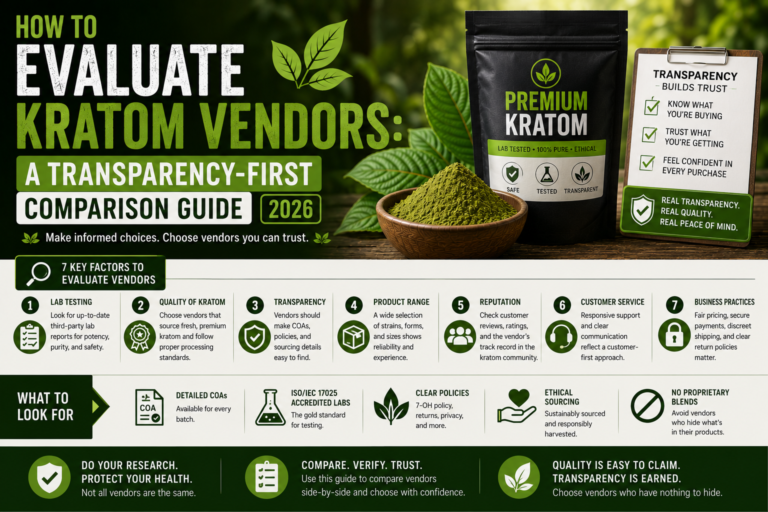
Check for Batch-Specific COAs
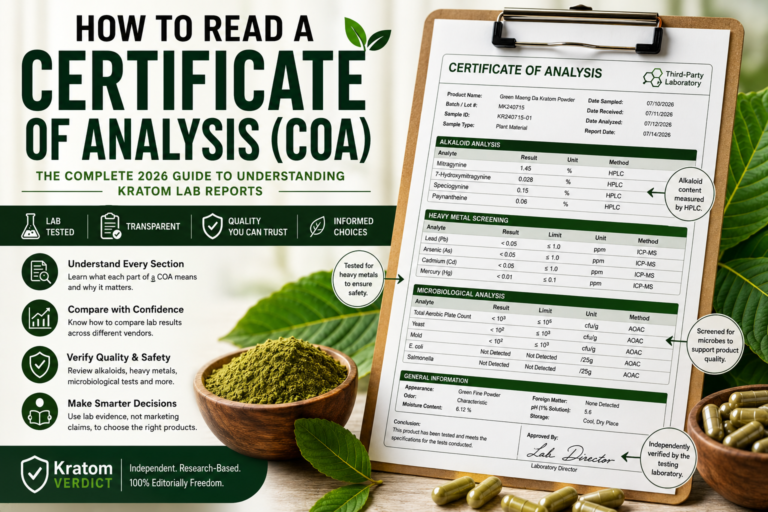
As with any kratom product, look for a Certificate of Analysis tied to the specific batch you’re purchasing, including:
- Alkaloid content (mitragynine and 7-hydroxymitragynine levels)
- Heavy metal screening
- Microbial testing
- The name of an independently verifiable, accredited testing lab
Keep in mind that a COA verifies chemical composition and contamination levels — it does not verify leaf shape or size, which is a separate sourcing claim entirely.
Ask About Sourcing Documentation
Because leaf shape claims can’t be verified after processing, ask vendors directly:
- How do you verify that a batch labeled “Horn” or “Elephant” actually reflects that leaf morphology?
- Do you source directly from specific farms or cooperatives that specialize in these leaf types?
- Can you provide any documentation, harvest records, or supplier information supporting the specialty labeling?
A vendor with a legitimate, specialized supply chain for these leaf types should be able to describe their sourcing process in specific detail rather than offering only a generic answer.
Compare Pricing to Market Averages
Specialty leaf types often carry a price premium, which can be reasonable given potentially smaller, less common supply chains. However, an unusually large price gap compared to other vendors offering the same leaf type is worth investigating rather than assuming reflects proportionally higher quality.
Verify AKA GMP Status Regardless of Leaf Type
A vendor’s AKA GMP Qualified status (verifiable through the American Kratom Association’s published list) reflects manufacturing hygiene and testing protocol standards across their entire product line, not just specialty products. This remains a relevant transparency marker regardless of which leaf type or vein color you’re considering.
Common Misconceptions About Horn and Elephant Kratom
Misconception: Leaf Shape or Size Determines Alkaloid Content in a Predictable Way
While vendors sometimes market leaf shape or size as an indicator of composition, alkaloid content is influenced by a complex combination of factors — including growing region, soil composition, tree maturity, harvest timing, and processing method — rather than leaf shape or size alone. The only way to know the actual alkaloid composition of a specific batch is through its COA, not through assumptions based on the leaf-type label.
Misconception: “Rare” Always Means “Higher Quality”
Rarity in the kratom market often reflects limited cultivation or smaller supply chains, not necessarily superior quality control or testing rigor. A rare leaf type from a vendor with no COA is a bigger unknown than a common leaf type from a vendor with thorough, verifiable testing documentation.
Misconception: Horn and Elephant Are Separate “Strains” Like Vein Colors
Because Horn and Elephant refer to leaf morphology rather than vein color, they aren’t a parallel category to red, white, and green vein classifications — they’re a different axis of classification entirely, and can technically apply across multiple vein colors.
Questions to Ask Before Purchasing Horn or Elephant Kratom
- Is there a current, batch-specific COA available for this specific product listing?
- How does the company verify that this batch reflects the claimed leaf shape (Horn) or leaf size (Elephant)?
- What region is this specific batch sourced from, and does the vendor work directly with growers specializing in this leaf type?
- Is the vein color (red, white, or green) specified separately from the leaf-shape classification?
- Is the company AKA GMP Qualified, and can that be verified independently?
- How does the pricing for this product compare to other vendors offering the same leaf-type classification?
A Buyer’s Checklist for Specialty Leaf Products
- Batch-specific COA available, matching the product’s lot number
- Testing lab named and independently verifiable (ISO 17025 accredited)
- COA includes heavy metals and microbial testing, not alkaloid content alone
- Vendor can describe sourcing documentation supporting the Horn/Elephant leaf-shape claim
- Vein color specified separately from leaf-shape classification
- AKA GMP Qualified status confirmed through the AKA’s own published list
- Pricing reasonably consistent with other vendors offering comparable specialty leaf products
- Vendor restricts shipping to jurisdictions where kratom is banned
Frequently Asked Questions
Is Horn kratom a different plant species than standard kratom? No. Horn kratom refers to a leaf-shape variation within the same Mitragyna speciosa species, not a separate species or subspecies. The distinguishing feature is the shape of the leaf’s edges, not a fundamentally different plant.
Does Elephant kratom come from older trees? Vendors sometimes associate larger leaf size with more mature trees, but leaf size can also be influenced by soil conditions, cultivation practices, and growing region, so tree age alone isn’t a reliable explanation on its own.
Can Horn and Elephant kratom be found in red, white, and green vein varieties? Yes. Because leaf shape and vein color describe different characteristics, both Horn and Elephant kratom are marketed across multiple vein-color classifications, depending on the specific batch and vendor.
Why is Horn kratom often more expensive than standard products? Vendors typically cite limited cultivation and smaller supply chains for Horn kratom as the basis for premium pricing. As with any specialty product, it’s worth comparing pricing across multiple vendors and verifying sourcing claims rather than assuming a higher price automatically reflects better quality.
Is there a lab test that confirms leaf shape or size? No. Standard kratom lab testing (COAs) verifies alkaloid content and contaminant levels, not the physical shape or size of the source leaf. Leaf-type claims rely on vendor sourcing documentation and honesty rather than something a COA can independently confirm.
Should I trust a vendor’s claim that a product is “authentic” Horn or Elephant kratom without further verification? It’s reasonable to ask for more than just the label. Requesting sourcing documentation, checking the vendor’s overall transparency practices (COAs, GMP status, responsiveness to direct questions), and comparing claims against other vendors offering the same leaf type all provide more confidence than the product label alone.
Final Takeaways
Horn and Elephant kratom represent leaf-shape and leaf-size classifications rather than a parallel category to standard vein-color designations, and both are commonly associated with Indonesian growing regions, particularly Borneo. Because leaf morphology can’t be independently verified once kratom is processed into powder, buyers evaluating these specialty products should apply the same core due-diligence framework used for any kratom purchase — batch-specific COAs, verifiable lab accreditation, AKA GMP status, and direct vendor communication — while paying particular attention to how a company documents and describes its sourcing for these less common leaf types.
As with any kratom purchase, the goal isn’t to determine which leaf type is “better,” since that’s not a claim any responsible source can make. It’s to make sure that whatever you’re buying — Horn, Elephant, or standard leaf — comes from a vendor whose claims you can actually verify.
This article is for informational purposes only and does not constitute medical advice. Kratom is not FDA-approved for the treatment, cure, or prevention of any disease. Consult a licensed healthcare professional before using any botanical supplement, particularly if you are pregnant, nursing, taking other medications, or managing a chronic health condition.