Reviewed by Kratom Verdict Editorial Team
Last Updated: July 2026
Guide Type: Independent Editorial Strain Guide
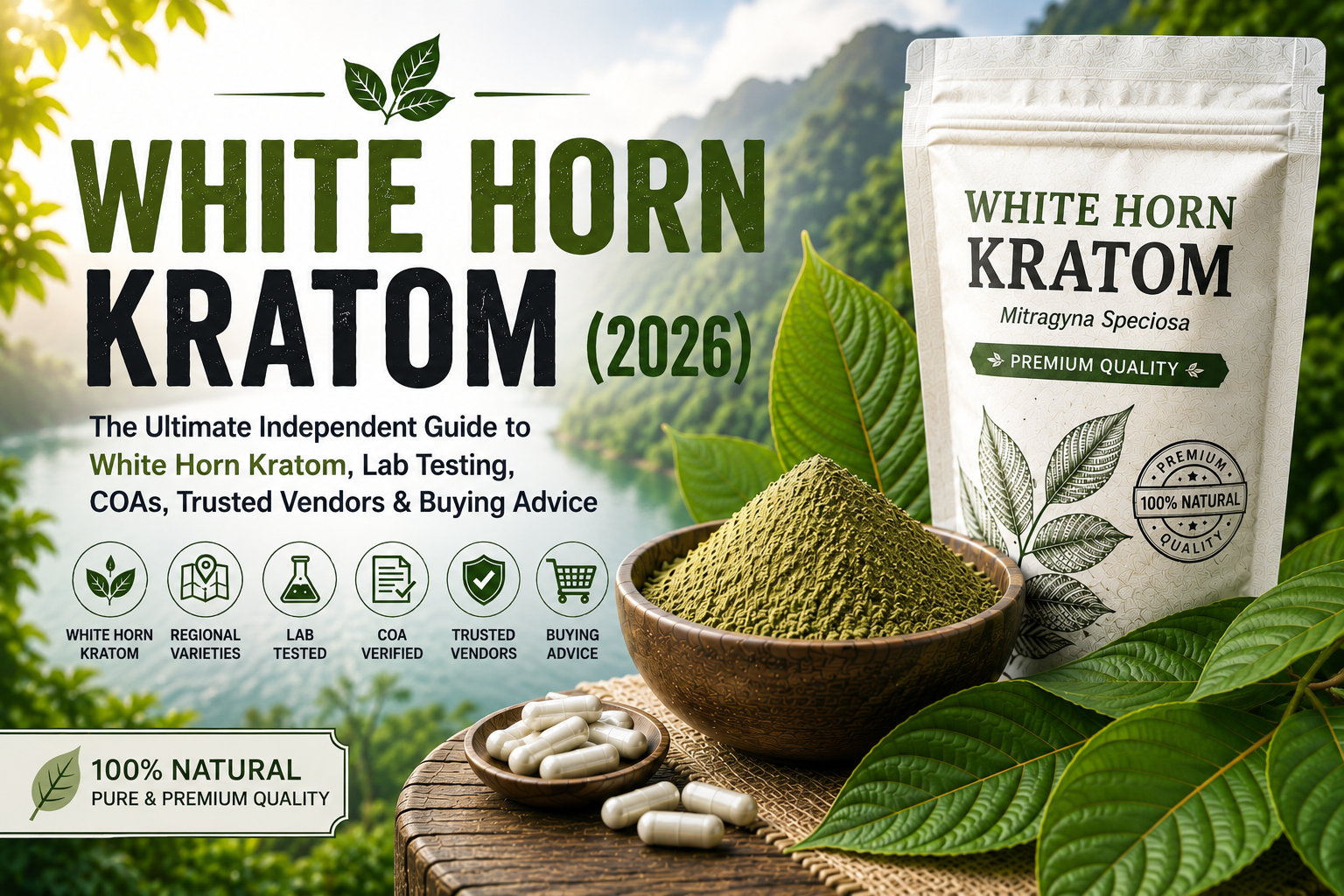
White Horn Kratom
As the kratom marketplace continues to expand, consumers searching for White Horn Kratom are presented with hundreds of products carrying similar names but offering very different levels of transparency. While many websites advertise premium quality or exclusive processing methods, relatively few provide the independent documentation that allows buyers to evaluate products objectively. Laboratory reports, Certificates of Analysis (COAs), manufacturing standards, and traceable sourcing information remain some of the most valuable resources available when comparing kratom products.
Unlike synthetic products manufactured under tightly controlled conditions, kratom is a naturally cultivated botanical. Factors such as regional climate, soil composition, seasonal harvesting, drying methods, storage conditions, and manufacturing practices can influence individual production batches. Because of these natural variations, products sold under the same commercial name are not guaranteed to be identical across different vendors or production lots.
This guide approaches White Horn Kratom from an educational and transparency-first perspective. Rather than promoting any specific vendor or making unsupported claims, the goal is to explain how consumers can evaluate products using independently verifiable information. Throughout this guide, readers will learn how laboratory testing, Certificates of Analysis, manufacturing transparency, and documented quality assurance practices contribute to responsible purchasing decisions.
Whether you are researching White Horn Kratom for the first time or comparing several vendors, understanding objective quality indicators provides a stronger foundation than relying solely on marketing language or product descriptions.
What Is White Horn Kratom?
White Horn Kratom is a commercial marketplace name used for kratom products associated with distinctive horn-shaped leaves and categorized within the white-vein product group. Although the name is widely recognized throughout the kratom industry, it is not a formally recognized botanical classification of Mitragyna speciosa. Instead, it serves as a commercial identifier that helps vendors organize products for consumers.
Similar names—including Red Horn, Green Horn, Gold Horn, and Yellow Horn—are also marketplace classifications rather than scientific varieties. Product names should therefore be viewed as descriptive labels rather than guarantees of identical cultivation methods, processing techniques, laboratory characteristics, or manufacturing standards.
Consumers researching White Horn Kratom should look beyond the product name and review independent documentation that supports quality, consistency, and transparency.
Botanical Background of Mitragyna speciosa
Kratom is derived from Mitragyna speciosa, a tropical tree belonging to the Rubiaceae family, which also includes coffee plants. The species grows naturally throughout parts of Southeast Asia, particularly Indonesia, where favorable environmental conditions support commercial cultivation.
Although commercial names differ considerably, all kratom products originate from the same botanical species. The differences consumers encounter in the marketplace often reflect harvesting schedules, drying procedures, processing methods, blending practices, and manufacturing standards rather than separate botanical species.
Understanding this distinction helps consumers interpret commercial product names more accurately while emphasizing the importance of laboratory verification and manufacturing transparency.
Why Transparency Matters
Transparency has become one of the strongest indicators of responsible manufacturing throughout today’s kratom marketplace.
Consumers comparing White Horn Kratom products should prioritize vendors that openly provide information regarding:
- Independent laboratory testing
- Certificates of Analysis (COAs)
- Manufacturing procedures
- Product sourcing
- Batch identification
- Quality assurance practices
- Customer support policies
Companies that publish this information allow buyers to evaluate products using measurable documentation instead of relying exclusively on promotional language.
Understanding Independent Laboratory Testing
Independent laboratory testing provides objective information that cannot be determined simply by reading product descriptions or examining packaging.
Testing commonly performed for White Horn Kratom includes:
- Botanical identity verification
- Alkaloid analysis
- Heavy metal screening
- Microbiological testing
- Yeast and mold analysis
- Salmonella screening
- Residual contaminant evaluation
- Batch verification
These analyses help consumers compare products using independently generated scientific documentation.
Although laboratory testing cannot guarantee product quality by itself, it remains one of the strongest indicators of manufacturing transparency available to consumers.
Certificates of Analysis (COAs)
A Certificate of Analysis represents one of the most valuable documents available when researching botanical products.
For White Horn Kratom, a COA commonly includes:
- Production batch number
- Sample identification
- Testing laboratory
- Date of analysis
- Laboratory methodology
- Alkaloid analysis
- Heavy metal screening
- Microbiological testing
- Laboratory authorization
Consumers should compare the batch number listed on the Certificate of Analysis with the batch number printed on product packaging whenever possible. Matching these identifiers helps verify that the laboratory report corresponds to the specific product being purchased.
Understanding Natural Batch Variation
Unlike pharmaceutical products manufactured under standardized chemical formulations, kratom remains an agricultural crop.
As a result, every batch of White Horn Kratom may naturally differ because of:
- Climate
- Rainfall
- Soil composition
- Harvest timing
- Drying methods
- Storage conditions
- Manufacturing practices
These natural variations reinforce the importance of reviewing batch-specific Certificates of Analysis instead of assuming every product sold under the same commercial name will be identical.
Manufacturing Standards
Responsible manufacturing practices help improve consistency throughout production.
Companies producing White Horn Kratom may implement documented procedures covering:
- Harvest handling
- Drying operations
- Milling
- Equipment sanitation
- Packaging
- Storage
- Batch tracking
- Quality assurance
Although manufacturing standards vary among companies, vendors that explain their production procedures generally provide consumers with greater transparency.
Evaluating Vendor Documentation
One of the easiest ways to compare vendors is by reviewing the documentation they provide.
Consumers researching White Horn Kratom should look for:
- Certificates of Analysis
- Independent laboratory reports
- Manufacturing information
- Product specifications
- Batch identification
- Educational resources
- Customer support information
Comprehensive documentation often reflects a stronger commitment to transparency than marketing language alone.
Looking Beyond Marketing Claims
Terms such as:
- Premium quality
- Superior product
- Carefully selected
- Highest grade
- Exclusive processing
are commonly used throughout the kratom industry.
While these descriptions may support product branding, they should never replace independently verifiable documentation.
Consumers are generally better served by evaluating:
- Laboratory reports
- Certificates of Analysis
- Manufacturing transparency
- Product traceability
- Published quality assurance procedures
Objective information provides a far stronger basis for comparison than advertising language.
Why Consumer Education Matters
Consumer education continues to play an increasingly important role within the kratom marketplace.
Understanding concepts such as:
- Laboratory testing
- Certificates of Analysis
- Botanical identification
- Manufacturing transparency
- Batch traceability
- Vendor evaluation
allows buyers to compare White Horn Kratom products using objective quality indicators instead of relying entirely on promotional material.
As transparency improves throughout the industry, consumers who understand these concepts will be better equipped to make informed purchasing decisions.
What You’ll Learn in This Guide
The remainder of this guide explores White Horn Kratom in greater detail, including manufacturing practices, laboratory testing procedures, alkaloid analysis, Certificates of Analysis, quality assurance systems, storage recommendations, packaging standards, vendor evaluation, buying guidance, and educational resources. Each section has been developed to support transparency-first decision-making using independently verifiable information instead of unsupported marketing claims.
How White Horn Kratom Is Processed
After harvesting, White Horn Kratom moves through several carefully managed production stages before reaching consumers. Although manufacturing methods vary among companies, the general process includes harvesting, drying, milling, quality inspection, laboratory sampling, packaging, storage, and distribution. Each stage influences product consistency, making manufacturing transparency an important consideration when comparing vendors.
Drying and Processing Methods
Drying represents one of the most important stages in botanical manufacturing. Producers of White Horn Kratom may use different drying environments, handling procedures, and processing techniques depending on their quality assurance systems. Since these methods differ throughout the industry, consumers should review documented manufacturing information rather than assuming identical production standards across every company.
Manufacturing Transparency
Manufacturing transparency helps consumers understand how White Horn Kratom progresses from harvested leaves to finished packaging. Responsible vendors often explain sanitation procedures, processing methods, equipment maintenance, manufacturing controls, and quality assurance systems. This information enables buyers to compare products using documented evidence rather than relying entirely on promotional language.
Third-Party Laboratory Testing
Independent laboratory testing remains one of the strongest indicators of transparency for White Horn Kratom. Accredited laboratories commonly perform botanical identity verification, contaminant screening, alkaloid analysis, heavy metal testing, microbiological analysis, and batch verification. Reviewing laboratory reports provides consumers with objective information that supports informed purchasing decisions.
Understanding Alkaloid Analysis
Laboratory alkaloid analysis measures naturally occurring compounds present within White Horn Kratom samples. Because alkaloid concentrations may vary naturally due to environmental conditions, harvesting schedules, drying procedures, and manufacturing practices, laboratory reports should always be interpreted as batch-specific documentation rather than permanent product characteristics.
Heavy Metal Screening
Independent laboratories frequently perform heavy metal screening as part of quality evaluation for White Horn Kratom. These analyses help manufacturers document quality assurance procedures while providing consumers with additional information regarding the testing completed before products become available for purchase.
Microbiological Testing
Microbiological testing forms another essential component of laboratory evaluation. Vendors selling White Horn Kratom supported by independent testing often provide reports covering microbial screening, yeast and mold analysis, and other quality assurance measures. These laboratory results contribute to improved transparency throughout the manufacturing process.
Reading a Certificate of Analysis (COA)
A Certificate of Analysis provides detailed laboratory documentation for a specific production batch of White Horn Kratom. Consumers should review laboratory identification, batch numbers, testing dates, contaminant screening, alkaloid analysis, and laboratory accreditation. Matching the COA batch number with product packaging helps verify that the documentation corresponds to the purchased product.
Batch Traceability
Batch traceability allows manufacturers to connect finished White Horn Kratom products with laboratory reports, production records, and quality assurance documentation. Companies maintaining reliable batch tracking systems demonstrate stronger manufacturing transparency while making it easier for consumers to verify product information whenever questions arise.
Evaluating Vendor Transparency
Transparency should be one of the primary factors when comparing vendors offering White Horn Kratom. Consumers should determine whether companies publish Certificates of Analysis, laboratory reports, sourcing information, manufacturing practices, customer support policies, and educational resources before making a purchasing decision.
Comparing Product Documentation
The amount of documentation available varies significantly between vendors. Before purchasing White Horn Kratom, compare laboratory reports, manufacturing standards, product specifications, batch identification, educational materials, and quality assurance information. Products supported by comprehensive documentation generally provide greater transparency than products promoted primarily through advertising.
Storage Recommendations
Proper storage helps preserve the condition of White Horn Kratom after purchase. Products should generally be stored inside airtight containers, protected from direct sunlight, excessive heat, and moisture. Maintaining cool, dry storage conditions supports product integrity during normal storage periods.
Packaging and Labeling
Packaging serves an important role in protecting White Horn Kratom during transportation and storage. Well-designed packaging commonly includes batch numbers, product identification, manufacturer information, storage recommendations, and lot tracking details. These features improve traceability while supporting overall quality assurance efforts.
Practical Buying Checklist
Before purchasing White Horn Kratom, consumers should review several important quality indicators:
- Independent laboratory testing
- Current Certificate of Analysis
- Batch number verification
- Manufacturing transparency
- Product traceability
- Company reputation
- Customer support availability
- Published quality assurance standards
- Clear packaging information
- Transparent sourcing policies
Following a consistent evaluation checklist helps consumers compare products objectively rather than relying entirely on promotional claims.
Preparing for an Informed Purchase
An informed purchasing decision begins with education instead of advertising. Consumers researching White Horn Kratom should compare laboratory documentation, manufacturing standards, Certificates of Analysis, sourcing transparency, and vendor reputation before selecting a product. Companies that openly publish this information make it easier for consumers to evaluate quality using independently verifiable evidence rather than unsupported marketing statements.
Frequently Asked Questions (FAQ)
Is White Horn Kratom a scientifically recognized variety?
No. White Horn Kratom is a commercial marketplace name rather than a formally recognized botanical variety. Similar names such as Red Horn, Green Horn, Gold Horn, and Yellow Horn are commercial classifications used by vendors to organize products. They should not be interpreted as officially recognized botanical varieties of Mitragyna speciosa.
Why should consumers review laboratory testing?
Independent laboratory testing provides objective information about White Horn Kratom that cannot be confirmed through marketing descriptions or packaging alone. Laboratory reports commonly include contaminant screening, alkaloid analysis, heavy metal testing, microbiological analysis, and batch identification, allowing consumers to compare products using documented scientific information.
What is a Certificate of Analysis (COA)?
A Certificate of Analysis (COA) is an independent laboratory document summarizing testing performed on a specific production batch of White Horn Kratom. It commonly includes batch numbers, laboratory identification, testing dates, alkaloid analysis, contaminant screening, testing methodology, and quality assurance information that consumers can review before making purchasing decisions.
Why is manufacturing transparency important?
Manufacturing transparency allows consumers to understand how White Horn Kratom is sourced, processed, tested, packaged, and documented before reaching the marketplace. Companies that openly publish laboratory reports, Certificates of Analysis, and manufacturing standards generally provide stronger evidence of responsible production practices.
Can products with the same name differ?
Yes. Products sold as White Horn Kratom may differ because of natural agricultural variation, harvesting schedules, drying methods, storage conditions, manufacturing procedures, laboratory testing practices, and quality assurance systems. Reviewing batch-specific documentation provides a more reliable basis for comparison than relying solely on commercial product names.
Common Misconceptions About White Horn Kratom
One common misconception is that every product labeled White Horn Kratom is identical. In reality, commercial names do not guarantee identical cultivation methods, manufacturing standards, laboratory testing, or quality assurance procedures between different companies.
Another misconception is that promotional terms such as “premium,” “highest quality,” or “exclusive” automatically indicate superior quality. While these phrases may support product branding, they should always be accompanied by independently verifiable laboratory reports and Certificates of Analysis.
Consumers should also recognize that commercial names do not necessarily identify a single cultivation region or processing facility. Modern supply chains often involve harvesting, drying, milling, blending, packaging, quality inspection, and export through multiple stages before products reach consumers.
Industry Transparency Continues to Improve
The kratom industry has steadily moved toward greater transparency over recent years.
Many responsible manufacturers now provide:
- Independent laboratory reports
- Batch-specific Certificates of Analysis
- Manufacturing information
- Product traceability
- Quality assurance documentation
- Educational resources
- Customer support information
These improvements allow consumers to compare products using objective documentation instead of relying entirely on promotional material or advertising claims.
Choosing White Horn Kratom Responsibly
Consumers researching White Horn Kratom should prioritize independently verifiable information before making purchasing decisions.
Important factors include:
- Independent laboratory testing
- Certificates of Analysis
- Manufacturing transparency
- Batch identification
- Product traceability
- Sourcing documentation
- Quality assurance procedures
- Customer support
- Company reputation
Evaluating several quality indicators together provides a more complete understanding of how products are manufactured and documented.
More Strains for you to research
- What Is Kratom?
- Horn Kratom
- Horn Kratom vs. Elephant Kratom
- Red Horn Kratom
- Green Horn Kratom
- Gold Horn Kratom
- Kratom Alkaloids Explained
- Kratom Lab Testing Explained
- How to Read a Kratom Certificate of Analysis (COA)
- Third-Party Lab Testing Explained
- Kratom Buying Guide
- Kratom Safety & Side Effects
- Kratom Legality Guide
- How to Identify a Trusted Kratom Vendor
- How to Verify a Kratom COA
- Kratom Extract Powder Explained
- Full Spectrum Kratom Explained
- Bali vs. Maeng Da Kratom
- Borneo vs. Sumatra Kratom
External Authority References
For readers seeking additional information about White Horn Kratom, the following independent organizations provide valuable educational resources covering botanical identification, laboratory testing, manufacturing transparency, regulatory developments, and peer-reviewed scientific research relating to Mitragyna speciosa and kratom quality standards.
- U.S. Food and Drug Administration (FDA) — Public information regarding kratom safety, regulatory status, import alerts, and consumer advisories.
- American Kratom Association (AKA) — Information regarding the voluntary Good Manufacturing Practices (GMP) Standards Program.
- Kew Science – Plants of the World Online — Botanical reference for Mitragyna speciosa.
- Journal of Ethnopharmacology — Peer-reviewed research concerning kratom botany, chemistry, and pharmacology.
- Frontiers in Pharmacology — Scientific publications examining kratom alkaloids, toxicology, and emerging evidence.
- National Center for Biotechnology Information (NCBI/PubMed) — Database of peer-reviewed biomedical literature relating to Mitragyna speciosa and its naturally occurring alkaloids.
Final Verdict
White Horn Kratom should be evaluated using transparent, independently verifiable information rather than promotional language alone. As with other botanical products, quality depends on documented manufacturing standards, batch consistency, independent laboratory testing, and the availability of current Certificates of Analysis. Consumers who compare products using objective quality indicators are better positioned to make informed purchasing decisions.
When researching White Horn Kratom, prioritize vendors that publish batch-specific laboratory reports, explain their manufacturing practices, provide traceable documentation, and maintain responsive customer support. Combining these factors with information from independent scientific and regulatory resources provides a balanced framework for evaluating products responsibly.
Editorial Note
This article is intended for educational and informational purposes only. It does not provide medical advice, diagnose, treat, or prevent any medical condition, nor does it recommend or endorse any specific product, brand, or vendor. Readers should review applicable laws within their jurisdiction and consult qualified healthcare professionals regarding health-related questions.