Reviewed by Kratom Verdict Editorial Team
Last Updated: July 2026
Estimated Reading Time: 18–22 minutes
Guide Type: Independent Editorial Strain Guide
Research Basis: Publicly available botanical information, third-party laboratory transparency, publicly available regulatory resources, scientific literature, and independent editorial research.
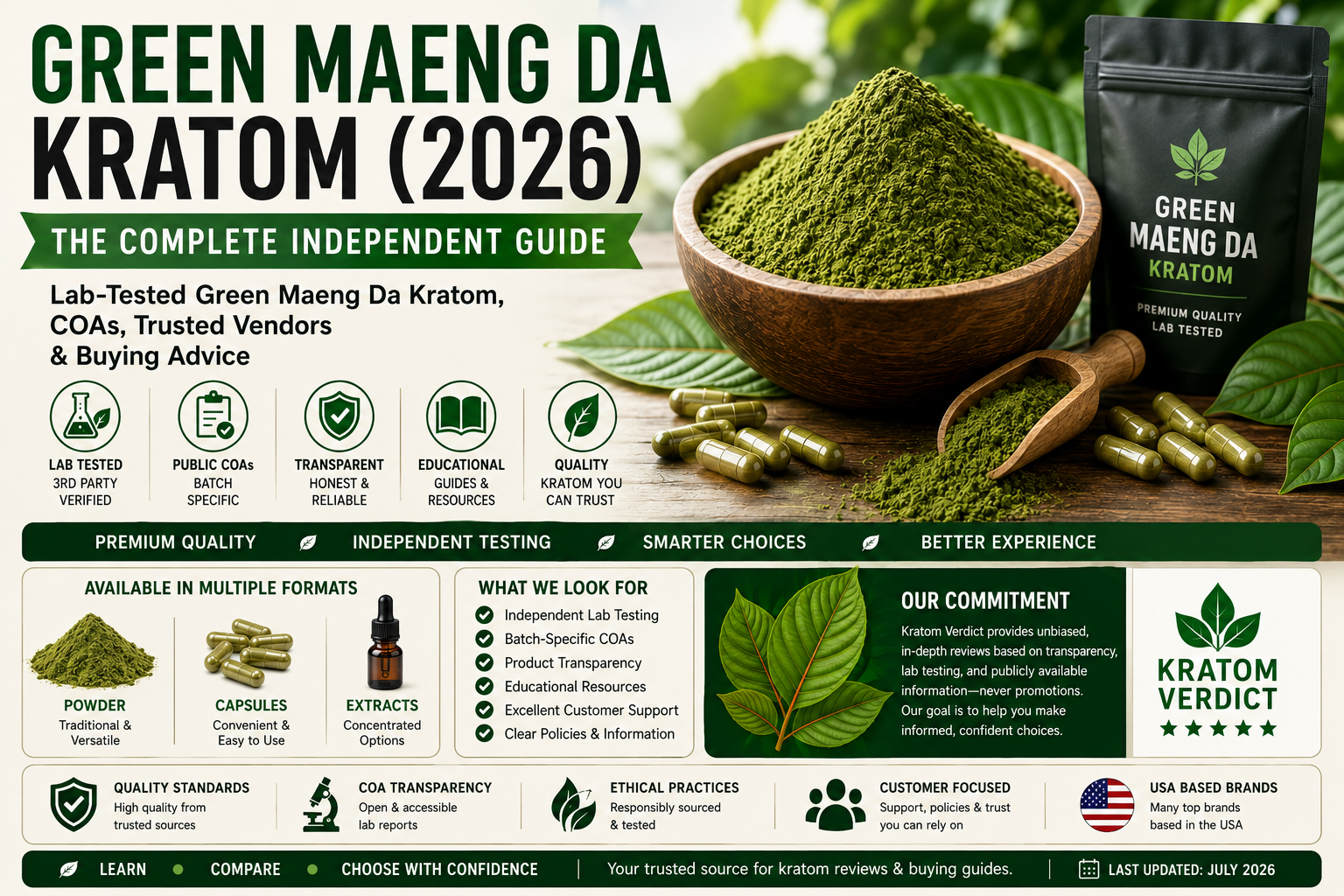
Green Maeng Da Kratom has built a reputation as the strain people come back to — a middle ground between white-vein stimulation and red-vein calm that users consistently describe as “functional energy” rather than a hard buzz or sedation. Search volume for the strain has climbed steadily through 2026, and it’s now one of the most requested green-vein products on the market. That popularity comes with a real downside: this is also a strain that’s had actual, documented contamination recalls, which makes vendor vetting more important here than with almost any other strain on this site. Green Maeng Da Kratom is commonly available as powder, capsules, tablets, and concentrated extracts.
This guide covers what Green Maeng Da actually is, what a legitimate lab report should show, the safety incidents worth knowing about, and exactly what to check before you buy.
Disclosure: This site earns commissions when you purchase through some vendor links below. That doesn’t change our evaluation criteria — we’re upfront about it because transparency is the whole point of this guide.
What Is Green Maeng Da Kratom?
“Maeng Da” is a commercial designation rather than a place name — it points to selectively bred or specially processed Mitragyna speciosa leaf, valued for a denser alkaloid profile than standard varieties. The “green” refers to vein color at harvest, positioning this strain as chemically intermediate between white and red veins.
It’s worth being upfront about something most product pages skip: “Maeng Da” naming isn’t standardized across the industry. Different vendors sell products under this name with meaningfully different chemical profiles, and some brands blend vein types entirely — one well-known vendor’s Green Maeng Da is an 80/20 blend of green and white vein powder, for example, rather than a single-origin green leaf. That inconsistency is exactly why the strain name alone tells you less than the batch-specific lab report does. Before purchasing Green Maeng Da Kratom, compare laboratory results instead of relying solely on marketing claims.
Most Green Maeng Da sold today is sourced from Indonesia, particularly Borneo, though the name’s origins trace back to Thailand.
Green Maeng Da Kratom Alkaloid Profile: What the Numbers Actually Mean
Reported mitragynine ranges for Green Maeng Da vary more than most strains, which is itself informative:
- Mitragynine ranges reported by reputable vendors span roughly 1.0%–1.9%, with premium single-origin batches typically landing between 1.3% and 1.7%. This wider spread reflects real differences in sourcing, harvest timing, and — in some cases — deliberate blending with white vein leaf to boost potency. Understanding the alkaloid composition of Green Maeng Da Kratom helps consumers make more informed purchasing decisions.
- 7-hydroxymitragynine (7-OH) stays low, generally under 0.02% of total leaf weight, consistent with the strain’s positioning as energizing rather than sedating. Trusted vendors typically provide transparent laboratory documentation for every Green Maeng Da Kratom batch.
Because the range is wider here than with more tightly defined strains, a current, batch-specific Certificate of Analysis (COA) matters even more for Green Maeng Da than usual — a vendor citing “1.3%+” with no batch document attached is telling you the floor, not the actual number in the bag you’re buying. Current regulations affecting Green Maeng Da Kratom may differ depending on your country, state, or local jurisdiction.
Understanding Product Consistency
One of the most important considerations when evaluating any botanical product is consistency between batches. Environmental conditions, harvesting practices, drying techniques, storage methods, and processing standards can all influence the final characteristics of a product. For this reason, responsible manufacturers often perform routine quality-control testing on every production batch rather than relying on occasional laboratory analysis.
Batch consistency allows consumers to compare laboratory results over time and determine whether a manufacturer follows standardized production practices. While natural variation is expected in agricultural products, significant differences between batches without explanation may indicate inconsistent sourcing or limited quality-control procedures. Reviewing batch-specific documentation provides greater transparency than relying solely on general product descriptions or promotional materials.
Independent laboratories also play an important role in verifying that analytical results are produced using recognized testing methods rather than internal estimates. Reports prepared by qualified third-party laboratories can include information about alkaloid composition, heavy metal screening, microbial analysis, moisture content, and identity verification. Access to this information allows consumers to make more informed purchasing decisions based on documented data instead of marketing language.
Consumers should also remember that product names alone do not guarantee identical characteristics across different manufacturers. Two products carrying similar commercial names may differ in cultivation region, harvesting techniques, drying methods, or post-harvest processing. Because of these variables, comparing Certificates of Analysis, reviewing laboratory documentation, and evaluating vendor transparency often provides a more reliable basis for comparison than the product name itself.
As the botanical marketplace continues to develop, transparency remains one of the strongest indicators of responsible business practices. Companies that openly publish current laboratory reports, provide clear batch identification, and explain their quality-assurance procedures help consumers evaluate products using objective information rather than assumptions. This approach supports informed purchasing decisions while encouraging higher standards of quality and accountability throughout the industry
What Users Report About Green Maeng Da kratom Effects
No vendor or publisher can legitimately make a medical claim about kratom — it hasn’t been evaluated by the FDA for treating any condition. What’s widely and consistently described is a “clean energy” profile: noticeable focus and mood lift without the jittery edge some users report from higher-potency white strains, and without the heavier sedation of red veins. Reported effects commonly last around 4 hours, with onset generally within 20–40 minutes. The quality of Green Maeng Da Kratom can vary depending on cultivation, harvesting, and post-harvest processing methods. Our independent editorial team recommends reviewing laboratory testing before selecting any Green Maeng Da Kratom product.
One practical note that comes up repeatedly across user reports: Green Maeng Da appears to build tolerance faster than milder green strains, with some regular users reporting they need a break within 10–14 days compared to 3–4 weeks for gentler options. Individual response varies enormously based on tolerance, body weight, and batch potency, so treat any effect description — including this one — as a general reference point, not a guarantee.
Green Maeng Da kratom vs. Other Green Strains
| Strain | Mitragynine Range | Typical Character |
|---|---|---|
| Green Maeng Da | 1.0%–1.9% (varies by vendor) | Higher potency, “functional energy,” faster tolerance buildup |
| Green Bali | ~1.2%–1.9% | More balanced, gentler all-around use |
| Green Indo | Moderate | Milder stimulation, often described as smoother |
This kind of direct comparison — including being honest about where ranges overlap or where a strain’s marketing outpaces its actual potency data — is the kind of substantive context Google’s quality rater guidelines reward in supplement content, versus a page that just repeats one vendor’s superlatives.
Safety Note: Green Maeng Da Has a Real Recall History
This is worth stating plainly rather than glossing over: Green Maeng Da has been directly involved in documented contamination recalls. In November 2025, a vendor issued a recall on its Green Maeng Da powder after Florida’s Department of Agriculture and Consumer Services identified potential Salmonella contamination during routine retail testing. This isn’t a hypothetical risk cited to sound thorough — it’s a specific, verifiable incident, and it underscores why microbial testing on a current COA isn’t optional for this strain in particular. Green Maeng Da Kratom remains one of the most widely researched green-vein varieties in today’s commercial kratom market.
Vendor Evaluation Checklist
Before buying Green Maeng Da from any source, verify:
- A current, batch-specific COA showing mitragynine %, 7-OH %, heavy metals, and microbial testing (Salmonella and E. coli specifically, given the strain’s recall history)
- AKA GMP certification, confirmed directly on the American Kratom Association’s own published vendor list — roughly 80% of vendors in this space haven’t cleared this standard, so don’t assume it
- Clear disclosure of blending — if the product mixes vein types, the vendor should state that plainly, not imply single-origin green leaf
- Independent reviews mentioning this specific strain by name — general brand reputation doesn’t guarantee quality on any one product line; Reddit’s r/kratom is a common source for strain-specific feedback
- Freshness signals — nitrogen-flushed or vacuum-sealed packaging and visible harvest/packaging dates
- A genuine return or satisfaction policy
Common Product Formats
- Powder — most cost-effective, fastest onset, requires manual measuring
- Capsules — pre-measured convenience (commonly sold in ~500mg capsules with a stated minimum mitragynine percentage)
- Tablets — pressed, pre-measured, easy to transport
- Extracts — significantly more concentrated, requiring much smaller and more carefully measured servings
A Note on Use and Starting Points
We’re not going to hand you a single “right” dose — tolerance, body weight, and batch potency vary too much for that to be responsible, one-size-fits-all advice. What’s commonly cited across users and vendors is starting toward the lower end of whatever range a reputable seller lists, giving it 20–40 minutes to take effect before considering more, and being mindful of timing — some users report that taking it later in the day can disrupt sleep for a night or two afterward. Given the faster tolerance buildup reported with this strain specifically, spacing out regular use is worth factoring in more than with milder greens. If you’re new to kratom or currently take other medications, talk to a healthcare provider first — kratom has documented interactions with several drug classes, and pregnant or breastfeeding individuals, along with anyone managing a serious medical condition, should avoid it and consult a clinician. Independent laboratory testing can help verify the alkaloid profile of Green Maeng Da Kratom before purchase.
Also Research
- What Is Kratom?
- Maeng Da Kratom
- Red Maeng Da Kratom
- White Maeng Da Kratom
- Gold Maeng Da Kratom
- Kratom Alkaloids Explained
- Kratom Lab Testing Explained
- How to Read a Kratom COA
- How to Verify a Kratom COA
- Kratom Buying Guide
- Kratom Safety & Side Effects
- Kratom Legality Guide
Legal Status Check
Green Maeng Da follows the same legal patchwork as kratom generally. As of mid-2026, it remains legal at the federal level and in most U.S. states, with roughly nine states maintaining outright bans and 30+ operating under Kratom Consumer Protection Act frameworks requiring age verification and testing compliance. Confirm your specific state’s current law — including the state you’re shipping to — before ordering.
Frequently Asked Questions
Is Green Maeng Da the same in every vendor’s product? No — this is one of the least standardized strain names in the market. Some vendors sell single-origin green leaf; others sell blends of green and white vein powder under the same name. Always check the specific product’s COA rather than assuming consistency across brands.
What mitragynine percentage should I look for? Reported ranges from reputable vendors span roughly 1.0%–1.9%, with many premium single-origin batches landing between 1.3% and 1.7%. The number only matters if it’s backed by a current, batch-specific COA.
Has Green Maeng Da actually been recalled before? Yes. In November 2025, a Green Maeng Da powder product was recalled after a state agriculture department identified potential Salmonella contamination during retail testing. This is a documented reason microbial testing matters for this strain specifically, not a generic caution.
Does Green Maeng Da build tolerance faster than other strains? Some regular users and vendor guides report needing breaks sooner with Green Maeng Da (roughly 10–14 days) compared to milder green strains (3–4 weeks), though this varies by individual use pattern and isn’t clinically established.
How do I verify a vendor’s Green Maeng Da lab results are legitimate? Look for a COA from a named, independent third-party lab, dated to match the specific batch number on your product’s packaging — including microbial results, not just an alkaloid percentage.
Readers interested in learning more about Green Maeng Da Kratom, laboratory testing, botanical quality standards, and consumer education can consult publicly available information from the American Kratom Association (AKA), the American Herbal Products Association (AHPA), the U.S. Food and Drug Administration (FDA), the National Institutes of Health (NIH), and the National Center for Biotechnology Information (NCBI). These organizations publish educational resources related to botanical products, laboratory standards, consumer safety, and scientific research.
The Bottom Line
Green Maeng Da’s reputation as a balanced, high-functioning strain is genuine, but its inconsistent naming conventions and documented recall history make it one of the strains where vendor vetting matters most. Confirm a current, batch-specific COA that includes microbial testing, check AKA GMP status directly through the American Kratom Association, and don’t assume “Green Maeng Da” means the same thing from one brand to the next. Consumers should review a batch-specific Certificate of Analysis (COA) when evaluating Green Maeng Da Kratom products.