Reviewed by Kratom Verdict Editorial Team
Last Updated: July 2026
Estimated Reading Time: 18–22 minutes
Guide Type: Independent Editorial Strain Guide
Research Basis: Publicly available botanical information, third-party laboratory transparency, publicly available regulatory resources, scientific literature, and independent editorial research.
White Bali Kratom is one of the most searched kratom strains online, and for a specific reason: it’s positioned as the “gentle doorway” into white-vein kratom — energizing and focus-forward, but without the harder edge some users report from strains like White Maeng Da. That popularity comes with the same problem every high-search kratom strain has: a flood of vendors selling inconsistent, mislabeled, or under-tested product riding on the strain’s name.
This guide covers what White Bali actually is, what the alkaloid numbers on a lab report should look like, how the effects compare to other Bali and white-vein strains, and exactly what to check before you buy.
Disclosure: This site earns commissions when you purchase through some vendor links below. That doesn’t change our evaluation criteria — we’re upfront about it because transparency is the whole point of this guide.
What Is White Bali Kratom?
White Bali comes from Mitragyna speciosa leaves harvested young — before the central leaf vein darkens toward green or red — then dried and processed in the style historically associated with the Bali trade name. That name itself is largely a market convention at this point: most kratom sold today under the “Bali” label, white vein included, is actually grown and processed in Indonesian regions like Borneo, particularly around Suhaid, rather than on the island of Bali itself. “Bali” survived as shorthand for a particular processing and flavor profile long after sourcing shifted.
The early harvest is what defines the “white” designation, and it’s also what shapes the alkaloid profile that makes this strain distinct.
Alkaloid Profile: What the Numbers Actually Mean
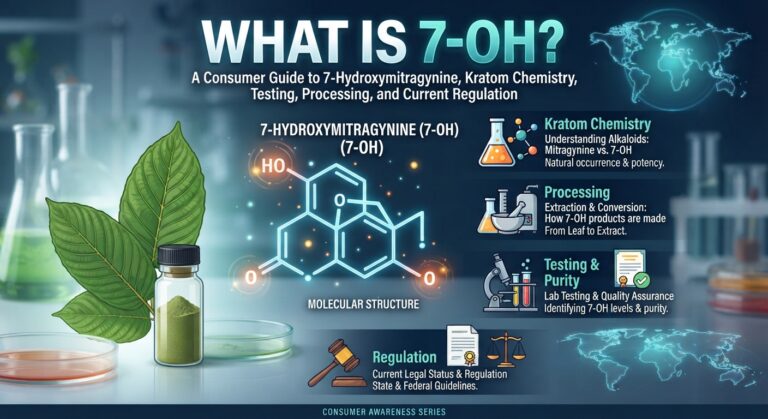
Kratom’s effects are driven primarily by two alkaloids: mitragynine and 7-hydroxymitragynine (7-OH). The timing of harvest changes the balance between them.
- Mitragynine runs higher in white-vein strains generally, since younger leaves haven’t undergone the oxidation process that shifts alkaloid balance over time. Lab testing across reputable vendors for White Bali typically shows mitragynine in the 1.2%–1.8% range, though some sources report slightly lower baseline figures (roughly 0.8%–1.4%) — the spread reflects real variation between harvests, growing regions, and testing labs, which is exactly why batch-specific testing matters more than any single published average.
- 7-OH stays comparatively low in white-vein kratom, since this alkaloid becomes more concentrated as leaves mature and oxidize — a process white-vein leaves see far less of due to earlier picking.
That combination — higher mitragynine, lower 7-OH — is the chemical basis for White Bali’s reputation as a “cleaner” stimulating strain compared to red-vein varieties. A legitimate Certificate of Analysis (COA) will show both figures tied to a specific batch number, not a single reused document applied across every shipment a vendor sends out.
What Users Report About White Bali’s Effects
As with any kratom strain, no vendor or publisher can make a legitimate medical claim — kratom is not FDA-evaluated for treating any condition, and you should be skeptical of anything that suggests otherwise. What’s consistently reported across users and vendors is a profile of clean, focus-forward energy with a milder onset than more intense white-vein strains like White Maeng Da or White Elephant. Reported effect windows generally begin 20–45 minutes after use and last roughly 3–6 hours, though this varies by dose, body weight, and whether it’s taken on an empty stomach.
Because individual response depends heavily on personal chemistry, tolerance, and the specific batch’s potency, treat any effect description — including this one — as a general reference point, not a guarantee.
White Bali vs. Other Strains
| Strain | Alkaloid Lean | Typical Character |
|---|---|---|
| White Bali | High mitragynine, low 7-OH | Balanced, focus-forward energy; milder onset |
| White Maeng Da | High mitragynine | More intense stimulation, less beginner-friendly |
| Red Bali | Higher 7-OH relative to mitragynine | More sedating, evening use |
| Green Bali | Balanced | Middle ground between stimulating and calming |
This kind of side-by-side comparison is the sort of substantive, product-category context Google’s quality raters look for in supplement content — it signals the publisher understands how strains actually differ, rather than recycling a single vendor’s product description.
Why So Many White Bali Products Fail Quality Standards
Kratom has no federal product-safety regulation comparable to food or pharmaceuticals, and that gap shows up in predictable ways across the market:
- Mislabeled origin — leaf marketed as “Bali” that’s sourced and processed with no real connection to the traditional profile
- Inflated or unverifiable potency claims — a mitragynine percentage on the label with no COA to back it
- Contamination risk — heavy metals and microbial contamination from poor drying, storage, or handling conditions
- Stale COAs — a single lab report reused across multiple batches rather than tested batch-by-batch
The American Kratom Association’s GMP (Good Manufacturing Practice) certification program exists specifically to address this. Certified vendors are audited against defined handling, testing, and labeling standards, and the current list of certified vendors is publicly available directly through the AKA — always verify there rather than trusting a certification badge displayed on a vendor’s own site.
Explore More With Us
- What Is Kratom?
- Bali Kratom
- Red Bali Kratom
- Green Bali Kratom
- Gold Bali Kratom
- Kratom Alkaloids Explained
- Kratom Lab Testing Explained
- How to Read a Kratom COA
- How to Verify a Kratom COA
- Kratom Buying Guide
- Kratom Safety & Side Effects
- Kratom Legality Guide
Vendor Evaluation Checklist
Before buying White Bali from any source, verify:
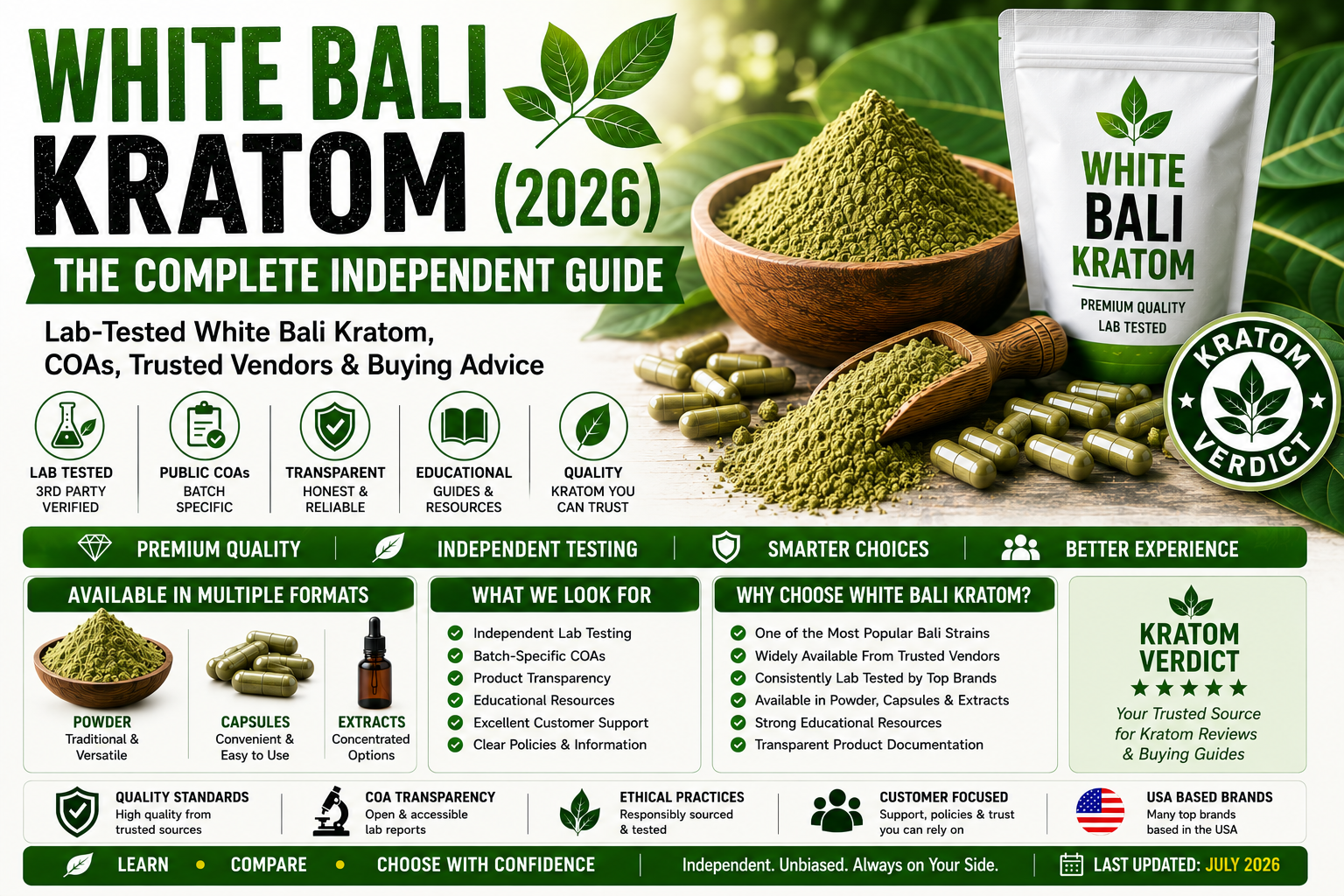
- A current, batch-specific COA showing mitragynine %, 7-OH %, heavy metals, and microbial screening results
- AKA GMP certification status, cross-checked on the AKA’s own published vendor list
- Independent reviews outside the vendor’s own site (Trustpilot, Reddit’s r/kratom, Better Business Bureau)
- Clear sourcing detail — actual growing region, not just the trade name “Bali”
- Consistent batch potency — reviews or documentation showing mitragynine content stays within a stable range across orders
- A genuine return/satisfaction policy
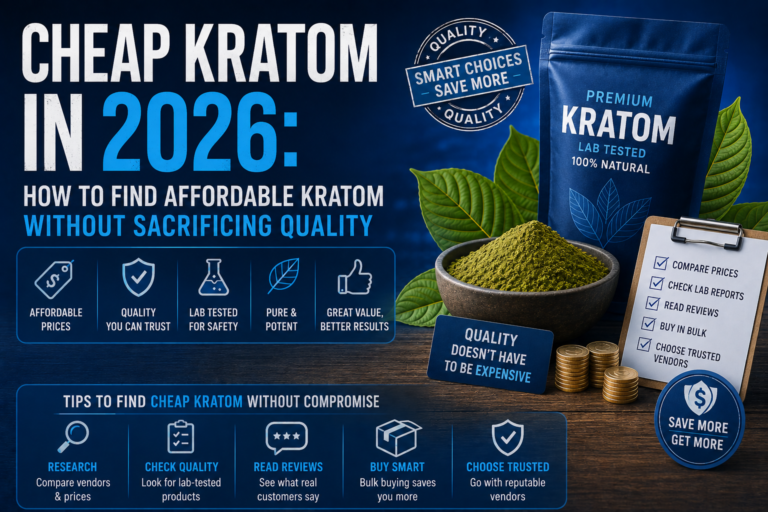
Be skeptical of pricing well below the market range (roughly $80–$150/kg from reputable vendors as of 2026) — unusually cheap White Bali is a common sign of cut, substituted, or under-tested product.
Common Product Formats
- Powder — most cost-effective, faster onset, requires manual measuring
- Capsules — pre-measured convenience, small premium in price per gram
- Extracts — more concentrated, requires smaller, more careful serving sizes
- Blended/high-MIT powders — standard leaf combined with extract to reach a higher stated mitragynine percentage; these should carry the same batch-level COA transparency as any single-origin product
A Note on Use and Starting Points
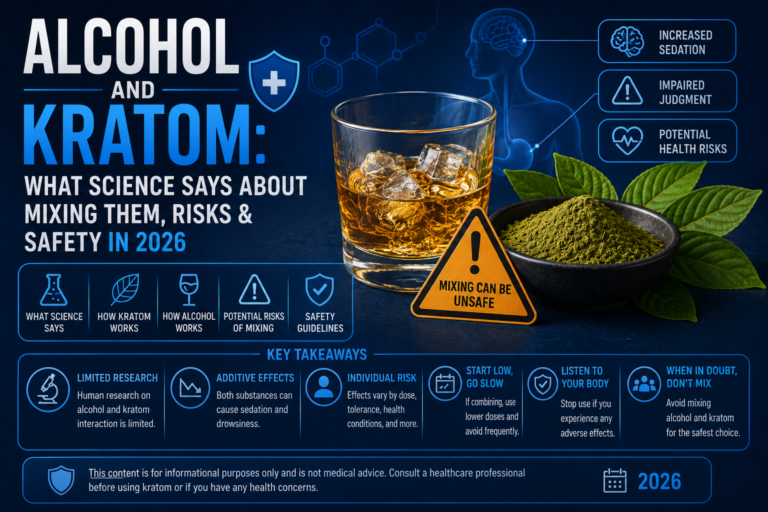
We won’t hand you a single “correct” dose — body weight, tolerance, and batch potency all vary too much for that to be responsible advice, and you should be cautious of any source that states one with total confidence. What’s commonly cited across vendors and experienced users is starting toward the lower end of whatever range a reputable seller lists for a given product, giving it 30–45 minutes to take effect before considering more, and increasing gradually only after you know how a specific batch affects you. If you’re new to kratom, or you’re taking other medications, talk to a healthcare provider first — kratom has documented interactions with several drug classes, and combining it with alcohol or other substances significantly raises risk.
Legal Status Check
White Bali follows the same legal patchwork as kratom generally. As of mid-2026, it remains legal federally and in most U.S. states, with roughly nine states maintaining outright bans and 30+ states operating under Kratom Consumer Protection Act frameworks requiring age verification and testing compliance. Confirm your specific state’s current law before ordering, since legality varies by where the product is being shipped to, not just from.
Frequently Asked Questions
Is White Bali stronger than Green Bali or Red Bali? Not in a simple “stronger/weaker” sense — White Bali is generally more stimulating due to its higher mitragynine and lower 7-OH balance, while Red Bali leans more sedating and Green Bali sits in between. Actual intensity depends heavily on the specific batch’s tested potency.
What mitragynine percentage should I look for in White Bali? Quality batches generally test in the 1.2%–1.8% range, though this varies by vendor and testing lab. The number is only meaningful if it’s backed by a current, batch-specific COA — a printed percentage without lab verification isn’t a reliable signal on its own.
Why does White Bali have lower 7-OH than red-vein strains? 7-OH concentration increases as kratom leaves mature and oxidize. White-vein strains, including White Bali, are harvested earlier in that cycle, which naturally keeps 7-OH levels lower relative to mitragynine.
Is “Bali” kratom actually from Bali? Usually not. Most kratom sold under the Bali name today, including White Bali, is grown and processed in other Indonesian regions such as Borneo. “Bali” persists as a trade/processing designation rather than a strict origin guarantee.
How do I verify a vendor’s lab results are real? Check for a COA from a named, independent third-party lab, dated to match the specific batch number on your product’s packaging — not a general “we test our products” claim with no document attached.
Readers interested in learning more about botanical quality standards, laboratory testing, and consumer education can consult publicly available information from the American Kratom Association (AKA), the American Herbal Products Association (AHPA), the U.S. Food and Drug Administration (FDA), the National Institutes of Health (NIH), and the National Center for Biotechnology Information (NCBI). These organizations publish educational resources related to botanical products, scientific research, laboratory standards, and consumer safety.
The Bottom Line
White Bali’s appeal as a gentler, more approachable white-vein option is genuine — but that same popularity is what draws vendors willing to trade on the name without backing it with real testing. The strain isn’t the risk; an unverified source is. Confirm a current batch-specific COA, check AKA GMP status directly through the American Kratom Association, and read reviews the vendor doesn’t control before you buy.
This article is for informational purposes only and does not constitute medical advice. The FDA has not evaluated kratom for any medical use. Consult a healthcare provider before using kratom, particularly if you take other medications or have an existing health condition. Always verify kratom’s legal status in your state before purchasing.