Is Kratom Bad? An awareness guide
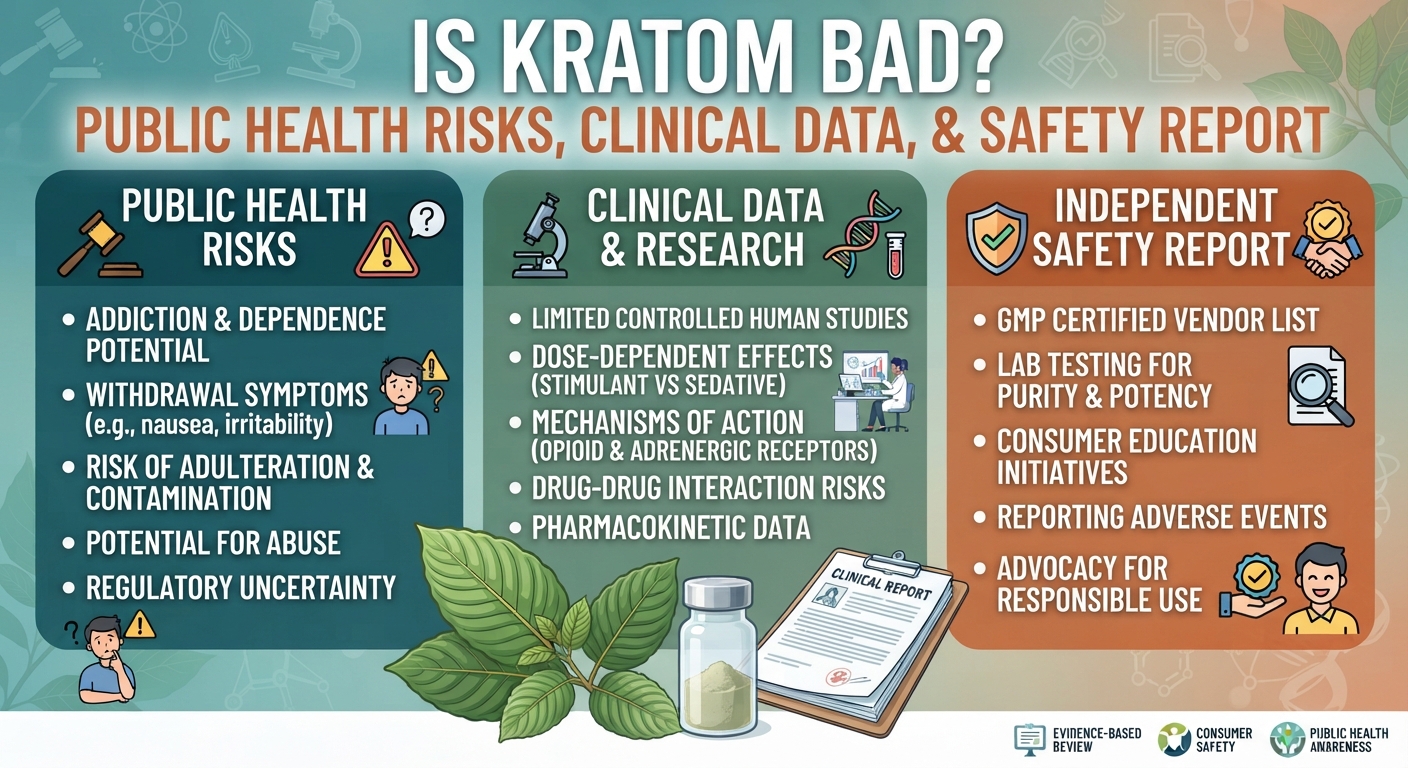
Public health organizations characterize kratom as a significant safety risk due to its potential for serious adverse health events, dependency, and addiction. While some consumers study the plant for lifestyle management, clinical data from the FDA and Mayo Clinic associates unstandardized usage with liver toxicity, respiratory depression, seizures, and severe withdrawal symptoms.
The rapid integration of alternative botanicals into the Western consumer landscape has created a significant public health tracking challenge. Digital marketplace expansion, aggressive retail storefront promotion, and a lack of standardized manufacturing oversight have forced millions of analytical consumers to evaluate complex plant-based substances independently.
Among the most heavily searched, fiercely debated, and misunderstood topics in the alternative health sector is the structural and physiological safety profile of Mitragyna speciosa. To help the public cut through conflicting internet marketing copy and commercial industry advocacy, this comprehensive investigation looks at the raw empirical facts to answer a fundamental consumer safety question: is kratom bad?
Written from the objective perspective of an independent consumer protection group at “Kratom Verdict,” this evaluation compiles verified toxicological datasets, peer-reviewed clinical research, and public declarations from global health authorities. By detailing specific neuroreceptor binding behaviors, hepatic clearance risks, contamination vectors, and the precise mechanical realities of physical habituation, this report establishes a vital, data-driven shield for your physical well-being and your household budget.
Buying Option
Executive Summary: Clinical Risk Factors and Consumer Safety Metrics
Before examining the granular molecular chemistry and localized organ tracking data, consumers must memorize these foundational, verified public health realities establishing the baseline safety profile of this substance:
- Neurological Trajectory: The primary active components interface directly with central nervous system pathways, functioning as atypical partial mu-opioid agonists and alpha-2 adrenergic receptor activators. This high-affinity binding behavior alters baseline neural signaling, carrying a documented risk of rapid tolerance acceleration, physical dependence, and addiction.
- Organ System Impact: Clinical data from the U.S. Food and Drug Administration (FDA) and the Mayo Clinic links the metabolic breakdown of unstandardized plain leaf powders and isolated extracts to acute organ distress. Documented adverse health events include acute hepatotoxicity, localized bile duct obstruction, renal stress, and severe cardiovascular dysregulation.
- Manufacturing Vulnerabilities: Because the international marketplace operates without uniform pre-market federal oversight, raw materials are highly susceptible to severe contamination. Independent laboratory audits frequently uncover toxic quantities of heavy metals like lead and arsenic, biological pathogens like Salmonella, and illegal adulteration with unlisted synthetic research chemicals.
- Withdrawal and Rebound Kinetics: Abrupt cessation of intake triggers a steep, highly disruptive metabolic rebound cliff. The resulting withdrawal syndrome manifests through severe systemic discomfort, including acute muscle aches, extreme sleep disturbances, profound cognitive irritability, and gastrointestinal distress.
Quick-Glance Consumer Takeaways
Before diving deep into the technical chemistry and manufacturing protocols, consumers can utilize these itemized criteria as a practical first screen for market evaluation:
- Procurement Safety: Procuring unverified botanical powders from local gas stations or non-vetted digital storefronts represents a critical consumer hazard. Safe verification requires bypass-tracking commercial hype to audit active manufacturing compliance scores.
- Pricing vs. Risk Metrics: While bulk raw leaf powder sits at a relatively low retail cost per gram, the long-term healthcare liabilities and economic expenses associated with physical habituation can devastate a household financial budget.
- Third-Party Lab Transparency: Generic, non-traceable laboratory sheets are entirely useless for verifying safety. Real protection requires comprehensive high-performance liquid chromatography (HPLC) panels that explicitly match the unique manufacturing lot code stamped on your retail packaging.
- Product Freshness Risks: Poor post-harvest storage and dynamic moisture exposure cause rapid organic decay, allowing dangerous mold spores and microbial pathogens to multiply within unsealed botanical matrices.
- Contaminant Controls: The presence of heavy metals or industrial residual solvents used during extraction represents a severe, long-term toxicological hazard. Quality assurance verification must extend past raw alkaloid potency to include exhaustive contaminant sweeps. Many digital storefronts hide the truth about is kratom bad, forcing public health advocates to outline why is kratom bad for daily users.
1. Botanical Background and Native Alkaloid Interactivity
The Biological Blueprint of Mitragyna Speciosa
To accurately answer the core query of is kratom bad, one must first decouple botanical reality from commercial marketing slogans. Mitragyna speciosa is a tropical evergreen tree belonging to the Rubiaceae (coffee) family, native to the dense, equatorial rainforest networks of Southeast Asia, primarily across Indonesia, Thailand, Malaysia, and Papua New Guinea. The root architecture of these trees thrives in deeply saturated, highly acidic river-valley soils that are continuously replenished by intense seasonal monsoon flooding.
The leaves of the tree synthesize a highly complex multi-alkaloid web consisting of over forty distinct secondary metabolites. From an evolutionary standpoint, the plant does not create these compounds for human lifestyle management; they are synthesized as an aggressive chemical defense mechanism designed to paralyze local insect populations and shield the plant’s cellular walls from intense solar ultraviolet (UV) radiation. Within this complex chemical matrix, the indole alkaloid mitragynine serves as the overwhelming dominant compound, typically comprising 60% to 70% of the total alkaloid payload in mature trees.
The Fallacy of “Safe and Natural” Plain Leaf Branding
A major deceptive tactic deployed by commercial industry advocates is the continuous assertion that because the material is a natural, unrefined agricultural leaf, it is inherently safe for human consumption. Public health toxicologists recognize this framing as a classic logical fallacy.
Nature synthesizes some of the most destructive toxins known to science, and a botanical’s origin has zero bearing on its safety inside the human body.
When evaluating whether is kratom bad, clinical researchers look directly at how these unrefined compounds behave when processed by human metabolic pathways. Because raw leaf powder contains a shifting, non-standardized distribution of high-affinity alkaloids, every single harvest presents a completely unpredictable chemical footprint.
When an analytical consumer ingests raw plant material, they are not taking a controlled, measured substance; they are flooding their internal organs with dozens of active, unbuffered alkaloids that compete for enzyme binding space and interact with multiple central nervous system pathways simultaneously. Analytical buyers routinely search is kratom bad because they need unbiased, data-driven facts to understand if is kratom bad long-term.
2. Pharmacological Mechanisms and Receptor Agonism
Mu-Opioid Receptor Affinities and Central Nervous System Alterations
The primary driving force behind public health warnings is the specific structural behavior of these alkaloids at the molecular level. Mitragynine and its highly potent metabolite, 7-hydroxymitragynine, cross the blood-brain barrier rapidly to interface directly with mu-opioid receptor networks inside the human brain and spinal cord.
[Ingested Alkaloids] ---> Crosses Blood-Brain Barrier
                             |
                             +---> Agonizes Mu-Opioid Receptors (Analgesia / Dependency Link)
                             |
                             +---> Activates Alpha-2 Adrenergic Receptors (Stimulation / Jitters)
                             |
                             +---> Blocks Adenosine Receptors (CNS Alertness / Tachycardia)
While commercial vendors attempt to distance their products from traditional pharmaceuticals, high-resolution molecular tracking confirms that these botanical compounds bind to the exact same neural receptors activated by controlled prescription medications.
- Mitragynine Binding Profiles: Mitragynine acts as an atypical partial agonist at the mu-opioid receptor web. While it activates these sites more gently than synthetic pharmaceuticals, it simultaneously blocks adenosine receptors and activates alpha-2 adrenergic networks. This dual-action pathway forces the central nervous system into a state of unnatural hyper-alertness, which can easily trigger severe peripheral jitters, rapid heart-rate spikes, and acute panic tracking.
- 7-Hydroxymitragynine Potency Velocity: The minor alkaloid 7-hydroxymitragynine possesses an incredibly high raw binding affinity for the mu-opioid receptor web, functioning with a potency profile that dwarfs standard mitragynine. In concentrated extract shots or isolated tablets, this compound floods neural pathways with unbuffered speed, completely bypassing the body’s natural biological safety ceilings and rapidly altering baseline brain chemistry. To properly evaluate is kratom bad, you must bypass commercial vendor hype to see why the FDA declares is kratom bad for families.
Functional Biased Signaling and the Tolerance Acceleration Trap
Clinical researchers heavily monitor a molecular pathway known as functional selectivity, or biased signaling. When a substance binds to a mu-opioid receptor, it activates two separate internal messaging channels: the G-protein signaling pathway (which handles pain mitigation) and the beta-arrestin-2 pathway. The beta-arrestin-2 pathway is the biological engine behind the most hazardous side effects of traditional synthetic opioids, including fatal respiratory depression and severe intestinal paralysis.
The primary alkaloids are classified as G-protein biased agonists, meaning they preferentially activate the clean G-protein channel while minimizing beta-arrestin-2 recruitment. Commercial distributors exploit this scientific fact to claim their products are completely safe. Medical boards answering is kratom bad examine high-affinity mu-opioid receptor binding behaviors to prove that is kratom bad for baseline chemistry.
However, public health watchdogs warn that this biased signaling pathways creates a severe tolerance acceleration trap. Because the compounds lack a built-in biological brake, the brain’s homeostatic mechanisms respond to continuous receptor saturation by rapidly down-regulating receptor sensitivity. If a close friend asks you is kratom bad, you can share our comprehensive public health safety guide detailing why is kratom bad for wellness.
To achieve the same initial lifestyle management effects, consumers are forced to escalate their serving sizes and frequency with immense velocity, locking themselves into a severe cycle of physical habituation that can quickly degrade their long-term health and exhaust their household financial budget. Exploring toxicological research profiles answers is kratom bad by establishing the physical mechanisms that make people realize is kratom bad for dependency.
3. Organ-Specific Toxicological Risks and Clinical Data
Kratom Side Effects on Liver Tissue and Acute Hepatotoxicity
The human liver is the primary filtration plant tasked with breaking down and clearing active botanical compounds from the bloodstream. When analyzing is kratom bad from an organ-health perspective, kratom side effects on liver tissue represent some of the most thoroughly documented and severe clinical risks in modern medical literature.
[Continuous Ingestion of Unbuffered Alkaloids]
                       |
                       v
    [Cytochrome P450 Enzyme Saturation / Overload]
                       |
                       v
     [Localized Cholestatic Hepatotoxic Injury]
                       |
                       v
 [Bile Duct Obstruction ---> Elevated ALT/AST Enzymes ---> Jaundice / Organ Distress]
When a consumer regularly ingests unbuffered plant matter or high-potency liquid extract shots, the liver’s complex cytochrome P450 enzyme matrix—specifically the CYP2D6 and CYP3A4 isoenzymes—becomes completely saturated.
This enzyme overload halts normal metabolic clearance velocity, inducing a state of localized cholestatic liver injury. Clinical tracking datasets show that patients presenting with severe botanical-induced hepatotoxicity exhibit massive, dangerous spikes in their alanine aminotransferase (ALT) and aspartate aminotransferase (AST) enzyme counts. The sudden surge in emergency room visits proves is kratom bad, forcing independent community watchdogs to reveal why is kratom bad without regulation.
As the liver’s bile clearance pathways become physically obstructed, toxic bile pigments back up into the bloodstream, manifesting as localized jaundice (yellowing of the skin and eyes), dark tea-colored urine, intense full-body itching, and acute right-upper-quadrant abdominal pain. Without immediate medical intervention and complete substance cessation, this cholestatic distress can progress toward localized tissue necrosis and acute organ failure. Local boards of health constantly monitor is kratom bad search metrics to provide clear localized answers to the query is kratom bad for minors.
Buying Option
Cardiovascular Stress, Tachycardia, and QTc Prolongation
The toxicological burden extends directly into the human cardiovascular system, driven by the intense adrenergic receptor interaction inherent to the primary plant compounds. When raw leaf powder or concentrated extract shots enter the metabolic pathways, the sudden activation of alpha-2 adrenergic networks forces the heart muscle to contract with unnatural velocity and force. Our independent watchdog desk monitors is kratom bad datasets, giving families transparent, objective reports on whether is kratom bad for liver tissue.
Clinical evaluations of patients admitted to emergency departments following botanical overconsumption routinely document severe cases of tachycardia (heart rates exceeding 100 beats per minute), severe hypertension, and unpredictable blood pressure spikes. Discussing clinical safety indicators helps clarify is kratom bad while tracking historical case studies that demonstrate exactly why is kratom bad for health.
More alarmingly, advanced electrocardiology tracking shows that high-dose consumption can induce QTc interval prolongation inside the heart’s electrical conduction pathways. By delaying the time it takes for the heart’s ventricles to electrically recharge between beats, the substance introduces a critical risk of triggering Torsades de Pointes—a sudden, chaotic, and potentially fatal ventricular arrhythmia that can cause immediate cardiovascular collapse. An unverified blog post rarely gives accurate data on is kratom bad, frequently confusing new buyers who want to know is kratom bad or safe.
4. Why Is Kratom Considered Unsafe? Manufacturing Vulnerabilities
The Regulatory Vacuum and Lack of Pre-Market Safety Verification
To fully evaluate why is kratom considered unsafe, consumers must look past molecular biology to examine the structural realities of the global supply chain. Because the U.S. Food and Drug Administration (FDA) has officially designated Mitragyna speciosa as an unapproved dietary supplement and a significant public health hazard, the entire industry operates within a volatile regulatory vacuum. There are zero mandatory pre-market federal safety screenings, zero standardized manufacturing purity requirements, and zero uniform labeling laws governing retail production. Before allocating your household budget, audit is kratom bad financial studies to see why our consumer platform says is kratom bad for savings.
This complete lack of institutional oversight means that the burden of safety verification is shifted entirely onto the shoulders of the uneducated consumer. Deceptive digital brands and local smoke shop distributors take full advantage of this vacuum, purchasing cheap, unverified bulk raw material from overseas suppliers and packaging it for retail sale without executing basic cleanliness checks. This environment leaves the end-user highly vulnerable to ingesting dangerous sub-standard materials that fail basic public health parameters. Our comprehensive comparative guide maps out is kratom bad variables, helping people understand why modern medicine states is kratom bad for recovery.
Heavy Metal Accumulation and Toxic Elemental Loading
Because Mitragyna speciosa trees are hyper-accumulators of trace elements from their surrounding environment, their extensive root networks aggressively absorb mineral compounds directly from the Southeast Asian earth. When these trees are cultivated in proximity to unvetted agricultural operations or industrial zones, they pull toxic heavy metals out of the soil and lock them permanently into the cellular walls of their leaves.
[Tropical Hyper-Accumulator Roots] ---> Absorbs Toxic Earth Minerals
                                             |
                                             +---> Lead (Pb) Accumulation (>1.2 ppm Risk)
                                             |
                                             +---> Arsenic (As) Accumulation (>1.0 ppm Risk)
                                             |
                                             +---> Cadmium (Cd) Accumulation (>0.3 ppm Risk)
Independent laboratory audits conducted by public health watchdogs have routinely uncovered horrific levels of elemental contamination inside commercial retail pouches.
Standard batches frequently test far above acceptable safety thresholds for Lead (Pb), Arsenic (As), Cadmium (Cd), and Mercury (Hg). Regularly ingesting these unverified powders leads to long-term toxic elemental loading inside human bone and organ tissues, exposing consumers to severe neurological decay, chronic renal filtration stress, and bone density degradation.
Biological Pathogens and Salmonella Contaminations
The vulnerabilities inherent to the post-harvest supply chain introduce severe biological contamination hazards. In rural processing networks across Southeast Asia, raw leaves are frequently harvested from wild jungle environments, transported in open-air trucks, and spread out to dry on large outdoor tarps laid directly on the ground. This exposure leaves the wet agricultural material highly vulnerable to contact with animal feces, local river runoff, and tropical ambient humidity.
Consequently, federal health agencies have issued massive, sweeping consumer alerts tracking widespread Salmonella enterica and Escherichia coli outbreaks directly linked to imported botanical powders.
Ingesting these contaminated materials triggers severe, acute foodborne illness, manifesting as debilitating gastrointestinal cramps, explosive diarrhea, high fevers, and severe systemic dehydration. For vulnerable demographics—including immunocompromised individuals or elderly consumers—navigating a severe Salmonella infection can quickly escalate into a life-threatening blood plasma infection.
5. The Realities of Habituation: Is Kratom Highly Addictive?
Neurological Homeostasis and Receptor Down-Regulation
When assessing is kratom highly addictive, clinical neurobiologists review the exact structural feedback loops that govern long-term substance exposure. The human brain is hardwired to maintain a state of perfect internal balance, known scientifically as homeostasis.
When a consumer continuously floods their neural pathways with high-affinity partial opioid agonists, the brain views this constant receptor saturation as an unnatural anomaly.
To protect its delicate neural circuits from overstimulation, the brain executes an aggressive down-regulation protocol:
- Receptor Internalization: The brain physically pulls active mu-opioid receptors back inside cell membranes, making them completely unavailable for compound binding.
- Desensitization: The remaining visible receptor sites alter their physical molecular shape, systematically reducing their binding sensitivity.
- Neurotransmitter Suppression: The brain halts its own natural production of endorphins and calming neurotransmitters, relying entirely on the external botanical input to maintain baseline mood and comfort metrics.
This homeostatic shift is the biological definition of addiction. The consumer no longer takes the substance to achieve an altered state of focus or relaxation; they are forced to consume the material simply to satisfy their down-regulated neural pathways and achieve a basic, non-painful state of normal physical baseline existence.
The Kinetic Absorption Disconnect of Isolated Extracts
The risk of rapid habituation escalates dramatically when moving away from unrefined plain leaf powder to target highly concentrated liquid extract shots or isolated tablets. Raw ground leaf retains its complex agricultural fibers, plant fats, and structural cell walls, forcing the human gastric tract to execute a slow, multi-hour mechanical breakdown to slowly release the active alkaloids into the bloodstream.
Refined liquid extracts strip away this entire whole-plant matrix, presenting pure, isolated active molecules with near-instantaneous bioavailability.
When a consumer ingests a liquid extract shot, the unbuffered alkaloids flood the bloodstream instantly, driving a steep, vertical spike in blood-plasma concentrations that hits central nervous system receptors with high velocity. This rapid, intense kinetic activation triggers a powerful psychological reinforcement loop in the human brain, accelerating the timeline of physical dependence and driving severe, compulsive behavioral consumption patterns.
6. Recognizing and Managing the Signs of Kratom Dependency
Cognitive and Behavioral Identifiers of Substance Habituation
As physical dependency quietly solidifies its hold over an individual’s metabolic pathways, a distinct map of signs of kratom dependency begins to manifest across their daily routine and behavioral choices. Recognizing these indicators early is essential for preventing long-term physical and economic destabilization.
- Interdose Withdrawal Anxiety: The consumer experiences sudden, inexplicable waves of internal tension, sweating, and intense mental irritability precisely as their blood plasma alkaloid concentrations begin to drop between scheduled daily servings.
- Compulsive Routine Structuring: The individual’s entire daily itinerary becomes rigidly structured around substance accessibility. They refuse to participate in extended travel, professional shifts, or social events unless they can guarantee regular opportunities to ingest their specific powders or liquid shots.
- Financial Budget Exhaustion: The consumer continuously allocates an escalating share of their household financial budget toward procuring alternative botanicals. They prioritize funding their retail pouch or extract habit over critical economic obligations like utility bills, savings goals, or grocery budgets.
- Escalating Tolerance Saturation: The user routinely increases their daily serving volumes and frequency because their established amounts have completely lost their therapeutic performance value due to receptor down-regulation.
Physical Manifestations and Autonomic Rebound Adjustments
The physical indicators of an underlying dependency state become blindingly obvious the moment a consumer attempts to halt or delay their routine intake. Because the autonomic nervous system has been forced to adapt to continuous partial opioid receptor activation, removing the external substance causes a chaotic, intense rebound adjustment wave.
[Abrupt Substance Cessation] ---> Autonomic Nervous System Rebound
                                       |
                                       +---> Gastrointestinal Tract: Severe hypermotility, cramps, diarrhea
                                       |
                                       +---> Musculoskeletal System: Acute deep bone/muscle aches, restless legs
                                       |
                                       +---> Neurological Matrix: Profound sleep inertia, cold sweats, anxiety
The musculoskeletal system responds with severe deep bone and muscle aches, accompanied by relentless physical restlessness in the limbs (restless leg syndrome) that completely destroys the ability to rest.
The gastrointestinal tract enters a state of severe hypermotility, resulting in painful abdominal cramps, persistent nausea, and explosive diarrhea. Concurrently, the neurological matrix suffers from intense sleep inertia, cold sweats, hot flashes, and a profound sense of cognitive anxiety, highlighting the intense grip of physical dependency.
Internal Resources
For additional research, readers may also find these Kratom Verdict guides useful:
Vendor Transparency
- How to Evaluate Kratom Vendors
- Vendor Transparency Checklist
- How to Identify a Trusted Kratom Vendor
- Best Kratom Vendors for Beginners
Laboratory Testing
- Third-Party Lab Testing Explained
- Kratom Lab Testing Explained
- Kratom Alkaloid Testing Guide
- How to Read a Kratom Certificate of Analysis
- How to Compare Kratom COAs
- AKA GMP Certification Explained
Consumer Education
- Kratom Buying Guide
- Kratom Safety Guide
- Kratom Legality Guide
- Full Spectrum Kratom Explained
- Enhanced Kratom Powder Guide
- Kratom Extract Powder Explained
External References
Readers interested in learning more about laboratory standards and botanical documentation may consult publicly available resources from:
- U.S. Food and Drug Administration (FDA)
- American Kratom Association (AKA)
- International Organization for Standardization (ISO)
- AOAC INTERNATIONAL
- PubMed
- Kew Science – Plants of the World Online
- Journal of Ethnopharmacology
- Frontiers in Pharmacology
7. Technical Data Comparison Matrix
To ensure consumers can clearly visualize the distinct risk and operational profiles separating different product classes from standardized public benchmarks, this independent report outlines how both variations perform across critical quality and safety metrics. When worried consumers ask is kratom bad, toxicologists look at raw clinical data to determine exactly why is kratom bad for organ health.
Whole Leaf Powder
- Primary Alkaloid Vehicle: Unrefined whole plant fibers, lipids, and waxes.
- Kinetic Trajectory Profile: Slow, gradual absorption over 4 to 6 hours; gentle performance curve.
- Relative Dependence Potential: Moderate to high velocity; dependent on consumer frequency parameters.
- Hepatotoxic Liver Risk Metrics: Documented cholestatic risk factors; highly amplified by daily bulk volume consumption.
- Contaminant Vulnerability Status: High exposure to environmental lead loading, wild mold spores, and localized Salmonella outbreaks.
Refined Liquid Extracts & Shots
- Primary Alkaloid Vehicle: Isolated chemical concentrates completely stripped of plant matter.
- Kinetic Trajectory Profile: Rapid, vertical blood-plasma spike peaking in 30 minutes; short 2-hour lifecycle.
- Relative Dependence Potential: Extreme velocity; accelerates tolerance saturation within days of continuous use.
- Hepatotoxic Liver Risk Metrics: Severe acute risk profile; drives rapid enzyme saturation due to concentrated alkaloid payloads.
- Contaminant Vulnerability Status: Critical exposure to toxic residual industrial processing solvents like hexane and toluene.
Public Health Benchmark Standards
- Primary Alkaloid Vehicle: Standardized, clinically controlled pharmaceutical models.
- Kinetic Trajectory Profile: Precision-engineered timed release; fully documented metabolic half-lives.
- Relative Dependence Potential: Extensively mapped, structurally managed under strict professional medical oversight.
- Hepatotoxic Liver Risk Metrics: Comprehensively screened via clinical trials with clear safety boundaries.
- Contaminant Vulnerability Status: Absolute zero tolerance for pathogens, elemental heavy metals, or chemical impurities.
8. Independent Quality Auditing and Lab Literacy Protocols
Because the alternative botanical marketplace continues to expand without mandatory federal safety testing or uniform retail verification, the entire burden of product safety rests directly on the shoulders of the consumer. Deceptive commercial brands routinely take advantage of uneducated buyers by printing fake potency claims on their retail packaging and hiding the presence of hazardous chemical contaminants. If you want to know is kratom bad, our independent report investigates clinical safety parameters to clarify if is kratom bad for your budget.
To safeguard your physical health and protect your household financial budget from fraudulent operations, independent consumer protection watchdogs recommend implementing this strict three-step compliance audit before entering your payment data on any online storefront:
Step 1: Verify Active ISO/IEC 17025 Laboratory Accreditation
Never purchase botanical products from a vendor simply because they display a professional website layout or show a generic laboratory graphic on their packaging. A reputable, compliant distributor must provide a comprehensive Certificate of Analysis (COA) issued by an independent testing facility that holds an active ISO/IEC 17025 accreditation from a recognized national board. This premium credential proves that the laboratory undergoes rigorous independent audits, utilizes properly calibrated high-performance liquid chromatography equipment, and possesses the advanced technical expertise required to accurately measure plant metabolites without reporting false data.
Step 2: Cross-Reference the Package Lot Code with Master Logs
Some dishonest retail brands attempt to bypass compliance testing checks by printing static, outdated lab sheets or manually altering batch numbers to hide a failed, contaminated, or low-potency harvest. To safely protect your health and budget, you must manually cross-reference the unique lot code stamped on your package directly with the testing laboratory’s active master database log. If an online vendor or local retail store hesitates to display these live, transparent safety sheets, or if their customer service team cannot verify the exact harvest date of their current warehouse inventory, do not risk your physical well-being on their platform. Reviewing official health agency logs answers is kratom bad by highlighting exactly how and why is kratom bad for the heart.
Step 3: Enforce Non-Detectable Limits for Microbes, Metals, and Solvents
A genuine consumer protection audit requires reading past the raw alkaloid potency numbers to confirm the product has successfully passed a comprehensive contaminant screen. The batch number stamped on your packaging must link directly to a lab report certifying a complete absence of toxins:
- Microbiological Screening: The report must certify an absolute negative result for dangerous pathogens like Salmonella enterica and Escherichia coli, with total yeast and mold counts testing safely below 10,000 colony-forming units per gram (CFU/g).
- Heavy Metal Thresholds: To pass watchdog safety benchmarks, the material must test safely below strict consumer parameters: Lead (Pb) under 1.2 ppm, Arsenic (As) under 1.0 ppm, Cadmium (Cd) under 0.3 ppm, and Mercury (Hg) under 0.2 ppm.
- Residual Solvent Panels: For extract formulations or liquid shots, the sheet must prove a complete chemical purge of all industrial carrier fluids, showing non-detectable levels for toxic chemicals like hexane, heptane, and ethyl acetate.
⚕️ Mandatory Medical Disclaimer and Visual Context
Visual Description: The underlying data visualization displays an active Ahrefs Search Engine Results Page (SERP) overview panel highlighting organic domain ratings, url metrics, and keyword traffic streams for high-authority public health platforms like the Mayo Clinic and the American Psychiatric Association.
Disclaimer: The information presented in this report is intended strictly for educational, informational, and consumer protection purposes. Mitragyna speciosa remains an unapproved substance by the United States Food and Drug Administration (FDA) and poses documented public health hazards, including dependency, addiction, liver injury, and potential cardiovascular distress. This content does not constitute medical advice, diagnosis, or treatment, and should never be used as a substitute for professional healthcare guidance. Always consult a licensed physician or a trained toxicological professional regarding substance safety, physical symptoms, or underlying dependency concerns.