- Reviewed by Kratom Verdict Editorial Team
- Last Updated: July 2026
- Estimated Reading Time: 18–22 minutes
- Guide Type: Independent Editorial Strain Guide
Research Basis: Publicly available botanical information, third-party laboratory transparency, publicly available regulatory resources, scientific literature, and independent editorial research.
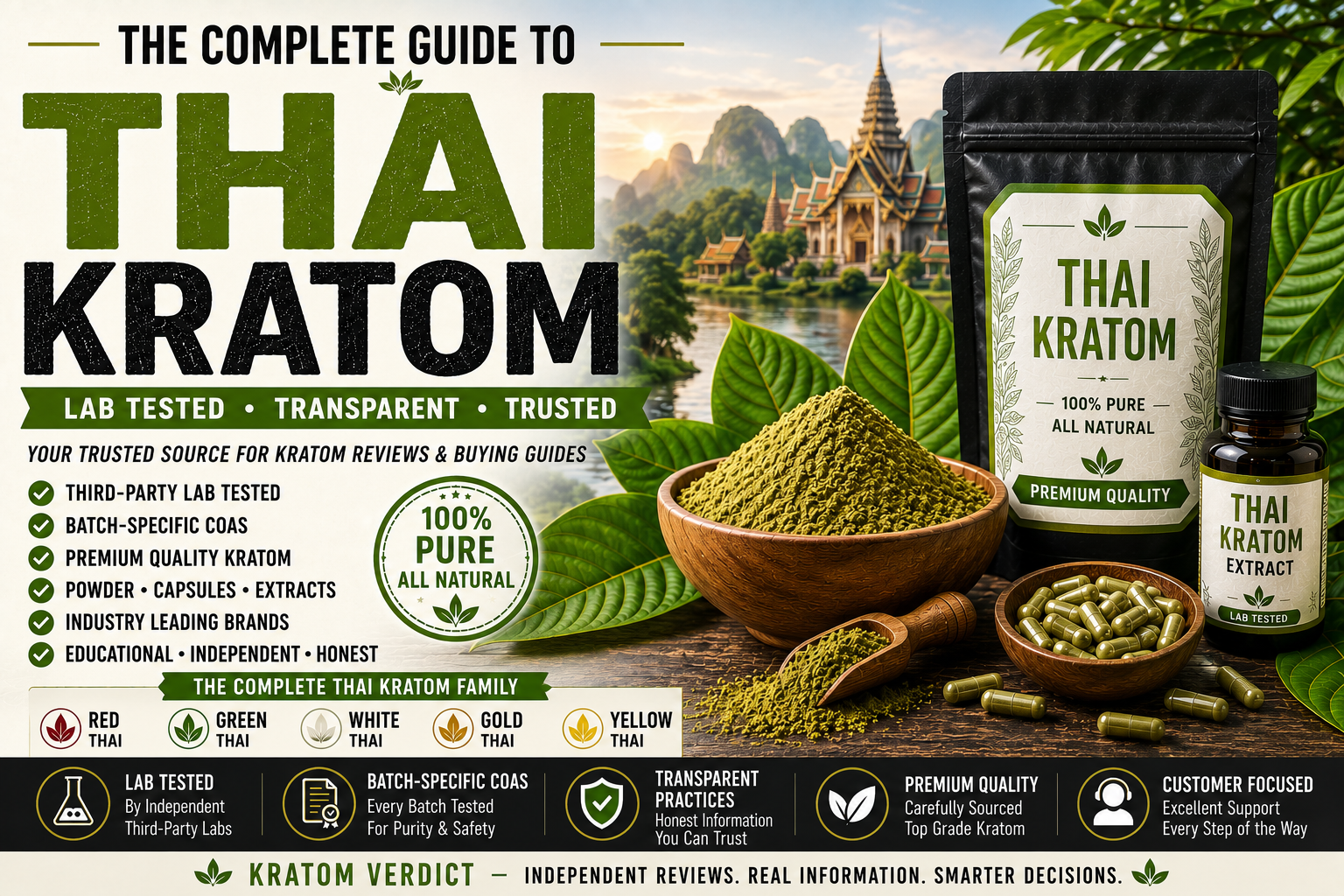
Among the many regional names used throughout the kratom industry, Thai Kratom remains one of the most widely recognized. The name frequently appears on vendor websites, product labels, discussion forums, and educational resources, yet many consumers are surprised to learn that it does not describe a single standardized botanical variety. Instead, the term generally reflects historical cultivation, commercial naming practices, and regional associations connected with Mitragyna speciosa.
For beginners, the popularity of Thai Kratom can make product selection challenging. Different vendors may use the same name while sourcing leaves from different cultivation regions or applying different post-harvest processing techniques. As a result, products marketed under this label can vary in appearance, laboratory documentation, manufacturing transparency, and available quality-control information. Understanding these differences is essential for anyone evaluating kratom products responsibly.
This guide approaches Thai Kratom from an independent editorial perspective rather than a promotional one. Instead of relying on advertising language or unsupported product claims, the focus is on topics that help consumers make informed decisions. These include third-party laboratory testing, Certificates of Analysis (COAs), botanical identification, manufacturing standards, sourcing transparency, storage practices, regulatory considerations, and methods for evaluating vendor documentation.
Throughout this article, readers will also learn how laboratory reports are used to verify botanical identity, why batch-specific testing matters, how production standards influence consumer confidence, and what information responsible vendors typically publish before offering products for sale. By emphasizing documentation instead of marketing, this guide aligns with current transparency standards expected across the modern kratom industry.
What Is Thai Kratom?
Thai Kratom refers to kratom products associated with Thailand or inspired by historical cultivation traditions linked to that region. While the name has been used commercially for many years, it should not be interpreted as a guarantee of identical genetics, chemical composition, or production methods. Different manufacturers may apply the designation to products originating from different cultivation areas or processed using different techniques.
Like all kratom products, Thai Kratom comes from the tropical tree Mitragyna speciosa, a member of the coffee family (Rubiaceae). The tree grows naturally in several parts of Southeast Asia, where environmental conditions such as rainfall, soil composition, humidity, and harvesting practices can influence cultivation. Modern commercial supply chains are considerably more complex than simple country-of-origin labels suggest, making documentation increasingly important.
For this reason, consumers should avoid evaluating products solely on strain names. Instead, batch-specific laboratory testing, sourcing information, manufacturing transparency, and independently verified Certificates of Analysis provide a more reliable foundation for comparing products.
Botanical Background
Mitragyna speciosa has been studied extensively by botanists and researchers interested in tropical medicinal plants. Scientific references classify it as an evergreen tree capable of reaching considerable height under favorable environmental conditions. Large glossy leaves, rapid seasonal growth, and adaptation to humid climates distinguish the species throughout Southeast Asia.
Although commercial names such as Thai, Malay, Indo, Bali, Borneo, and Maeng Da are widely recognized within the marketplace, these labels are not formal botanical classifications. They primarily serve as commercial identifiers that may reflect regional history, cultivation traditions, processing methods, or marketing terminology rather than scientifically defined varieties.
Recognizing this distinction helps consumers interpret product descriptions more accurately and encourages reliance on documented laboratory information instead of assumptions based solely on product names.
Why Laboratory Testing Matters
One of the most important developments in today’s kratom industry is the increasing emphasis on independent laboratory verification. Rather than depending exclusively on advertising claims, consumers now have access to Certificates of Analysis that document testing performed by qualified laboratories.
A comprehensive COA may include verification for botanical identity, alkaloid analysis, microbial screening, heavy metal testing, and additional quality-control measures. While individual laboratory reports differ, the presence of current, batch-specific documentation generally demonstrates a greater commitment to transparency than unsupported marketing statements.
When evaluating Thai Kratom, reviewing laboratory documentation can provide meaningful insight into product quality standards, manufacturing consistency, and the vendor’s overall commitment to consumer transparency.
Why Transparency Is Becoming the Industry Standard
Consumer expectations have changed significantly over the past decade. Buyers increasingly look beyond product descriptions and seek verifiable information regarding sourcing, manufacturing, laboratory testing, and regulatory compliance.
Responsible vendors often publish detailed information explaining where products originate, how they are processed, which laboratories perform testing, and whether each production batch includes an accessible Certificate of Analysis. This transparency allows consumers to compare products using objective documentation instead of promotional language.
As the kratom industry continues to mature, transparent manufacturing practices and independently verified laboratory reports are becoming key indicators of credibility.
How Thai Kratom Is Processed
Understanding how Thai Kratom is processed is an important part of evaluating overall product quality. Although harvesting methods vary among producers, responsible manufacturers typically document each stage of production, from leaf collection to drying, milling, packaging, and storage. Modern production facilities increasingly follow written quality procedures designed to improve consistency between batches while reducing contamination risks during handling.
Freshly harvested leaves are generally cleaned before controlled drying begins. Drying conditions can influence moisture content, appearance, and long-term storage stability. Once drying is complete, the botanical material is milled into a consistent powder before entering quality-control inspection. Throughout these stages, reputable manufacturers maintain production records that can later be compared with laboratory documentation.
Consumers should recognize that manufacturing practices often differ between suppliers. Rather than relying solely on marketing descriptions, reviewing documented production standards provides a better understanding of how products are prepared. Companies willing to explain harvesting methods, drying procedures, packaging controls, and storage recommendations generally demonstrate a stronger commitment to transparency. When evaluating Thai Kratom, understanding documented manufacturing practices offers far more value than promotional language alone.
Third-Party Laboratory Testing
Independent Thai Kratom third-party testing has become one of the most valuable tools available to consumers. Rather than accepting claims made directly by manufacturers, buyers can review laboratory reports produced by independent testing facilities. This separation between production and testing helps improve confidence that analytical results reflect the contents of the specific production batch.
A comprehensive laboratory report may include microbial screening, heavy metal analysis, moisture evaluation, botanical identification, and alkaloid testing. Individual laboratories may use different analytical methods depending on their accreditation and testing capabilities, but responsible vendors generally explain which laboratory performed the analysis and provide access to the completed report.
Consumers should verify that testing corresponds to the same production batch being offered for sale. Batch-specific documentation provides stronger evidence than generic reports uploaded months or years earlier. When comparing Thai Kratom products, independently verified laboratory testing represents one of the strongest indicators of transparency and quality assurance.
More Strains available for Research
- Green Thai Kratom
- Red Thai Kratom
- White Thai Kratom
- Thai vs. Malay Kratom
- Borneo Kratom
- Green Malay Kratom
- White Malay Kratom
- Green Maeng Da Kratom
- Bali vs. Maeng Da Kratom
- Borneo vs. Sumatra Kratom
Understanding Certificates of Analysis (COAs)
A Thai Kratom COA, or Certificate of Analysis, summarizes laboratory findings for a specific production batch. Although the appearance of individual reports varies among laboratories, most include the batch number, testing date, laboratory identification, sample description, and analytical results. Reviewing this documentation helps consumers compare products using objective information rather than marketing claims.
Learning to read a Thai Kratom certificate of analysis is an essential skill for responsible purchasing. A current COA demonstrates that a batch was submitted for laboratory evaluation before reaching consumers. Reports that include clear laboratory identification, traceable batch numbers, and complete analytical results generally provide greater transparency than reports containing limited information.
Consumers should also understand how to verify Thai Kratom documentation by confirming that the batch number shown on the packaging matches the number printed on the Certificate of Analysis. This simple verification step helps ensure that the laboratory report corresponds to the exact product being purchased.
Alkaloid Testing and Laboratory Analysis
Modern laboratories frequently perform Thai Kratom alkaloid testing to measure naturally occurring compounds found within Mitragyna speciosa. These analytical procedures provide measurable data regarding botanical composition and allow manufacturers to document each production batch using standardized laboratory methods.
Comprehensive Thai Kratom laboratory analysis may also include microbial screening, heavy metal evaluation, moisture analysis, and additional quality-control testing depending on laboratory capabilities. Rather than replacing overall quality assessment, these reports contribute one important part of a broader transparency program that includes sourcing documentation, manufacturing standards, and batch traceability.
Consumers should avoid assuming that laboratory values alone determine product quality. Instead, laboratory analysis should be considered alongside manufacturing documentation, Certificates of Analysis, sourcing information, and company transparency. Evaluating Thai Kratom using multiple documented criteria provides a more balanced and reliable purchasing approach.
Manufacturing Standards and Quality Control
Responsible manufacturers increasingly publish information describing Thai Kratom manufacturing standards together with documented Thai Kratom quality control procedures. These standards often explain how raw botanical material is received, inspected, processed, packaged, stored, and prepared for laboratory testing before distribution.
Quality-control systems commonly include batch identification, sanitation procedures, equipment maintenance, production documentation, and verification records. Maintaining written procedures helps manufacturers improve consistency while providing consumers with greater confidence regarding production practices.
Although manufacturing approaches differ between companies, businesses that openly explain their quality systems generally demonstrate stronger transparency than those providing little production information. When evaluating Thai Kratom, documented manufacturing standards and quality-control procedures offer meaningful insight into the overall reliability of a supplier.
Sourcing Transparency
Understanding Thai Kratom sourcing allows consumers to evaluate where botanical material originates and how it moves through the production process before reaching the marketplace. Responsible suppliers frequently publish information describing supplier relationships, harvesting practices, production oversight, and traceability procedures.
Greater sourcing transparency helps buyers understand whether documentation supports the company’s public claims. When combined with independent laboratory reports and Certificates of Analysis, sourcing information provides a more complete picture of overall product accountability.
Rather than relying exclusively on geographic names or advertising language, consumers should compare suppliers based on verifiable documentation, traceability practices, and publicly available production information. For Thai Kratom, transparent sourcing remains an important indicator of responsible manufacturing.
Thai Kratom Buying Guide
A responsible Thai Kratom buying guide begins with evaluating documentation rather than promotional claims. Consumers should first confirm that the vendor provides current, batch-specific Certificates of Analysis (COAs) from an independent laboratory. The COA should clearly identify the production batch, testing date, and laboratory that completed the analysis. Documentation should be easy to access before purchasing rather than only after delivery.
Next, review the company’s manufacturing information and sourcing transparency. Reliable businesses often explain where botanical material is obtained, how it is processed, and what quality-control procedures are followed before products reach consumers. Public information regarding manufacturing standards demonstrates accountability and provides additional confidence beyond advertising.
Comparing several suppliers is also important. Instead of selecting products solely because of pricing or marketing language, evaluate vendors according to laboratory testing, manufacturing transparency, customer support, batch traceability, and educational resources. Companies willing to publish detailed documentation generally demonstrate stronger long-term commitment to quality.
Finally, review storage recommendations, return policies, customer communication, and publicly available quality-control information. Purchasing Thai Kratom should be based on objective evidence rather than unsupported claims. An informed buying process reduces uncertainty and encourages responsible consumer decision-making.
How to Identify the Best Thai Kratom Vendors
Choosing the best Thai Kratom vendors requires more than comparing product descriptions or promotional offers. Responsible companies typically demonstrate transparency throughout every stage of production. They publish laboratory reports, explain manufacturing standards, provide sourcing information, and make Certificates of Analysis available for every production batch.
Consumers should examine whether the vendor performs independent third-party laboratory testing on every batch or only occasionally. Reliable suppliers generally explain which laboratories they use and provide documentation that corresponds directly with the product being offered. Batch numbers should match between product packaging and laboratory reports.
Educational content is another positive indicator. Vendors investing in consumer education often publish detailed information regarding quality standards, laboratory procedures, and responsible purchasing practices. These resources demonstrate an emphasis on transparency rather than relying exclusively on marketing language.
Instead of asking which company is “best,” consumers should compare documentation, manufacturing standards, laboratory verification, sourcing transparency, and overall accountability before selecting a supplier.
Thai Kratom for Beginners
For individuals researching Thai Kratom for beginners, education should always come before purchasing decisions. New consumers often encounter numerous strain names, marketing descriptions, and conflicting online information. Learning how laboratory testing, Certificates of Analysis, and manufacturing documentation work provides a far more reliable foundation than depending solely on advertising.
Beginners should become familiar with production terminology, batch testing, sourcing transparency, and quality-control practices. Understanding these topics makes it easier to evaluate products objectively while reducing confusion created by inconsistent marketing language.
Rather than focusing only on strain names, beginners benefit from learning how to compare documentation between vendors. Reviewing laboratory reports, manufacturing information, and sourcing transparency helps establish realistic expectations and encourages informed purchasing decisions based on verifiable evidence instead of promotional claims.
Thai Kratom Legality (2026)
Understanding Thai Kratom legality 2026 requires recognizing that regulations continue to evolve in different countries, states, and local jurisdictions. Laws may change over time, and legal status can differ significantly depending on where a product is purchased, sold, or possessed.
Consumers should always verify current regulations through official government sources before purchasing or transporting botanical products. Depending exclusively on vendor websites or outdated online discussions may result in inaccurate information regarding applicable laws.
Responsible vendors generally encourage consumers to review local regulations before ordering products. Staying informed about current legal requirements supports responsible purchasing decisions while reducing the possibility of regulatory misunderstandings.
Storage, Authentication & Long-Term Quality
Proper Thai Kratom storage contributes to maintaining product quality over time. Botanical materials should generally be stored in tightly sealed containers away from direct sunlight, excessive humidity, heat, and moisture. Appropriate storage conditions help preserve product integrity while reducing environmental exposure during long-term storage.
Consumers should also understand Thai Kratom authentication by reviewing batch-specific Certificates of Analysis, laboratory reports, and production documentation. Authenticity is supported through verifiable records rather than marketing language alone. Matching batch numbers, reviewing laboratory information, and confirming supplier transparency provide stronger evidence than promotional claims.
Combining proper storage with documented authentication practices helps consumers evaluate products more responsibly while emphasizing transparency throughout the purchasing process.
Frequently Asked Questions
Is Thai Kratom a scientifically recognized strain?
No. The term Thai Kratom is primarily a commercial designation associated with historical cultivation traditions rather than a formal botanical classification. Consumers should rely on laboratory documentation instead of strain names alone.
Why is a Certificate of Analysis important?
A COA provides independent laboratory information regarding a specific production batch. Reviewing laboratory documentation helps consumers compare products using objective analytical evidence.
What should consumers verify before purchasing?
Consumers should review Certificates of Analysis, laboratory testing, sourcing transparency, manufacturing standards, batch identification, and quality-control documentation before selecting a product.
Does every vendor provide laboratory reports?
No. Responsible vendors are generally more likely to publish batch-specific laboratory reports and explain their testing procedures. Consumers should verify documentation before purchasing.
Readers interested in learning more about Thai Kratom can explore educational resources published by the U.S. Food and Drug Administration (FDA), the American Kratom Association (AKA), Kew Science – Plants of the World Online, the Journal of Ethnopharmacology, Frontiers in Pharmacology, and the National Center for Biotechnology Information (NCBI/PubMed). These organizations provide information on botanical identification, laboratory testing, Certificates of Analysis (COAs), manufacturing practices, consumer safety, and peer-reviewed research relating to Mitragyna speciosa.
Editorial Conclusion
Thai Kratom continues to be one of the most recognizable regional names within the modern kratom marketplace, but informed purchasing decisions require more than familiarity with strain terminology. Independent laboratory testing, Certificates of Analysis, manufacturing transparency, sourcing documentation, and objective quality-control practices provide a stronger foundation for evaluating products than advertising claims alone.
Throughout this guide, the emphasis has remained on verifiable documentation rather than promotional language. Consumers who compare laboratory reports, verify production batches, review manufacturing standards, and evaluate sourcing transparency are generally better equipped to assess products responsibly.
As the kratom industry continues to evolve, transparency is becoming one of the strongest indicators of responsible manufacturing. Vendors that consistently publish independent laboratory documentation, maintain quality-control procedures, and communicate openly about sourcing practices help establish greater consumer confidence while supporting higher industry standards.
By focusing on education, documentation, and independent verification, readers can evaluate Thai Kratom using objective evidence and make purchasing decisions based on transparency rather than marketing alone.